

Good kitchen lighting combines four layers: ambient light across the ceiling, task light on every worktop, accent light for shelves and cabinets, and decorative fittings such as pendants over an island or table. Put task lights in front of the cook rather than behind, choose warm to neutral white (about 2700-4000 K) with good colour rendering, and put each layer on its own switch or dimmer. This updated guide explains each layer, where to place fittings, pendant dimensions in metric and imperial, and how to choose efficient LEDs.
Kitchens hold many different tasks and surfaces, so a single ceiling light rarely works. For ideas on fittings, see our pick of LED lights for your kitchen.
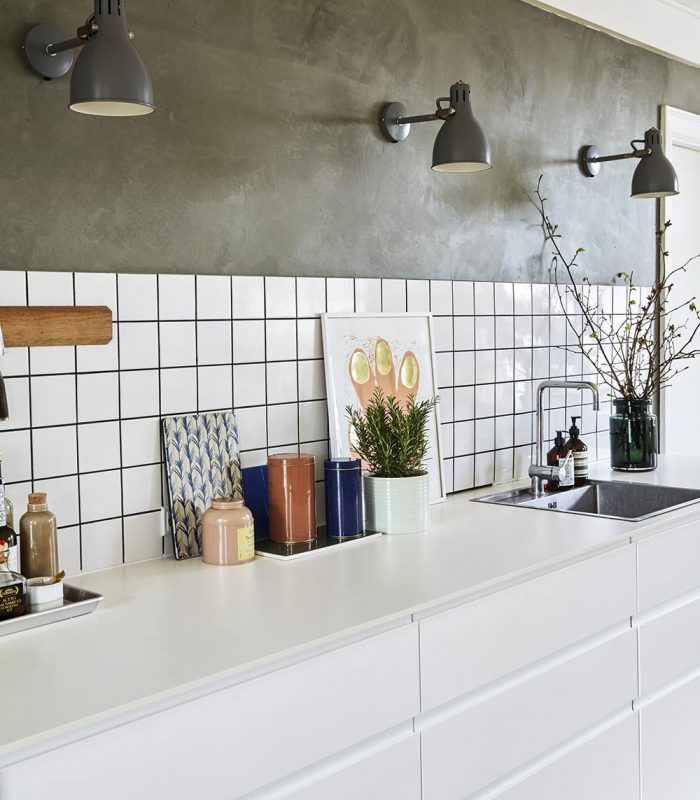
Courtesy of Anitta Behrendt
Because kitchens contain varied zones, such as worktops, islands, sinks and cabinets, each needs its own treatment. This is where layered lighting transforms interior spaces.
The layers of kitchen lighting
| Layer | Purpose | Typical fittings | Where |
|---|---|---|---|
| Ambient | Even general light for moving around and cleaning | Recessed downlights, surface panels, linear fittings, semi-flush ceiling lights | Across the ceiling, avoiding dark corners |
| Task | Shadow-free light on work surfaces | Under-cabinet LED strips, spotlights, pendants over islands | Worktops, sink, hob, island |
| Accent | Highlight objects, materials and shelving | LED strips in glass cabinets and shelves, adjustable spots | Open shelves, glass cabinets, textured walls |
| Decorative | Character and a focal point | Statement pendants, chandeliers, wall lights | Over the dining table or island |
Source: Arch2O guidance; US DOE (as of 1 November 2026).
The ambient lighting layer sets the general level; task lighting does the real work; accent and decorative lighting give character. With LEDs, all four can be combined without a large energy cost.
1. Install even ambient lighting
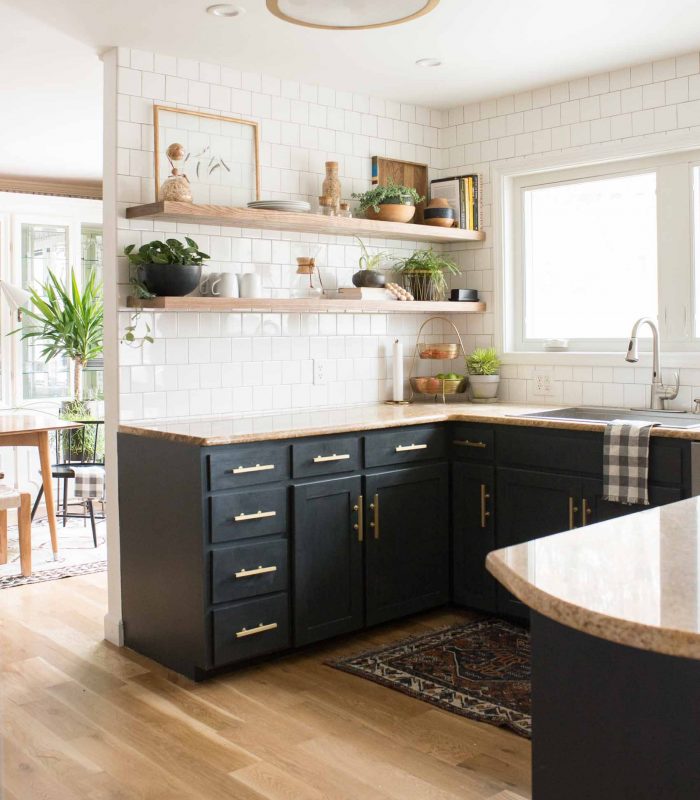
Courtesy of Design Sponge
Every kitchen needs general light that fills the room and softens shadows when daylight is low. Recessed downlights, surface panels, linear fittings or semi-flush ceiling lights all work. Spread them evenly, aiming light onto worktops and floor rather than leaving pools and dark corners, and avoid placing downlights directly behind where people stand at the counter, because their own shadow will fall on the work.
2. Light every work surface
Task lighting is the most important layer in a working kitchen:
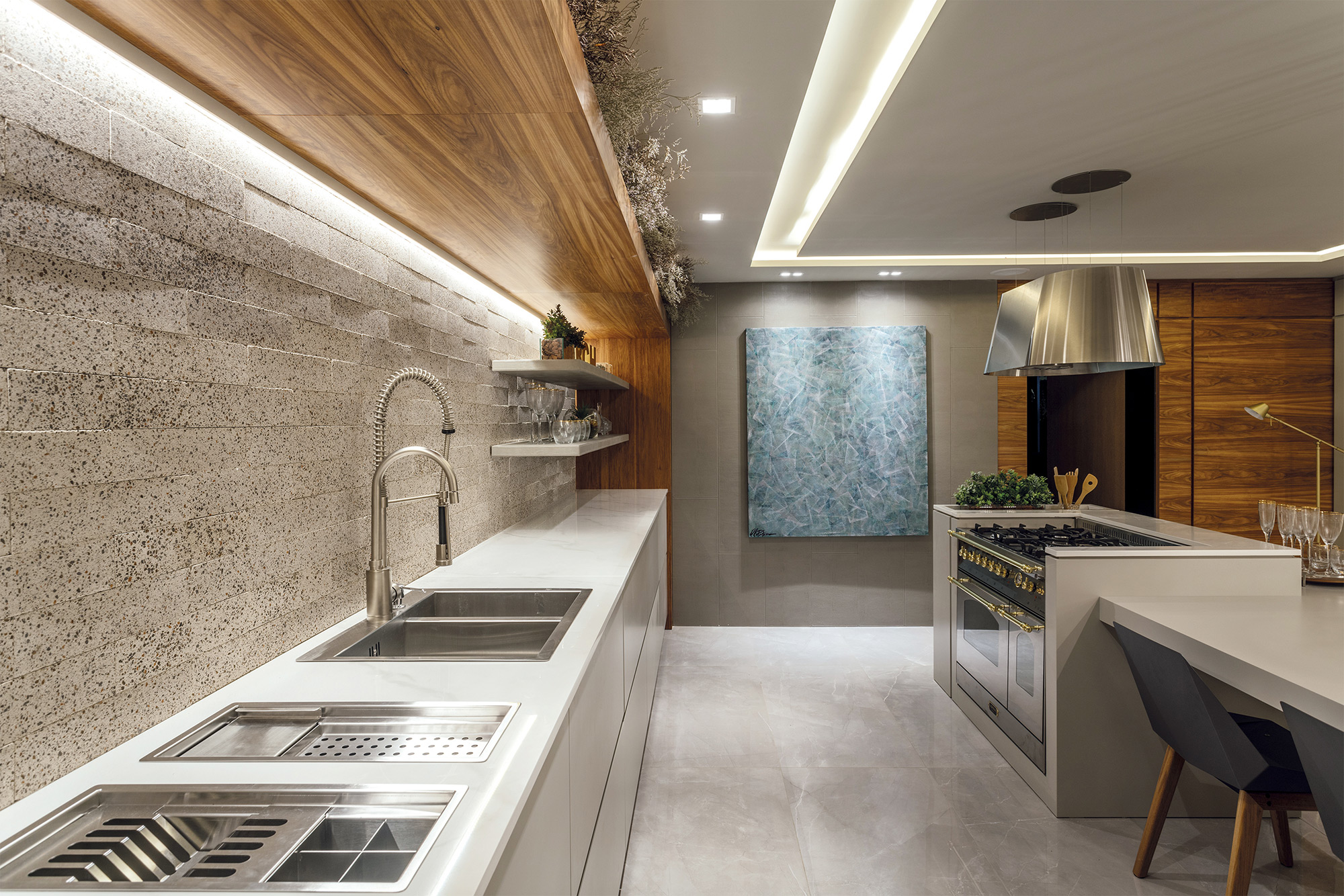
- Worktops under wall cabinets: continuous LED strips or linear fittings mounted towards the front of the cabinet underside light the surface evenly and hide the light source.
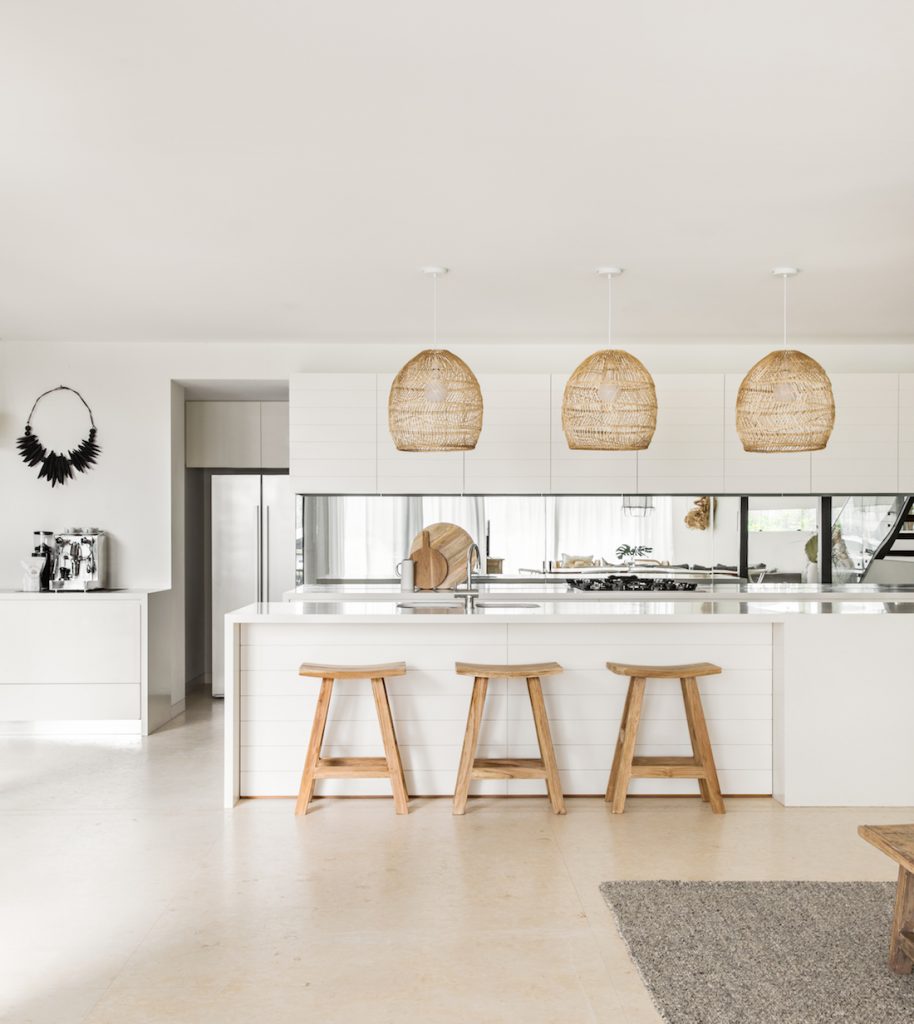
- Island: pendants or directional spotlights; the island is used for preparation, serving and eating.
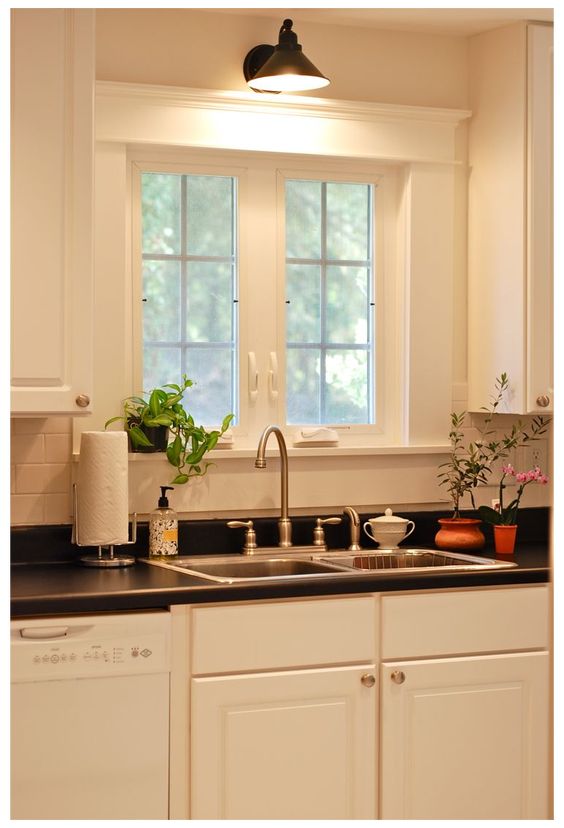
- Sink: a spotlight or pendant directly above, especially when the sink sits under a window that is dark at night.
- Hob: most cooker hoods include lights; check they are bright enough.
- Dining table: a pendant or chandelier on a dimmer, which also acts as decorative light.
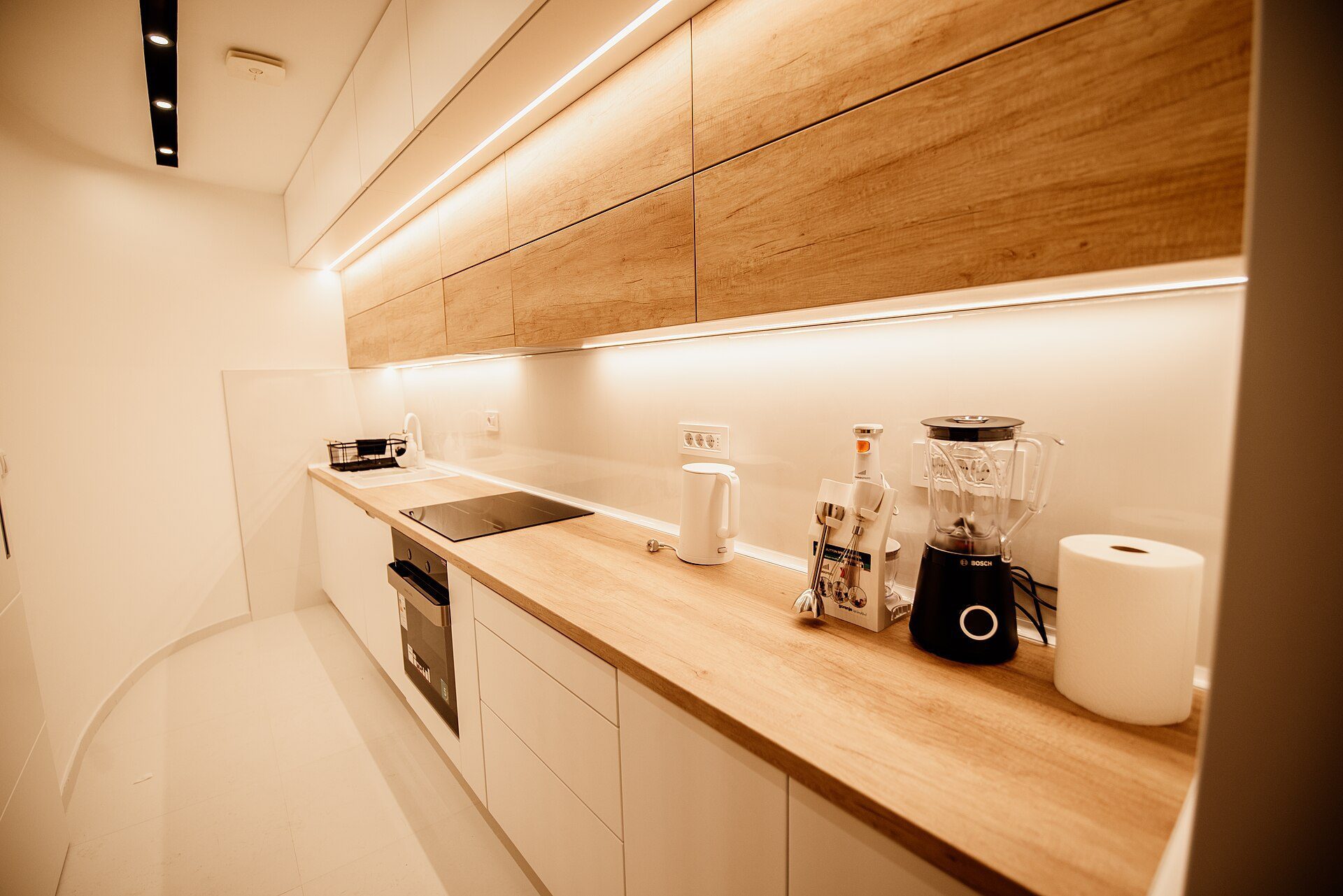
Continuous LED strips under wall cabinets light the whole worktop without shadows from the cook. Photo: Shixart1985, CC BY 2.0, via Wikimedia Commons. Shixart1985, source, CC BY 2.0
3. Accent cabinets and shelves
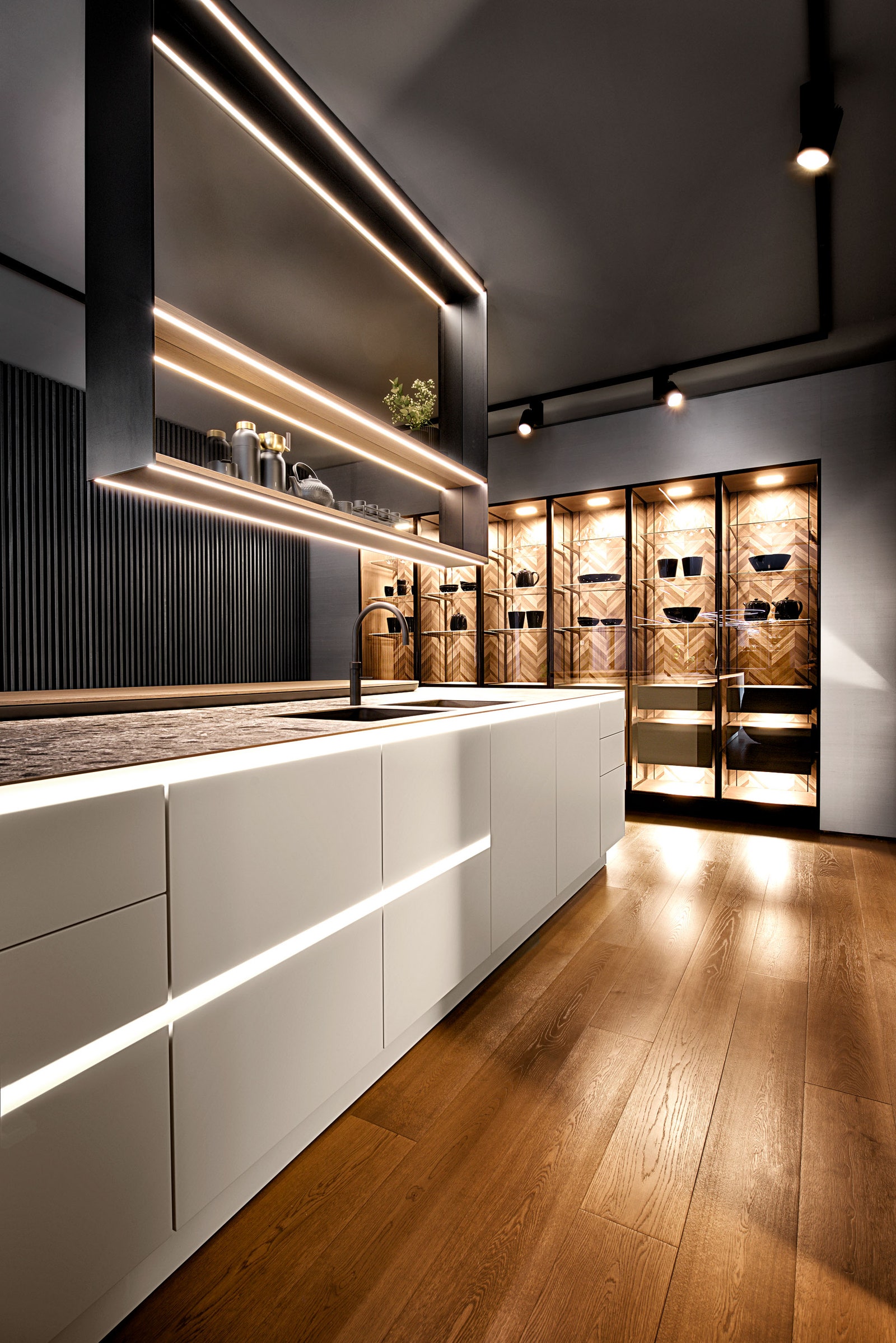
Cabinets fill much of a kitchen’s visual space, so lighting them changes the whole room. LED strips inside glass-fronted cabinets or along open shelves show off ceramics and glass. A strip along the top of tall units washes the ceiling with soft light, and a strip in the plinth of base units makes a gentle night light.
4. Choose finishes that work together
Courtesy of Etsy
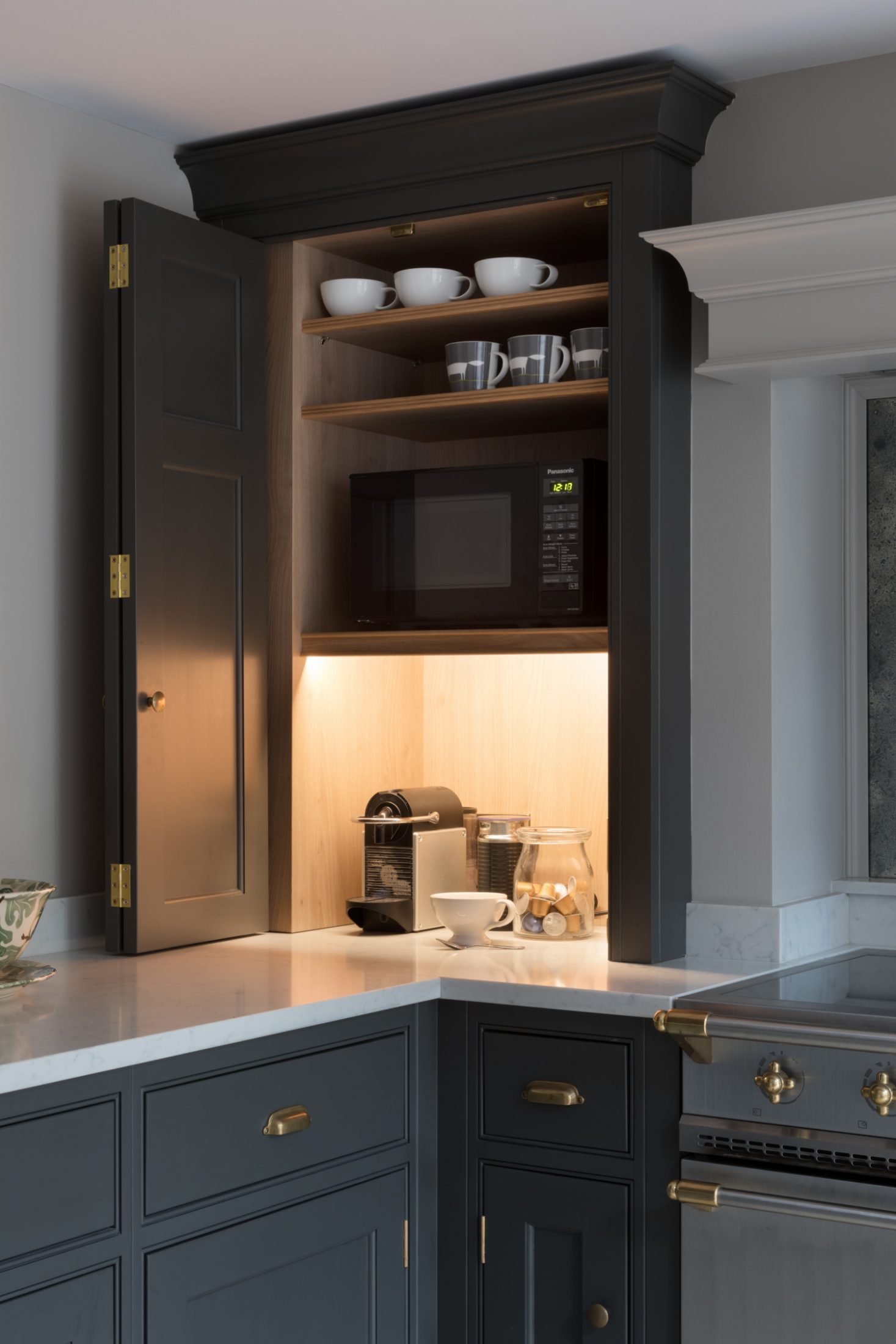
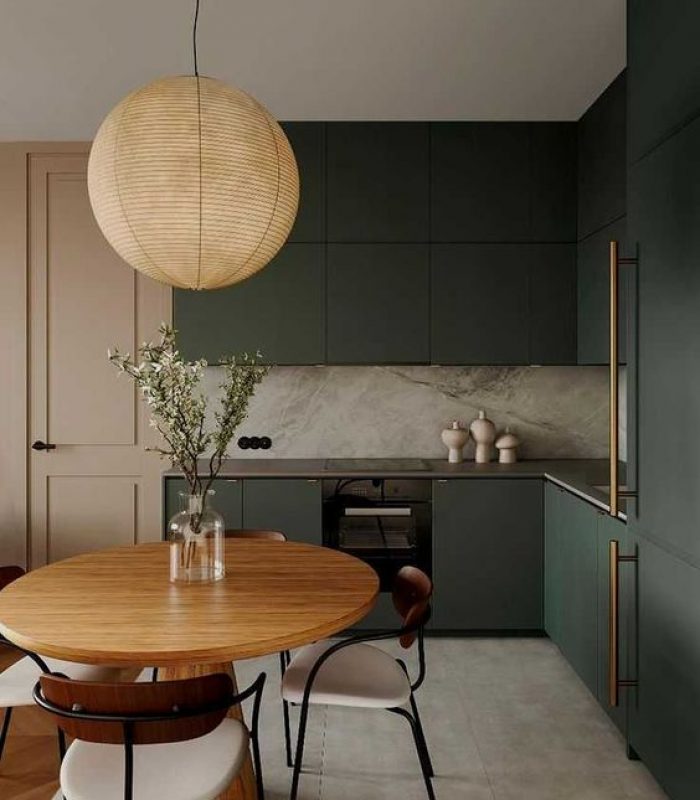
Fittings are part of the kitchen’s palette. Choose finishes that suit the cabinets, handles and taps, and keep to one or two metal finishes so they read as a set. Glass and opal shades spread soft ambient light; metal shades direct light downwards for tasks; fabric shades soften dining areas but should be kept away from steam and grease.
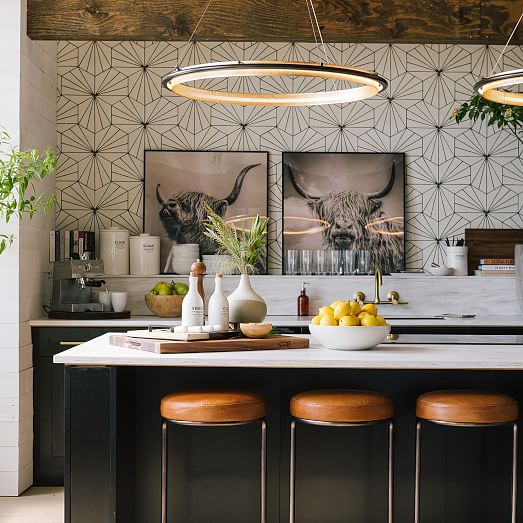
5. Size and hang pendants correctly
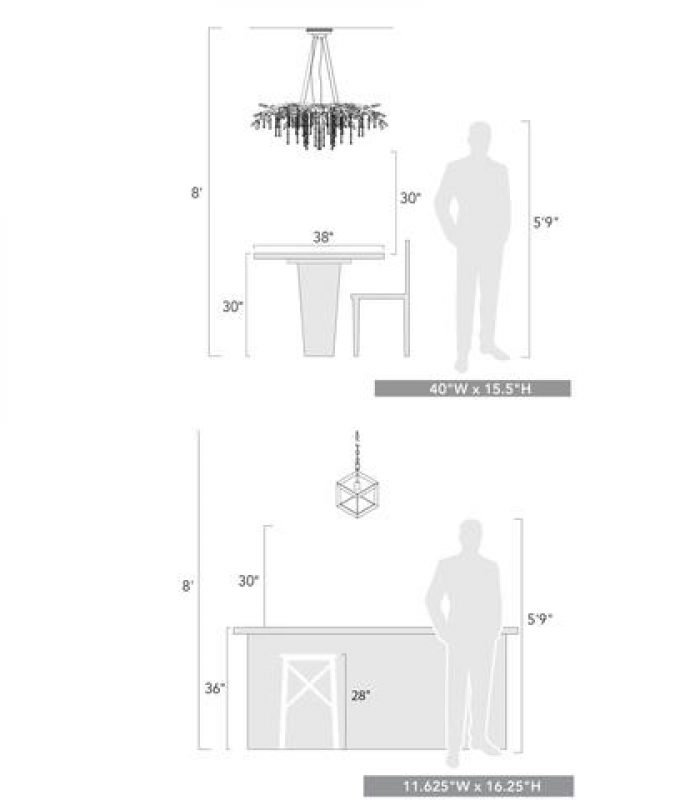
Measure the kitchen before choosing pendants or chandeliers, which hang low and attract attention. The figures below are common rules of thumb; always follow the manufacturer’s instructions and check head clearance where people walk.
| Item | Typical guidance | Imperial equivalent |
|---|---|---|
| Height of pendant bottom above worktop or table | About 75-90 cm | About 30-36 in |
| Spacing between pendant edges | About 60 cm or more | About 24 in |
| Pendant group width compared with island or table | About 30 cm narrower in total | About 12 in |
| Distance of first and last pendant from island end | Roughly half the spacing between pendants |
Source: Arch2O guidance; US DOE (as of 1 November 2026).
Two or three pendants suit most islands; odd numbers often look balanced, but the island length and pendant diameter matter more than the count. Over a long island, a single linear pendant can replace several small ones.
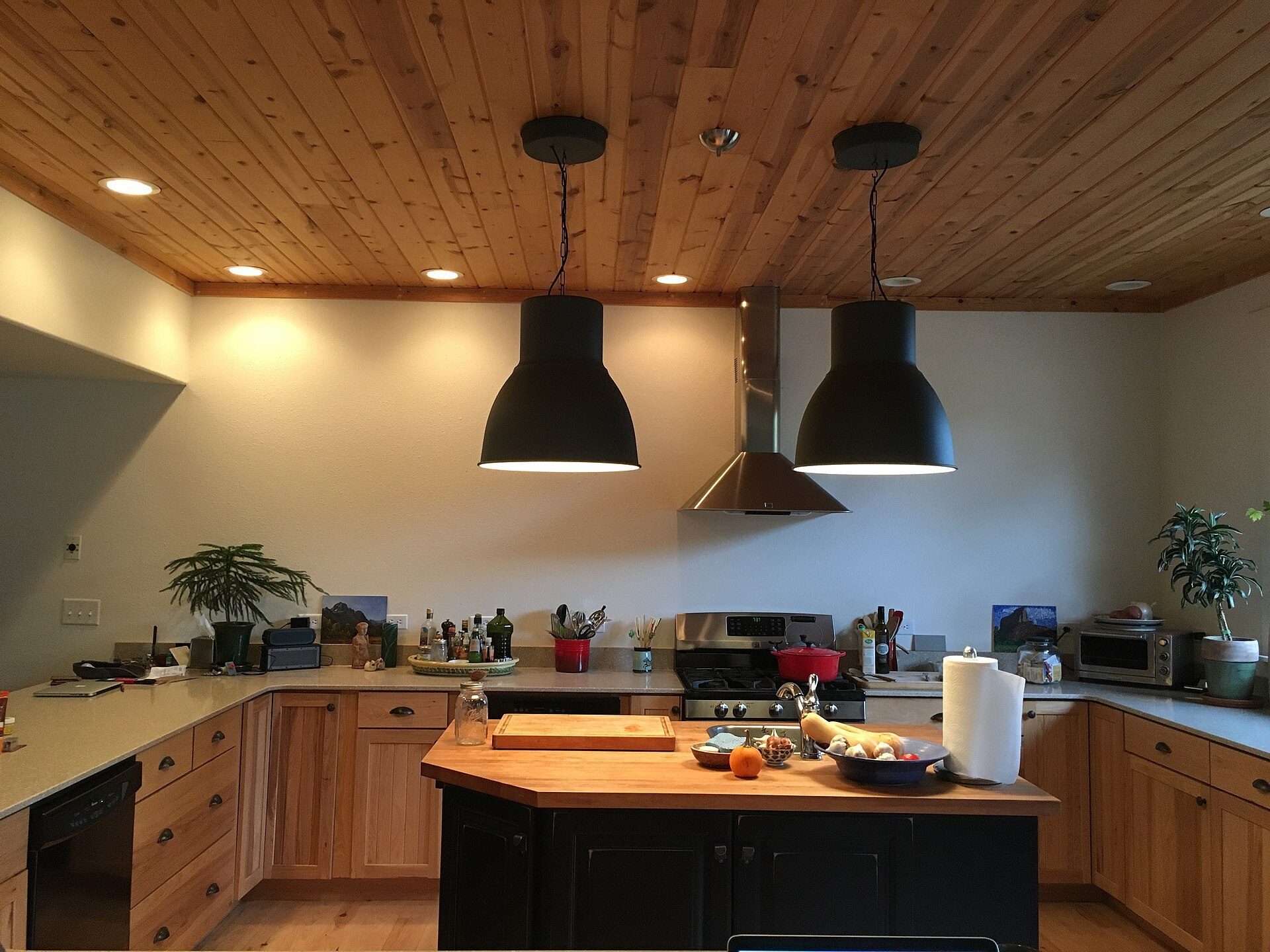
A pair of pendants over a kitchen island, hung low enough to light the worktop while leaving sightlines across the room. Photo: TSRC Mark, CC BY-SA 4.0, via Wikimedia Commons. TSRC Mark, source, CC BY-SA 4.0
6. Choose the right colour temperature and colour rendering
Colour temperature is measured in kelvin (K): lower numbers look warmer, higher numbers cooler. Most homes suit warm to neutral white; very cool light can make a kitchen feel clinical. Colour rendering matters just as much: a colour rendering index (CRI) of 90 or above makes food, wood and stone look natural.
| Value | Appearance | Typical kitchen use |
|---|---|---|
| 2700-3000 K | Warm white | Dining areas, open-plan living kitchens, evening use |
| 3500-4000 K | Neutral white | Worktops and general light in kitchens used mainly for cooking |
| 5000 K and above | Cool, daylight white | Rarely needed at home; can feel clinical |
| CRI (Ra) 90 or more | Colours of food and materials look natural | Task lighting over worktops |
Source: Arch2O guidance; US DOE (as of 1 November 2026).
In open-plan kitchens, consider neutral white for worktops and warmer light over the dining area, with both dimmable.
7. Choose efficient LEDs and good controls
LEDs are the standard choice for kitchens today. The US Department of Energy notes that residential LEDs, especially ENERGY STAR-rated products, use at least 75% less energy and last up to 25 times longer than incandescent lighting, according to its LED lighting guide. Choose fittings with good glare control, check that dimmable LEDs are compatible with your dimmers, and put each layer on a separate circuit so you can set the mood for cooking, eating or cleaning. In new homes in England, Approved Document L also sets minimum efficiency for fixed lighting.
Lighting small and dark kitchens
To make a small kitchen feel brighter, combine bright, even ambient light with under-cabinet strips, light-coloured surfaces and a few reflective finishes. Avoid a single central fitting, which leaves worktops in shadow. In kitchens with dark cabinets, plan more fittings, since dark surfaces reflect little light.
Kitchen lighting checklist
- Draw the kitchen plan and mark every work zone.
- Plan ambient light first, then task light for each zone, then accents and decorative fittings.
- Place task lights in front of where people stand.
- Choose 2700-4000 K and CRI 90 or more for worktops.
- Check pendant heights, spacing and head clearance.
- Put each layer on its own switch or dimmer.
- Choose efficient LED fittings with low glare.
Sources and further reading
- US Department of Energy, guide to energy-efficient lighting.
- ENERGY STAR, guidance on certified LED lamps.
- Manufacturers’ installation instructions for pendants, strips and drivers.

Emily Reyes is a Brooklyn-based architecture writer and Article Curator at Arch2O, known for her sharp eye for experimental design and critical theory. A graduate of the Southern California Institute of Architecture (SCI-Arc), Emily’s early work explored speculative urbanism and the boundaries between digital form and physical space. After a few years in Los Angeles working with boutique studios on concept-driven installations, she pivoted toward editorial work, drawn by the need to contextualize and critique the fast-evolving architectural discourse. At Arch2O, she curates articles that dissect emerging technologies, post-anthropocentric design, and contemporary spatial politics. Emily also lectures occasionally and contributes essays to independent design journals across North America.