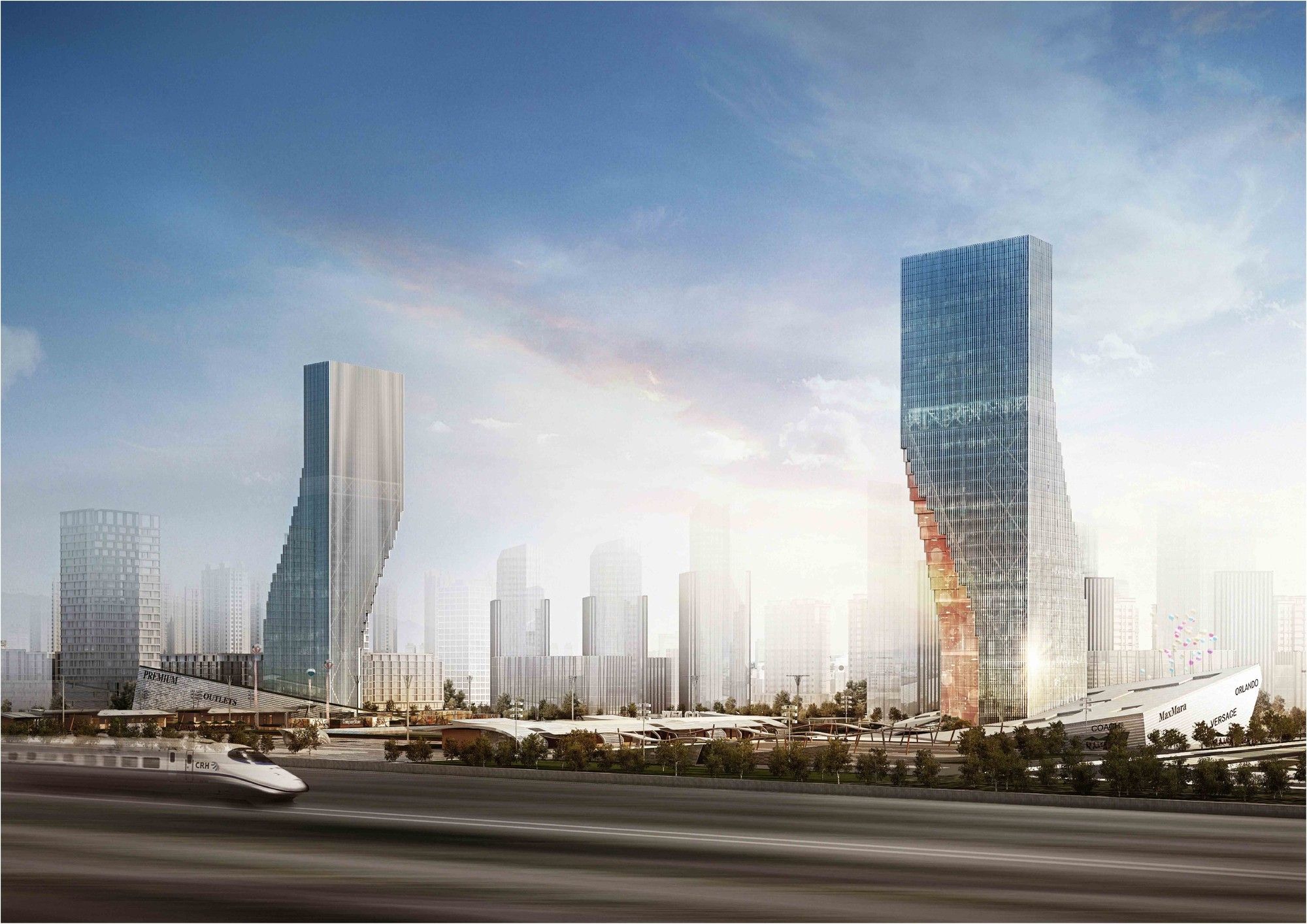
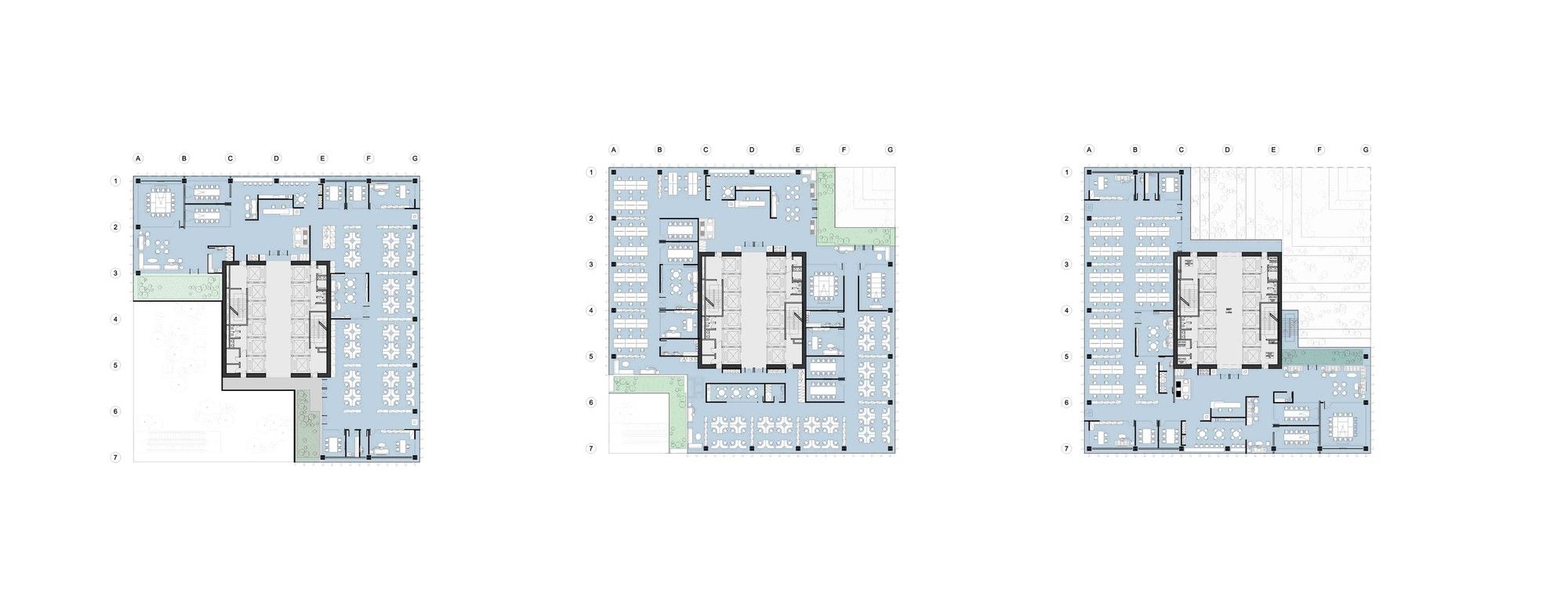
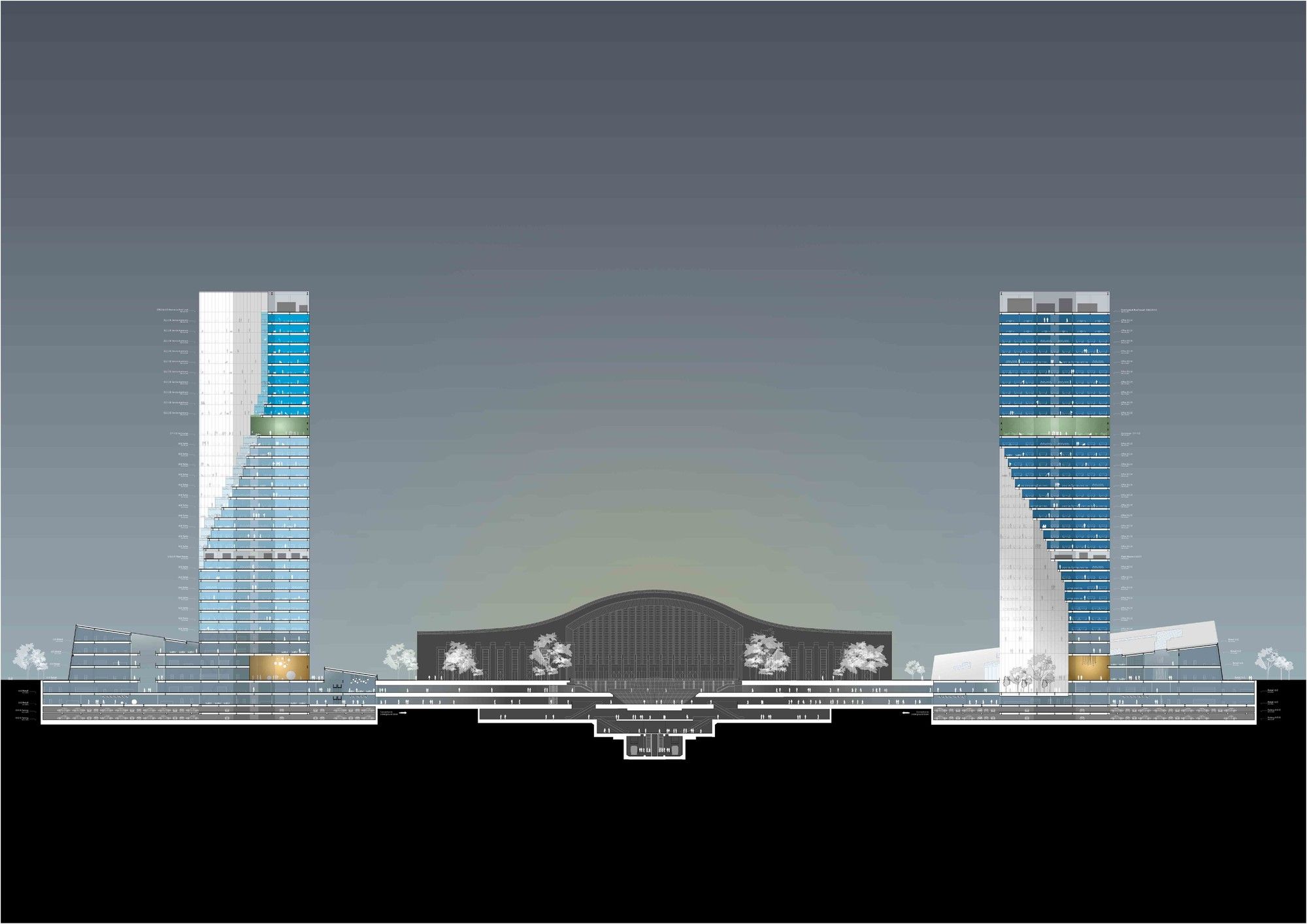
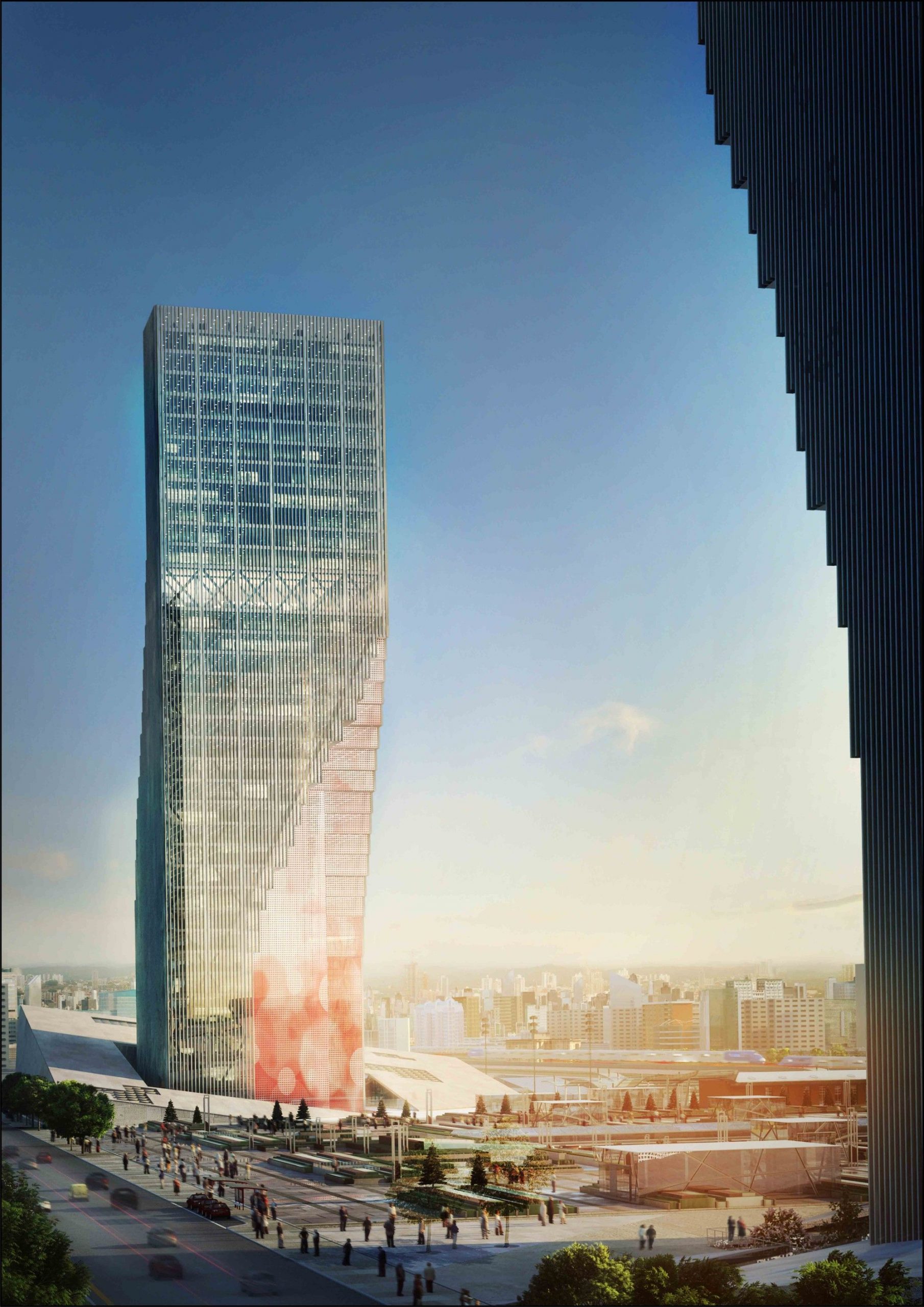
China has the world longest High Speed Rail (HSR) network that connects the entire country from north to south and from east to west. In the city of Harbin, the new West Train Station will become the northern China gateway connecting to China’s major cities with daily high-speed links to Beijing, Tianjin, Shanghai and Guangzhou. spatial practice has designed the Harbin High Speed Railway (HSR) west train station Twin Towers. The iconic project includes: office spaces, residential apartments, retail spaces and a hyper link to a new underground infra-structural hub. More from the architect after the jump.
Courtesy of spatial practice
Integration
Harbin West Station is a transportation hub linkedwith the high-speed train station, Subway and Bus Station.The Kaishengyuan Towers take full advantage of sitting on a transportation hub not only connected to main cities in China but hyper-connected to Harbin City main infrastructure. Distances are shortening, fostering faster business transactions and promoting communication.
Identity
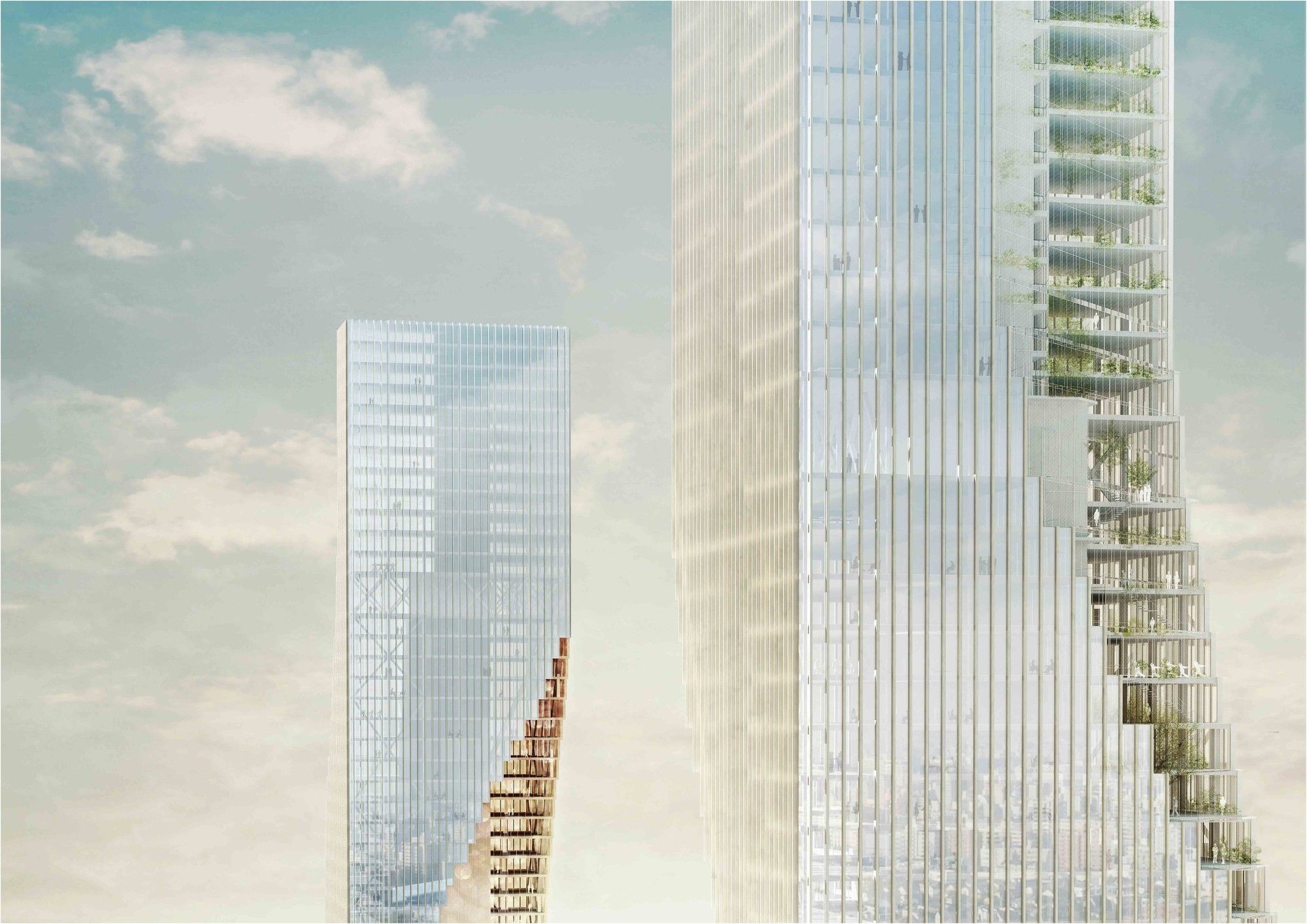
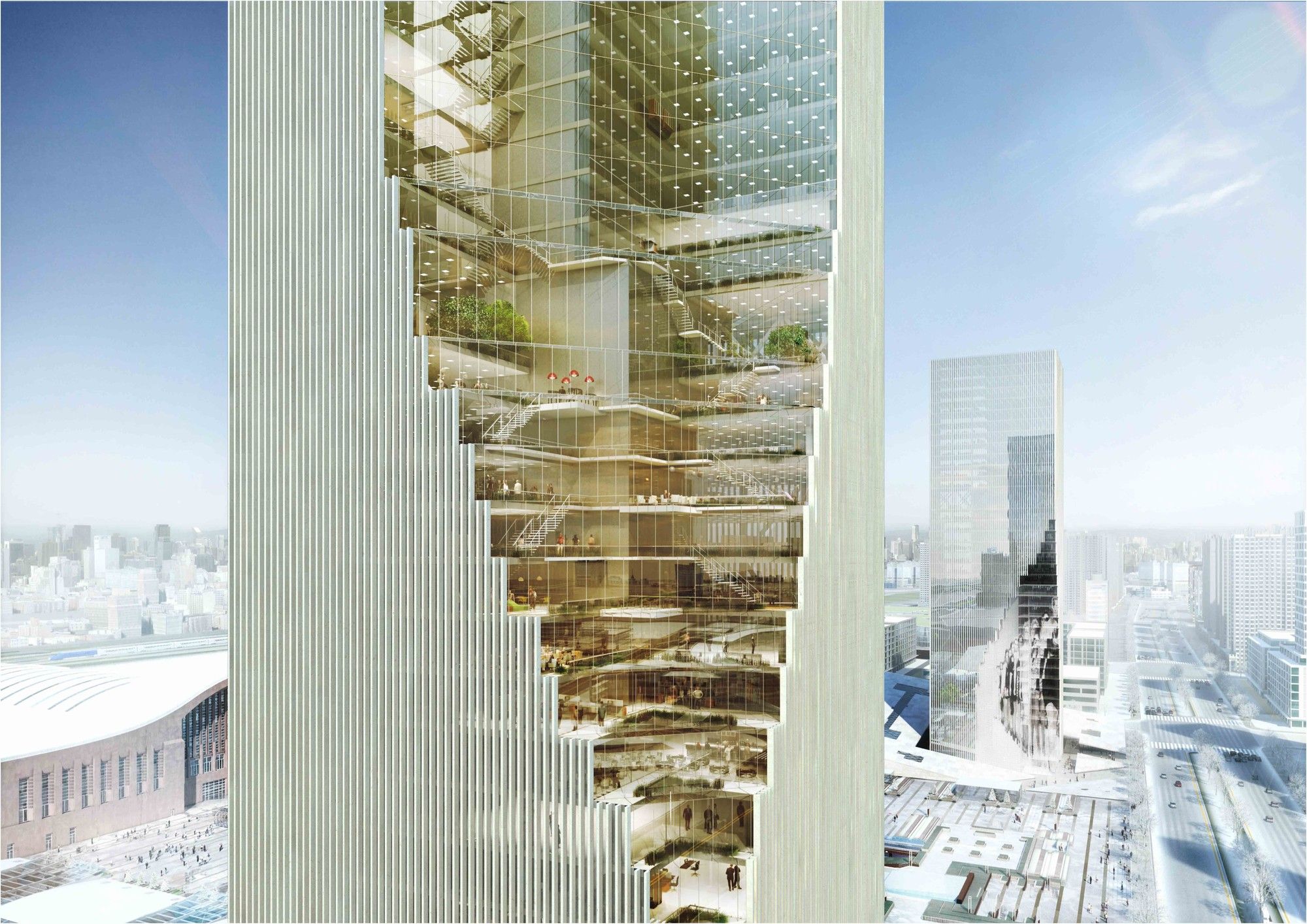
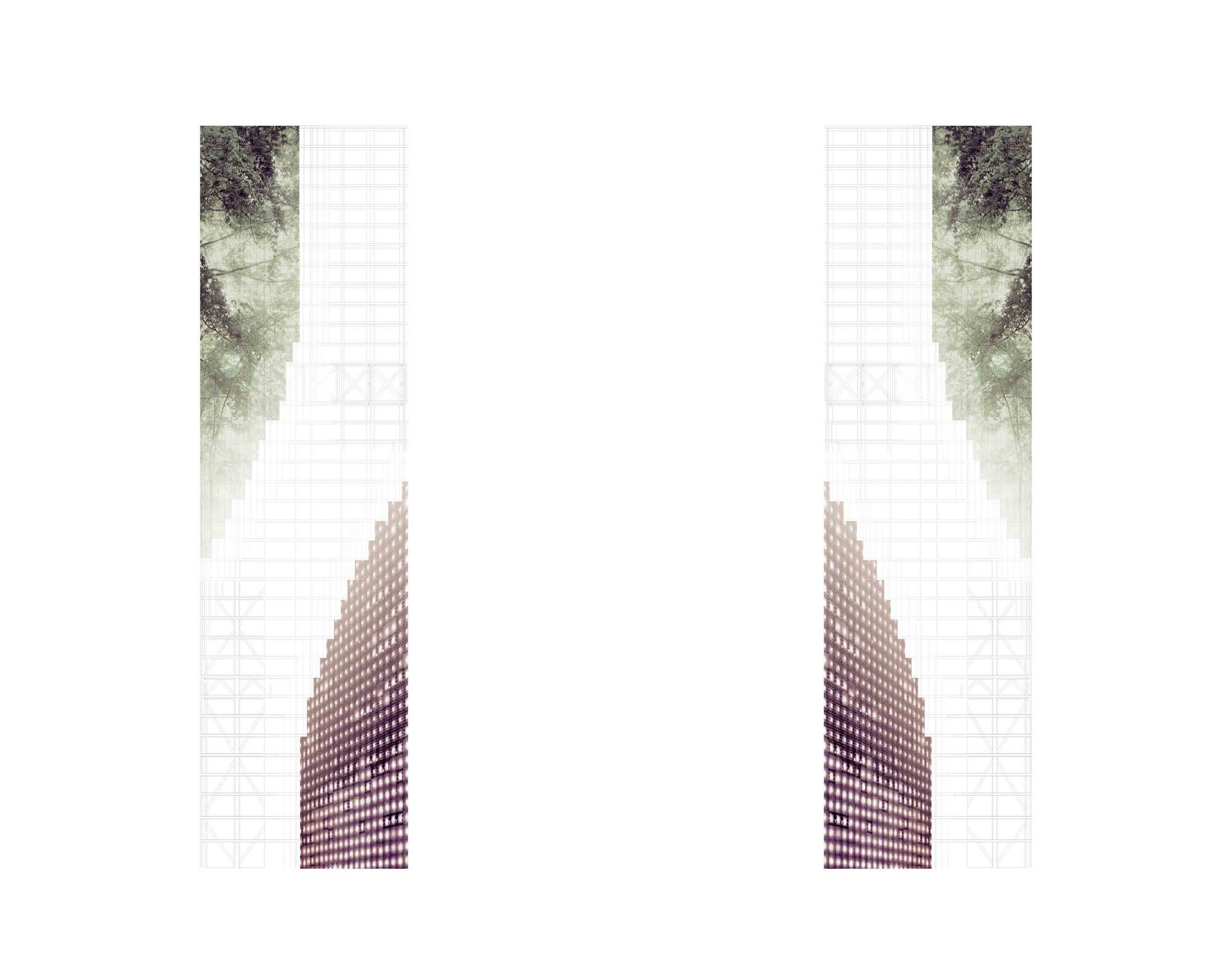
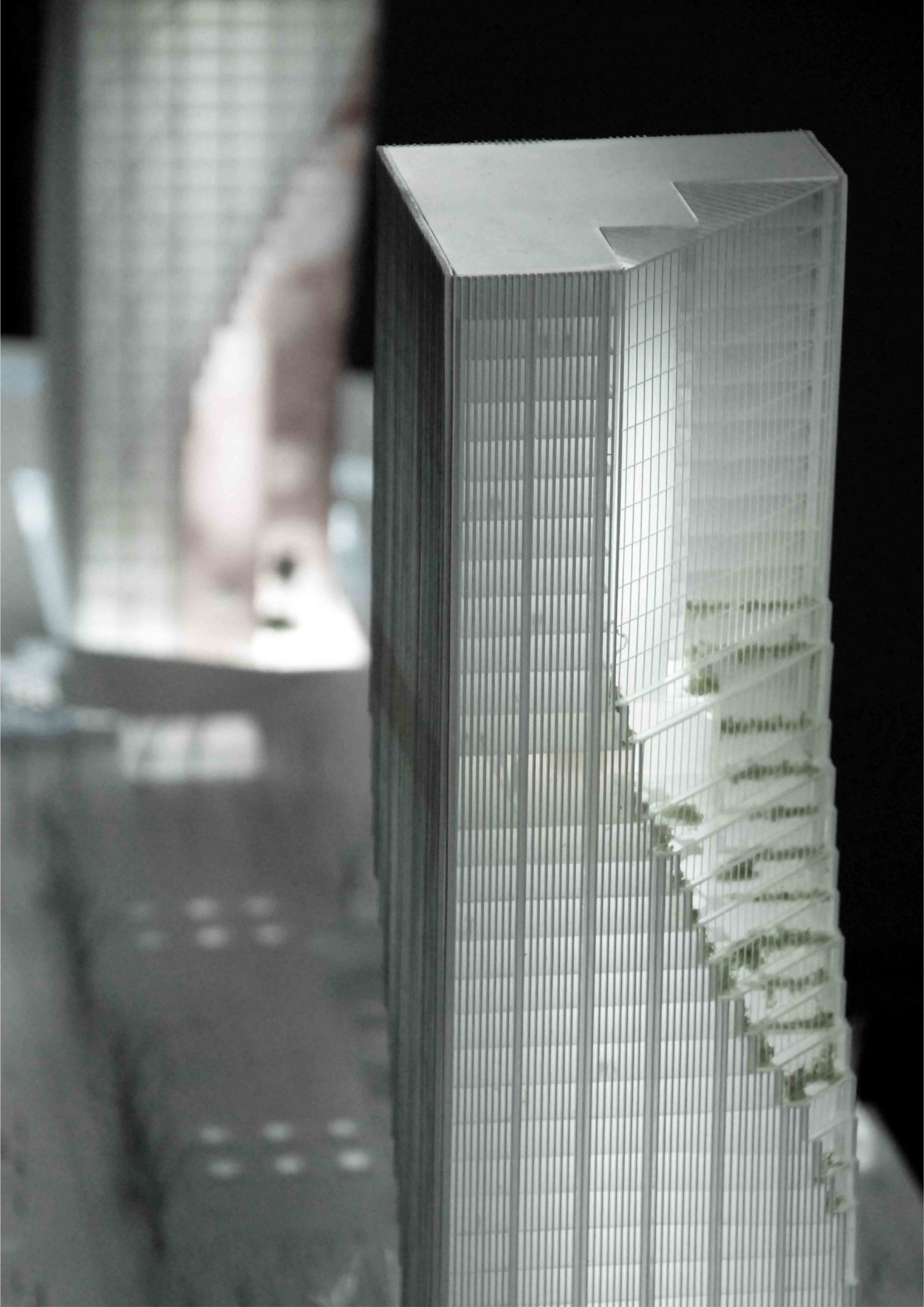
Sharing the same DNA – but positioned differently – the Twin Towers form a new icon for the Haxi Business Development Zone. The Towers creates a balanced relationship between empty and full, mass and void, private and public. Each tower creates a program specific dialogue with the site, with the north SoHo and Service Apartment tower atrium opening toward the Plaza, and the south Office Tower atrium oriented toward the Business District.
Working & Living
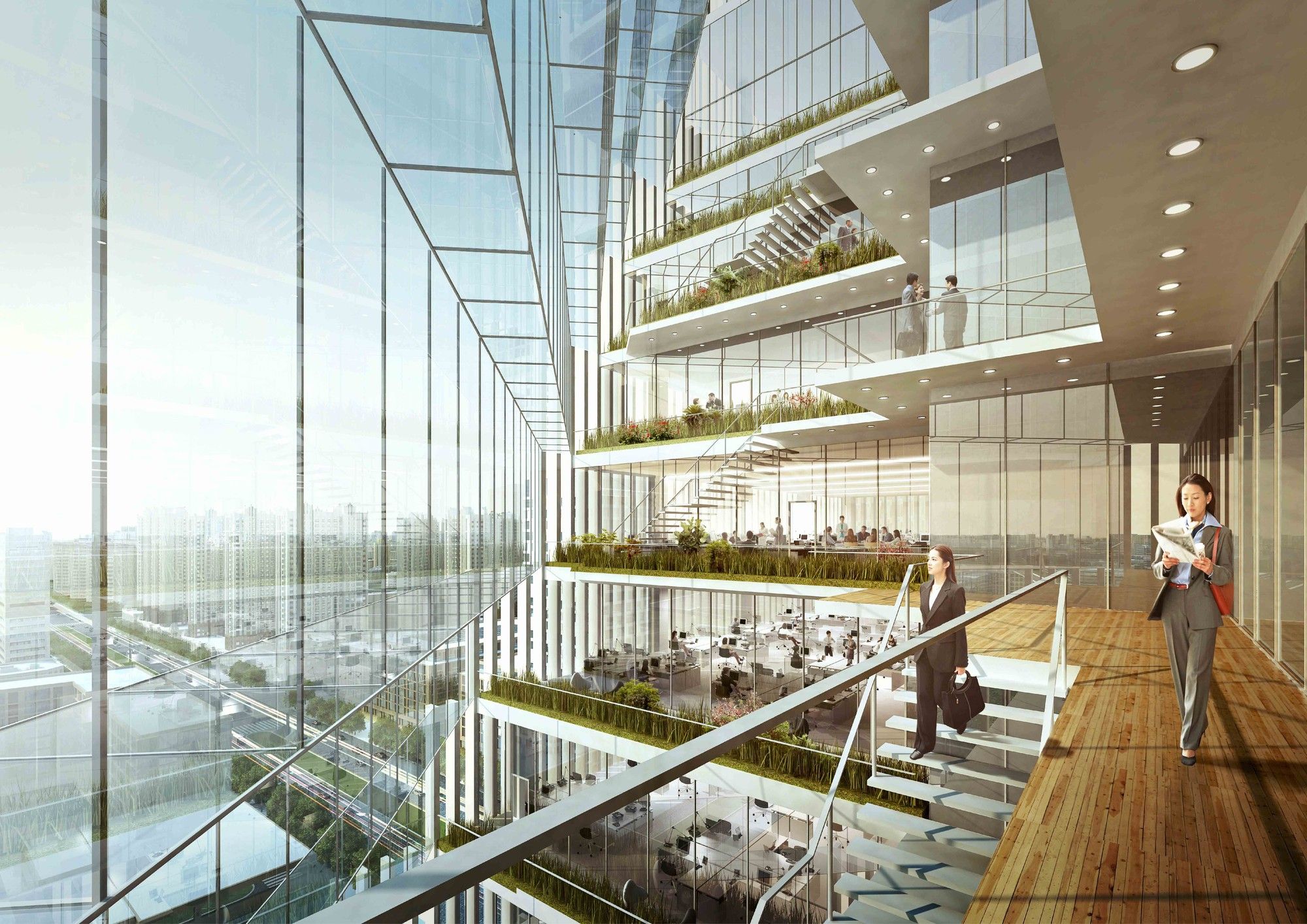
In response to Harbin’s extreme climate conditions, interior multi functional green terraces are injected into the upper atrium spaces promoting a high quality and healthy working environment for the office tower, and creating comfortable and climate controlled recreational terraces for the luxury residences.
Synergy
The towers perform as the Digital Gate framing the city and station. The integrated media facades frame and activate the adjacent plaza promoting communication and social interaction between travellers, commuters and residents. The suspended microclimate atriums create a new typology of indoor spaces that promotes human interactions.
Courtesy of spatial practice
Project Details
Location: Harbin, Haxi District, China
Program: Office, Residential, Retail, Parking and Landscape
Status: Design Proposal
Year: July, 2013
Client: Kaishengyuan Group
Architect: spatial practice
Partners in charge : Erik Amir, Dora Chi
Project Architect: Max Gerthel
Team: Calvin W. Liu, Cathal Peter Quinn, James Beadnall, Sarah GeXiaorui, Victor QuirosQuiros, Emily Wu
Local Architect: Harbin Institute of Technology
Structural Engineers: BuroHappold, Matthew Smith, Henry Li
Visualization: ADRI, German Glessner Group
Physical Model: Gereide Models Beijing