

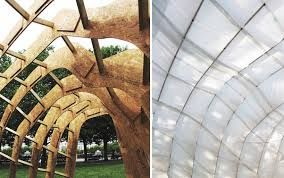
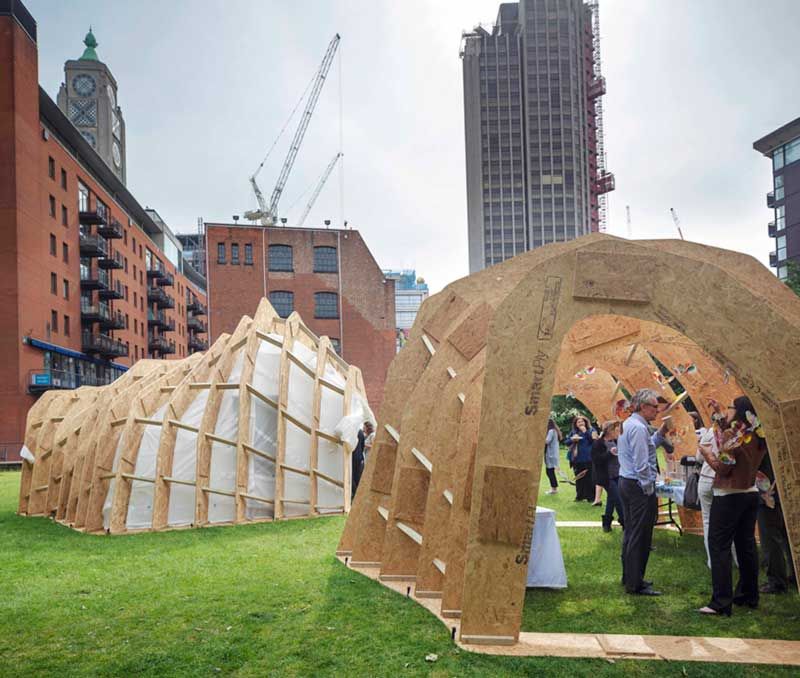
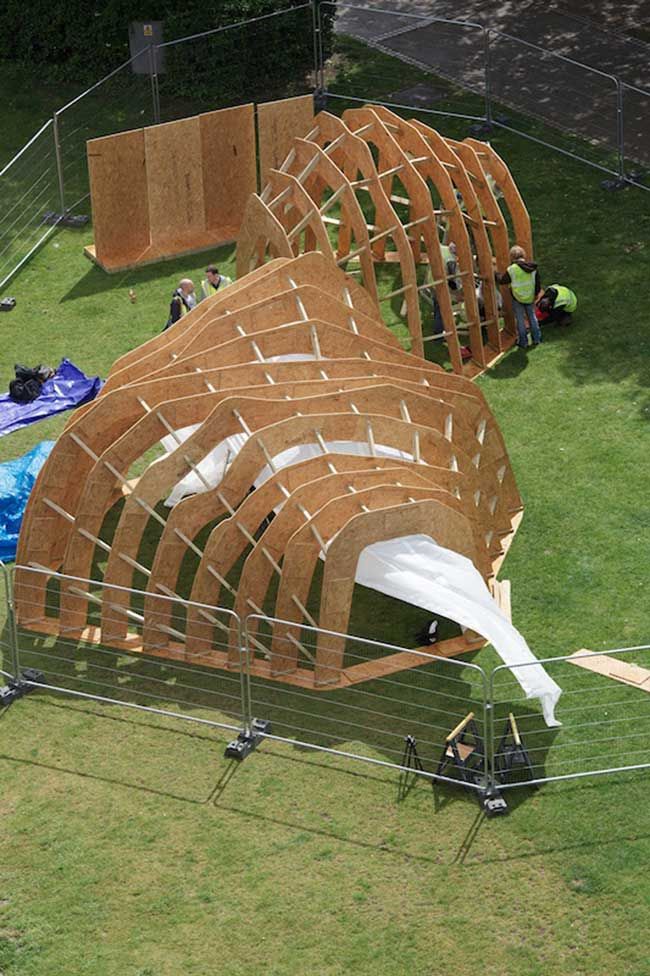
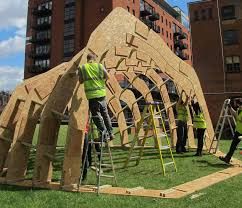
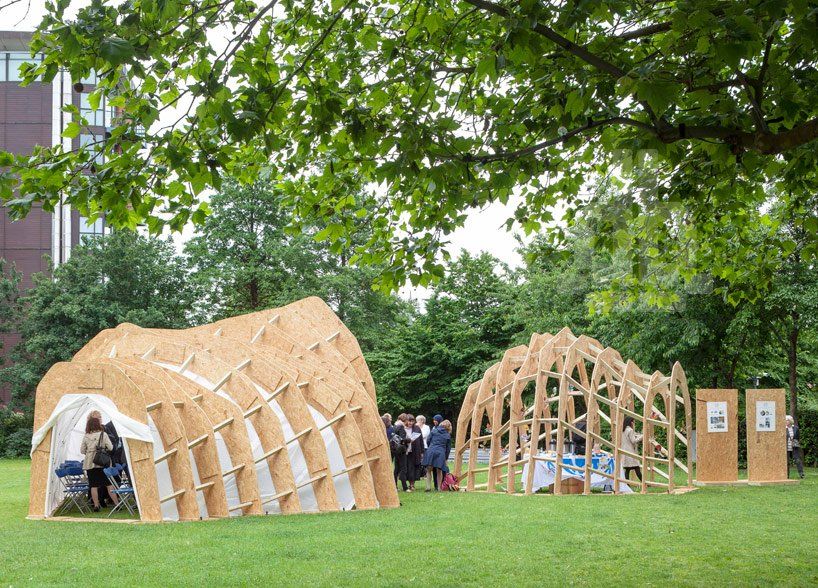
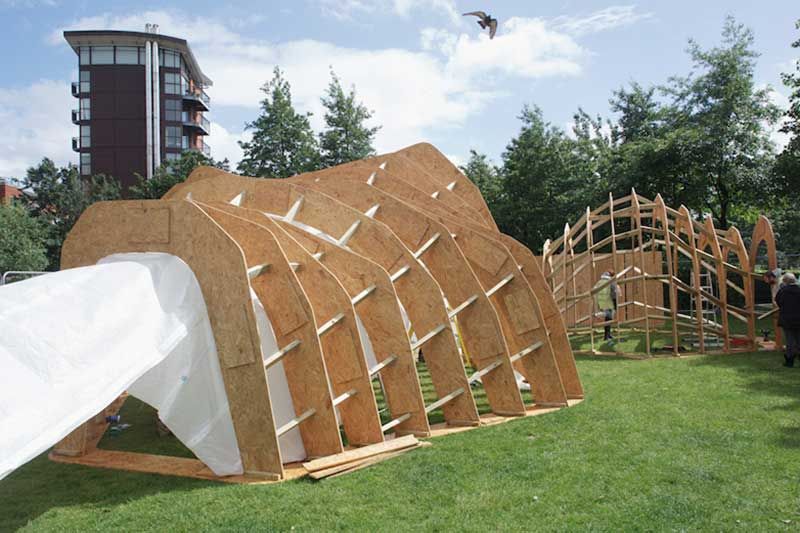
‘The embassy for refugees concept is an ongoing investigation into whether it’s possible to engage with social issues through design. Natasha Reid worked with children from a refugee charity to develop the design, the ‘embassy for refugees’
Courtesy of © Natasha Reid
By using practice as research and by crossing several disciplines, the experimental, embassy pavilions explore a range of interpretations of what sanctuary and refuge can mean.’ – Natasha Reid, designer of the ’embassy for refugees’
Courtesy of © Natasha Reid
This cross-disciplinary venture engages architecture, design, art through participation, engineering and human rights advocacy. As part of ‘refuge week,’ a UK wide venture, Natasha Reid proposed a structure that examines the meanings of sanctuary, refugee and escape.
Courtesy of © Natasha Reid
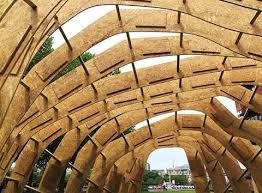
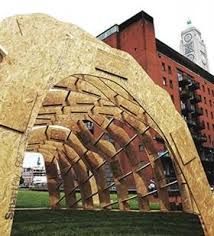
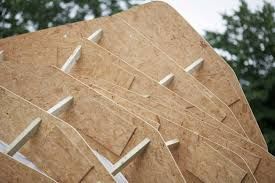
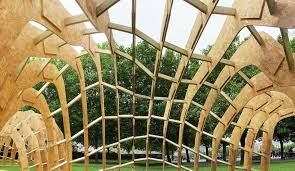
The UN refugee agency used the pavilions to launch a report on the subject. the project is also an ongoing collaboration and part of the traveling artwork ‘transient sanctuary’, the unexpected spaces will emerge across a variety of different sites in the UK. The structure takes its inspiration from caves and tree canopies and explores ideas of transparency, exposure, protection and permanence.
Courtesy of © Natasha Reid


Anastasia Andreieva is an accomplished Architectural Projects Editor at Arch2O, bringing a unique blend of linguistic expertise and design enthusiasm to the team. Born and raised in Ukraine, she holds a Master’s degree in Languages from Taras Shevchenko National University of Kyiv. Her deep passion for architecture and visual storytelling led her to transition from translation and editorial roles into the world of design media. With a keen eye for conceptual clarity and narrative structure, Anastasia curates and presents global architectural projects with precision and flair. She is particularly drawn to parametric and digital design, cultural context, and emerging voices in architecture. When I’m not analyzing the latest architectural trends, you’ll probably find me searching for hidden gems in cityscapes or appreciating the beauty of well-crafted spaces. After all, great design—like great connections—can be found in the most unexpected places. Speaking of connections, because architecture isn’t the only thing that brings people together.