

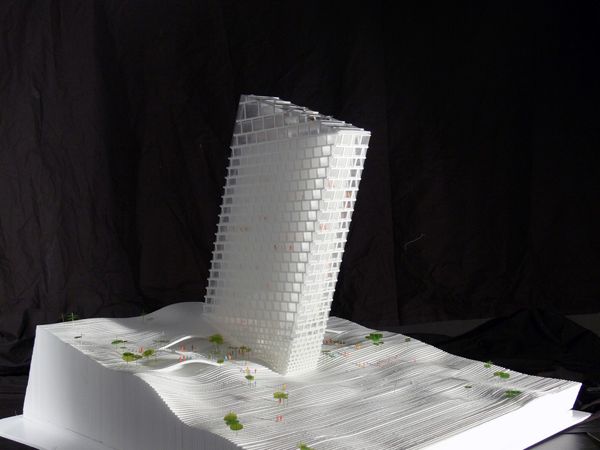
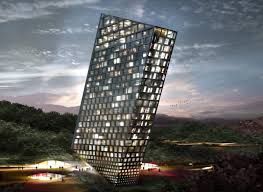
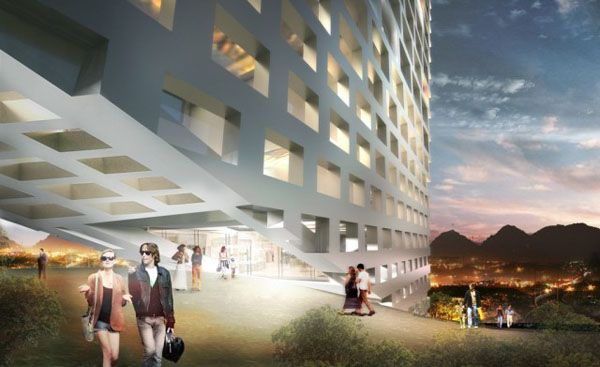
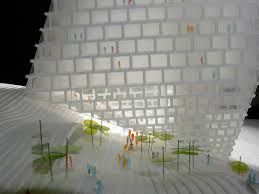
The BIG team revealed a new interesting design for TLT hotel, a project that aims to give a new face to the city of Guiyang in China. The name of the project is inspired from its form, with the building leaning forward as a result of its location on a slope, minimizing the visual impact it creates.
Courtesy of © BIG
The generic structure of the hotel redefines itself through its sculptural interpretation. The slope of the building, creating an instant landmark, leans toward the center of Huaxi is based on a functional logic: the objective is to minimize the impact on the hotel view from the central lake of the mountain, while improving its own visibility. While probably no minimizing its visibility per say, the hotel does seem to flow with the mountains rather than stand in opposition. The design seeks to incorporates interventions in the landscape to further this aim.
Courtesy of © BIG
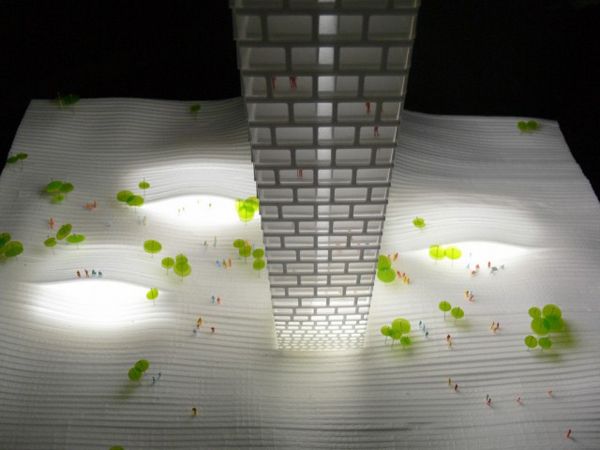
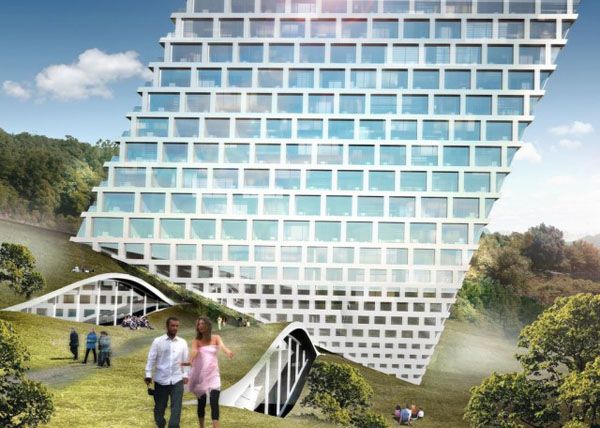
Soft openings are created in the slope, facilitating commercial space and parking. The bottom sixth of the facade blends nature and architecture: the landscape enters the building, underneath it, and offers the possibility to cross on foot.

Courtesy of © BIG
Among several international architects, BIG help to redefine the Huaxi district, the educational and cultural center of the city. In proposing a generic card from the hotel in one of the mountainsides of Huaxi, the architects envisioned a new and unique reference point, which attracts visitors to an area already known for its tourist attraction.
Courtesy of © BIG

Ibrahim Abdelhady is an architect, academic, and media entrepreneur with over two decades of experience in architecture and digital publishing. He is the Founder and CEO of Arch2O.com, a leading platform in architectural media, renowned for showcasing innovative projects, student work, and critical discourse in design. Holding dual PhDs in Architecture, Dr. Abdelhady combines academic rigor with industry insight, shaping both future architects and architectural thought. He actively teaches, conducts research, and contributes to the global architecture community through his writing, lectures, and media ventures. His work bridges the gap between practice and academia, pushing the boundaries of how architecture is communicated in the digital age.