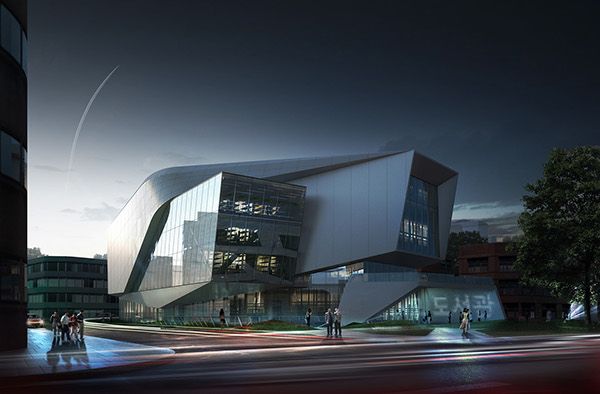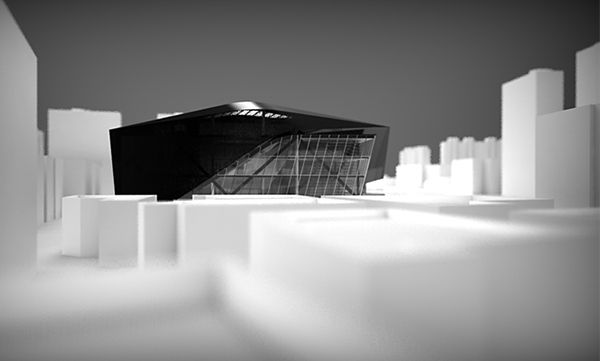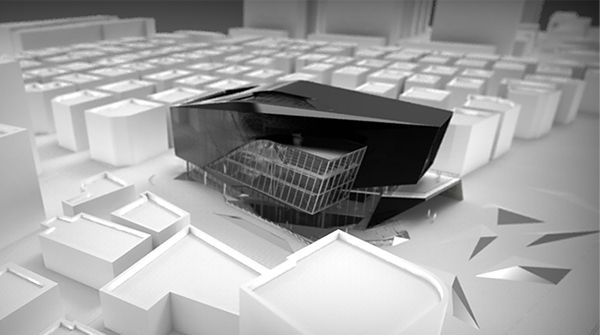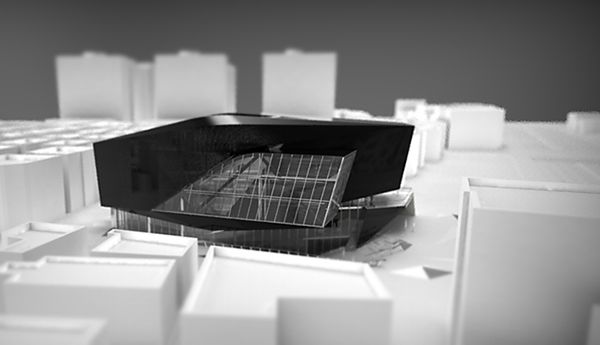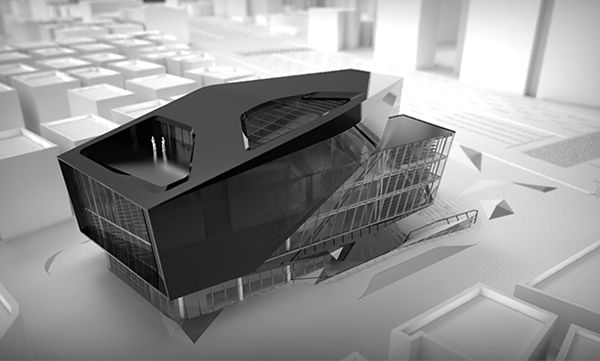


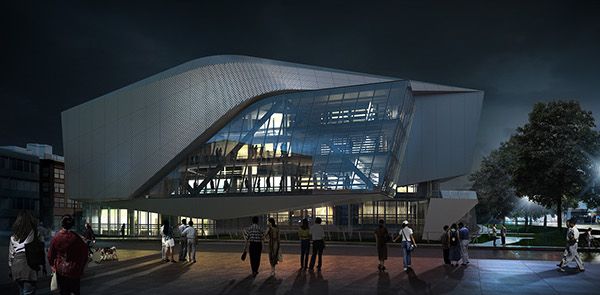
Few months ago, we published the finalists of the international architecture competition to design the Daegu Gosan Public Library, Korea. Following outstanding library design entry was submitted to us as a collaboration between Onebynine , Jason Easter and Frisly Colop. The entry did not make it among the competition finalists, but we are very happy to publish it here.
Courtesy of Łukasz Wawrzeńczyk, Frisly Colop Morales, Jason Easter & Adrian Yau
Project Description
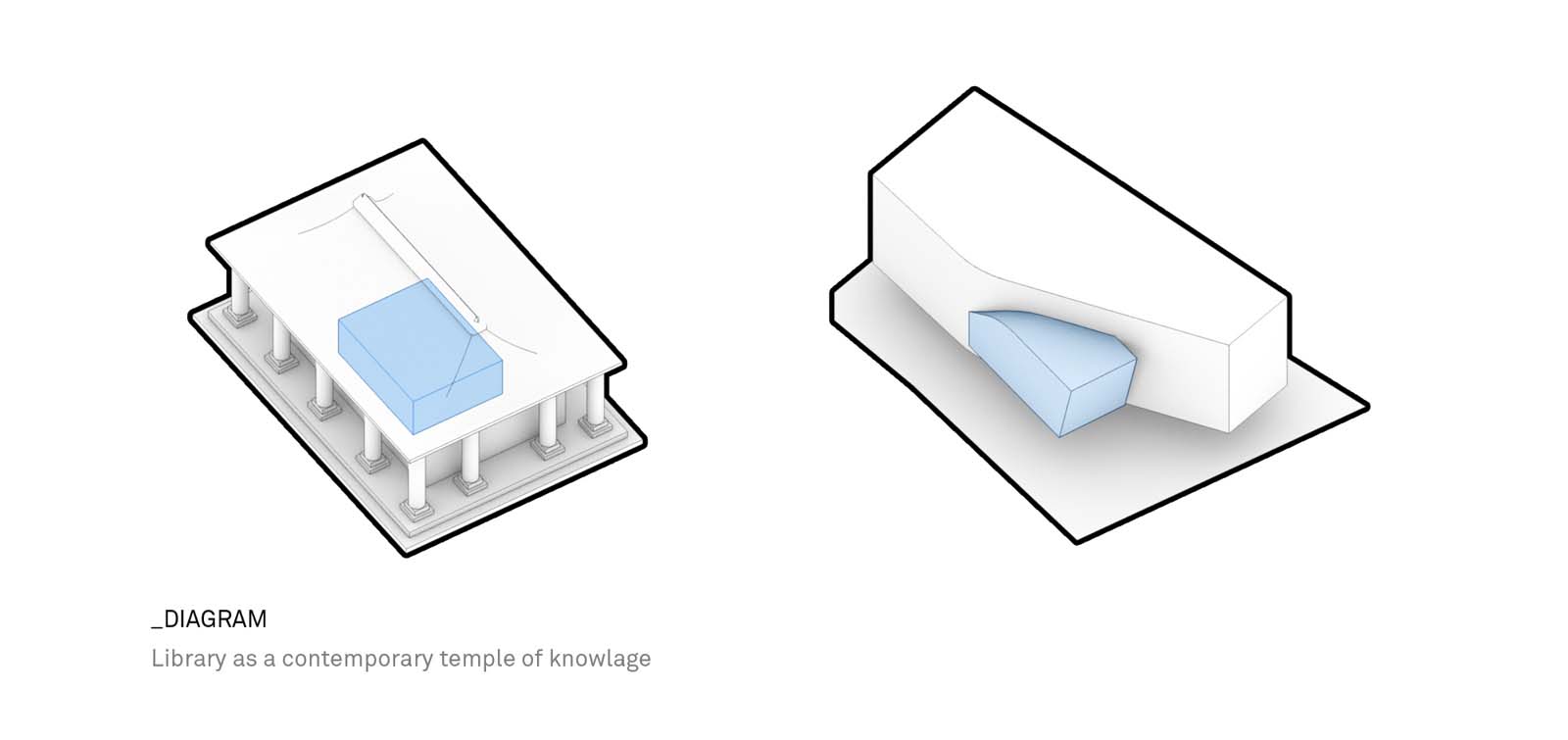
The cultural importance of the public library lies within the inherent power of the knowledge which it holds. This knowledge can be a significant life-altering force for the patrons of the library and furthermore within the larger community which it serves. The methods by which this information is contained and transmitted are continually evolving, yet the correlation between access to such information and issues such as upward social mobility and increased life opportunity are evident. The Daegu Gosan Public Library, like many libraries, stands as the physical manifestation of the concept of shared knowledge. As such, it is temple of knowledge, honoring the book as the foundation media of information communication, and making way for the new learning trends that result from the current digital movement. The library provides opportunities for intellectual trade and growth both analog and digital within the Suseong-gu community. Furthermore, it celebrates Daegu as a place rich with culture and an evolving demographic that places high value on the acquisition of knowledge.
Courtesy of Łukasz Wawrzeńczyk, Frisly Colop Morales, Jason Easter & Adrian Yau
Temple of knowledge
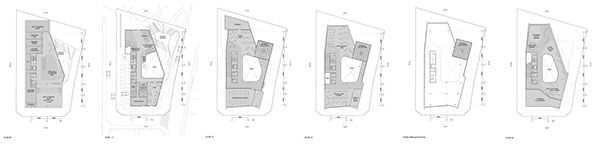
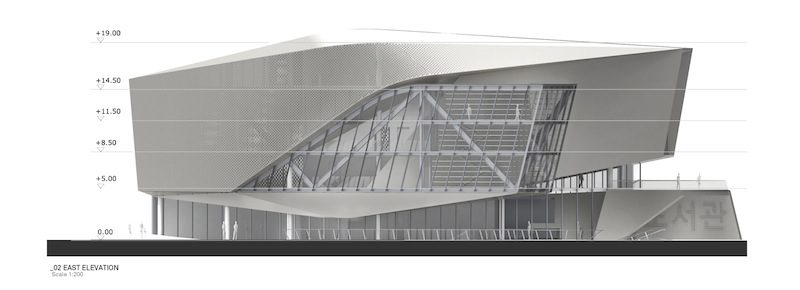
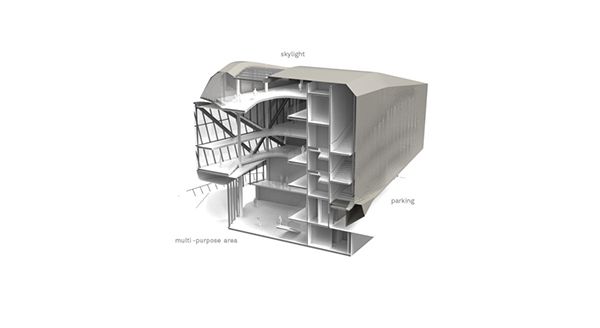
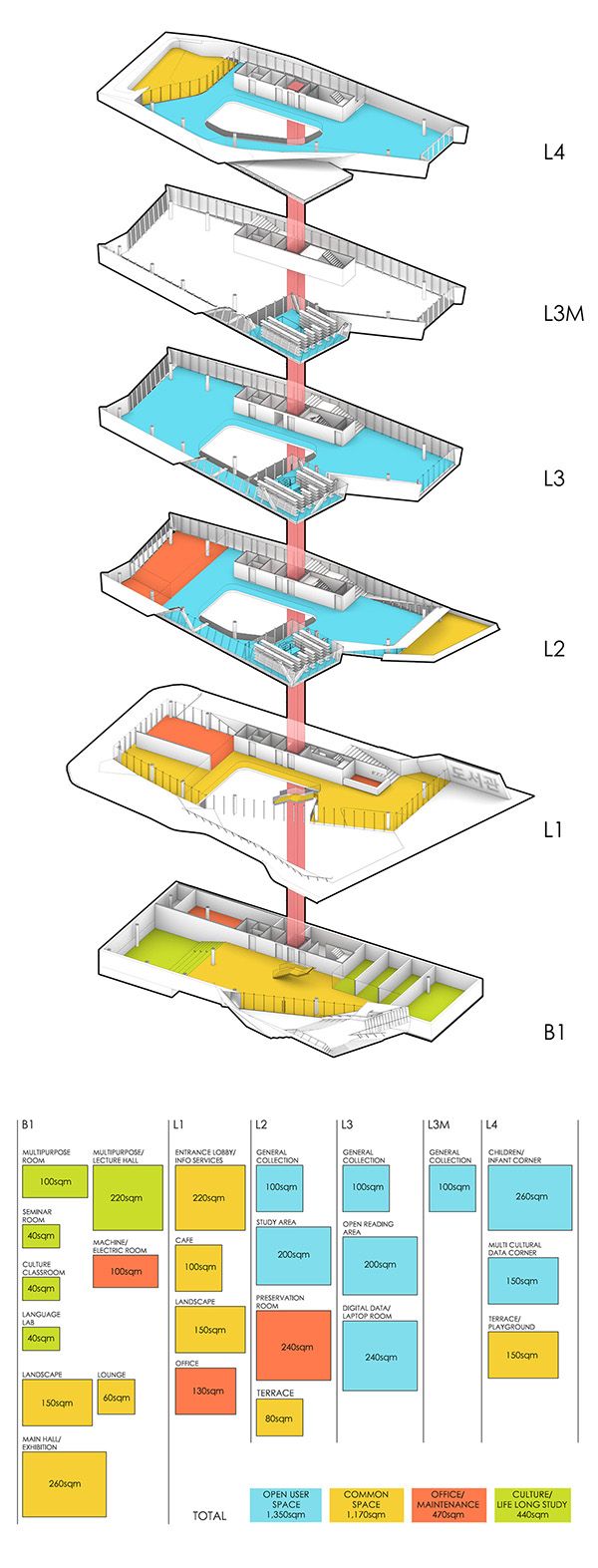
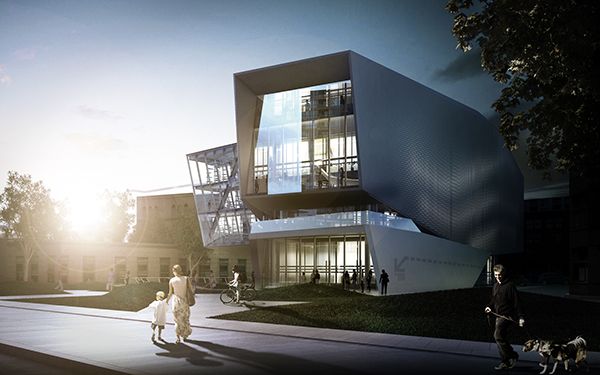
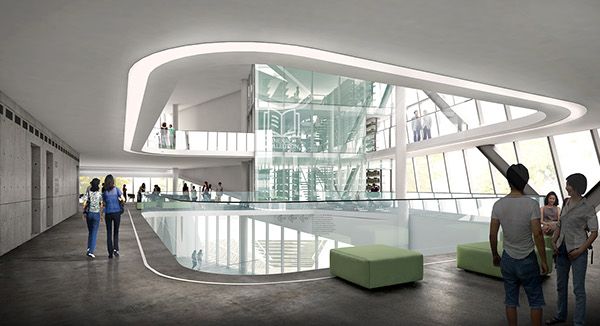
Similar to the temples of the varied religions, the Gosan Library celebrates a particular belief system, a particular way life, the belief in the power and importance of knowledge. The library offers the opportunity for intellectual and cultural exchange in ways both traditional as well as those less often associated with the library typology. The book stacks are consolidated into a single mass. The clear glass object creates an activated tribute to printed literature as the foundation of information transmission. In honoring the written and bound knowledge in this way, a more open floor plan is created for related program uses. The digital data space, reading room, children’s area and other programs flow off of a large atrium space providing a more flexible environment for exchange. These spaces are hence able to able to adapt to the evolving digital media to maintain a quality learning environment.
Courtesy of Łukasz Wawrzeńczyk, Frisly Colop Morales, Jason Easter & Adrian Yau
Cultural Heart
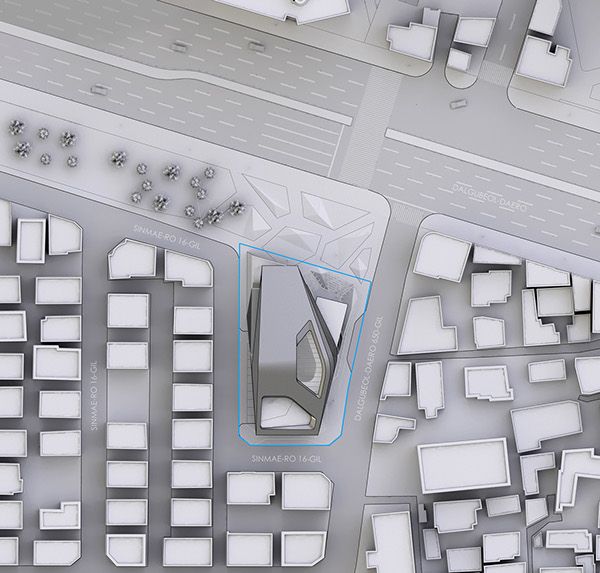
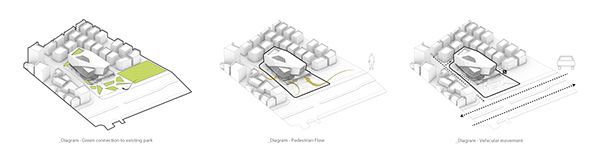
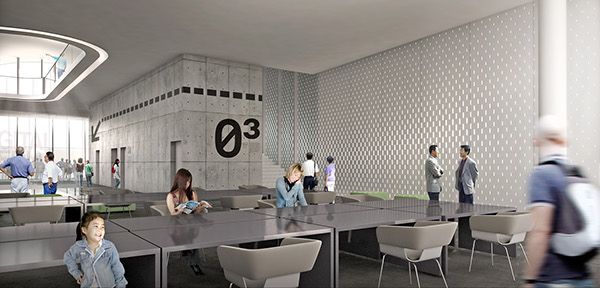
The Gosan Library is also the cultural hub with the area. Its proximity to the local subway station and a large public park make it a prime location for cultural exchange. Both passive and formal manners of interaction are facilitated by this public space. To reinforce this the northeast corner of the site pulls the landscape from the park under the building, extending the public space into the site. The resulting plaza creates a partially covered space which will be utilized and activated by the local communities. This sunken garden provides valuable natural daylight to the building functions located below grade. The life-long learning center and multi-purpose spaces surround this plaza providing easy access for the community. Additional terraces at the second level reading area and the roof connect the building back to the park and existing context.
Courtesy of Łukasz Wawrzeńczyk, Frisly Colop Morales, Jason Easter & Adrian Yau
Credits and Info:
Project: Daegu Gosan Public Library
Architects: Łukasz Wawrzeńczyk, Frisly Colop Morales, Jason Easter, Adrian Yau
Location: Daegu, Korea
Area: 3200 mk
Year: 2012