

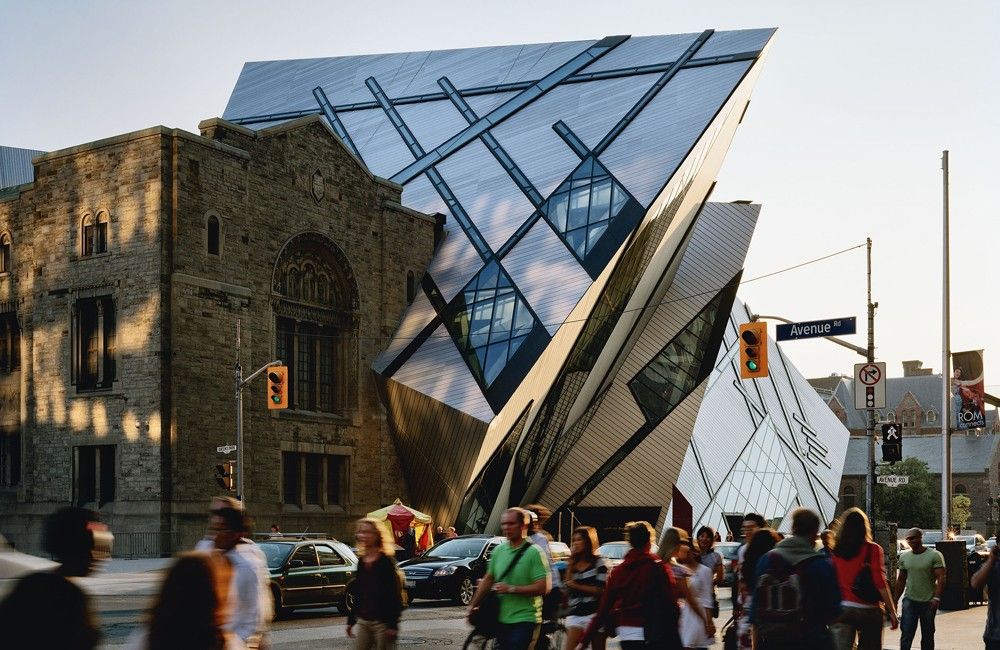
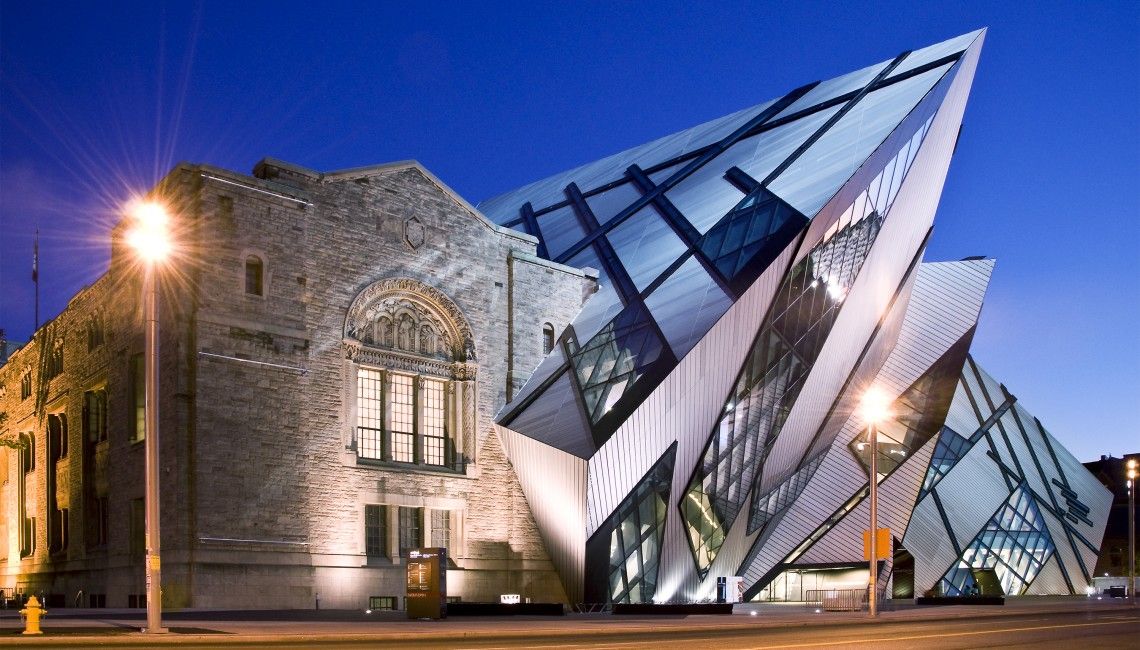
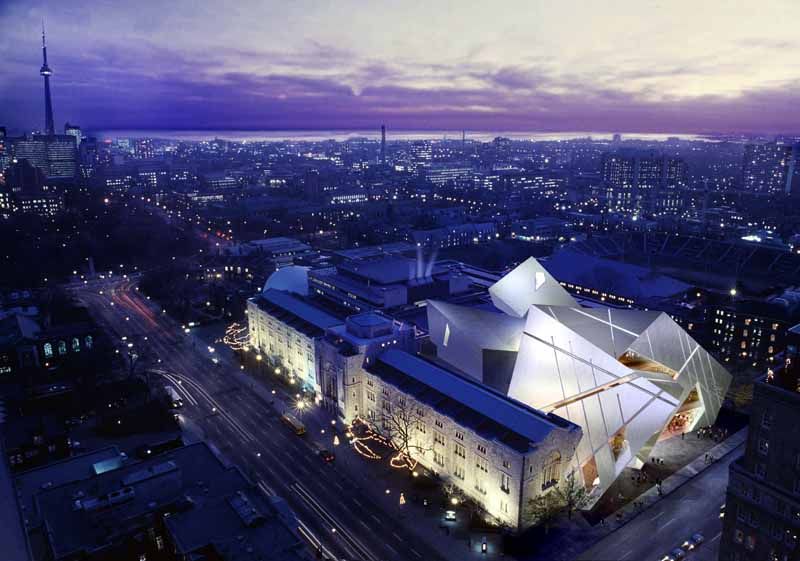
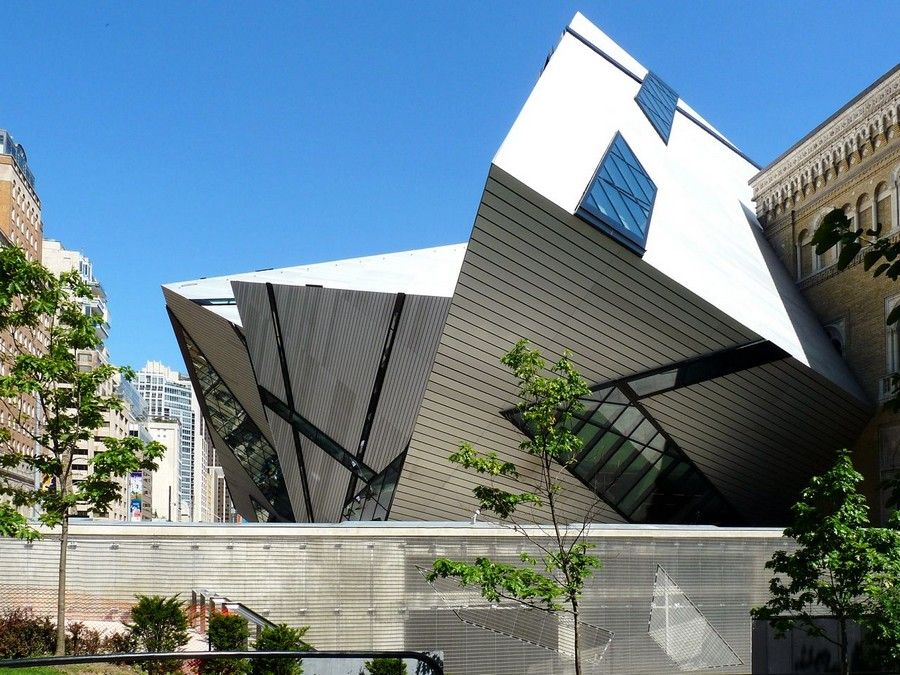
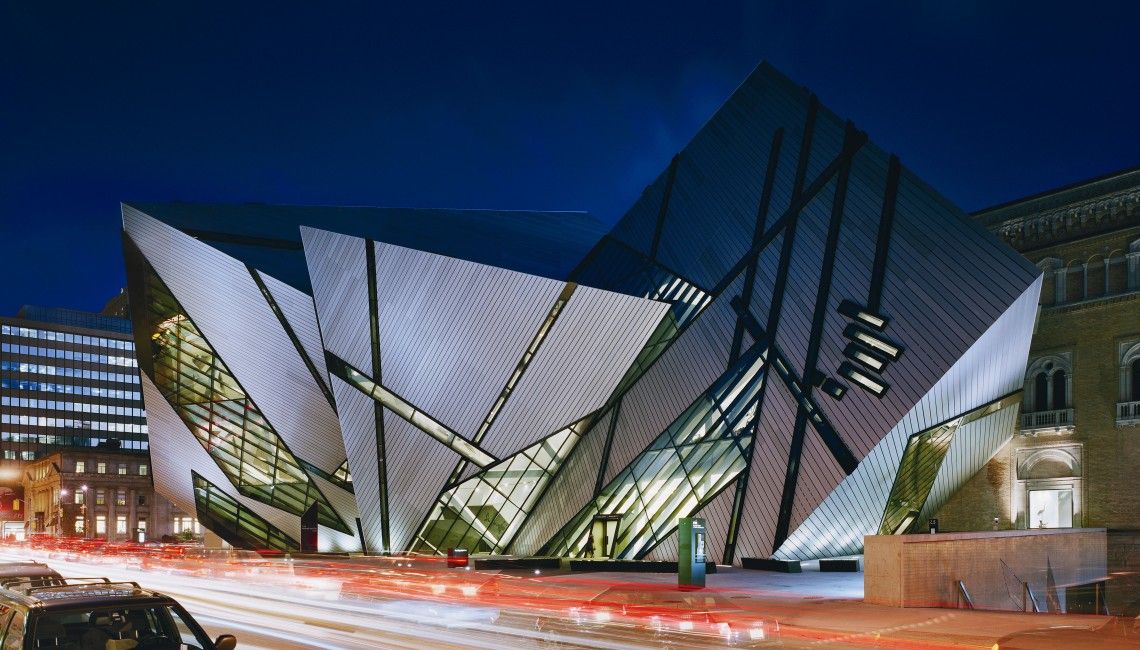
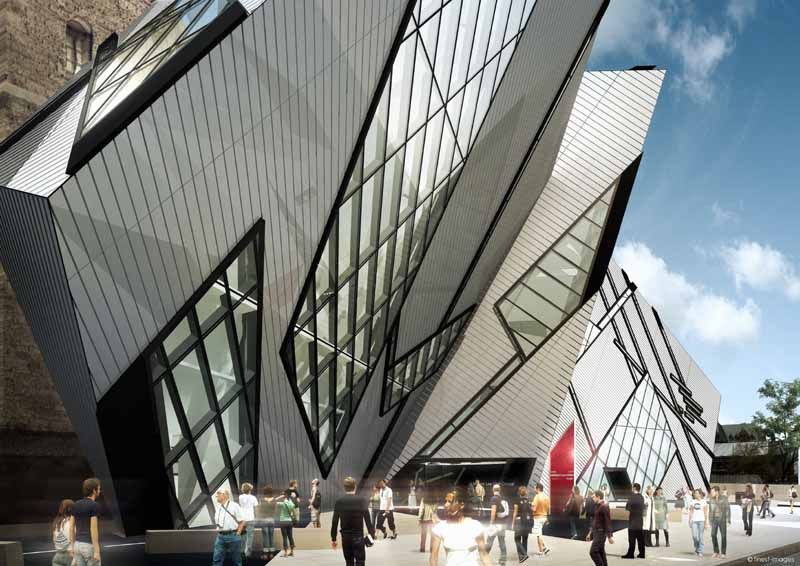
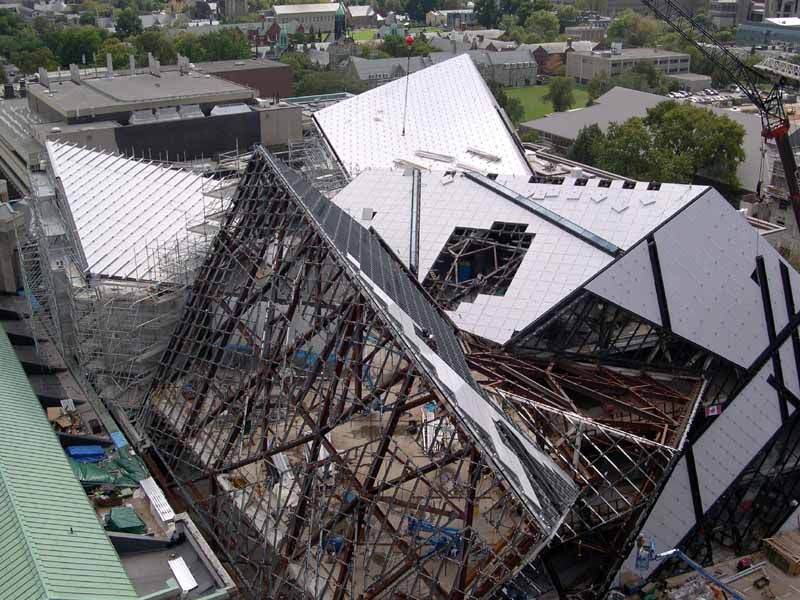
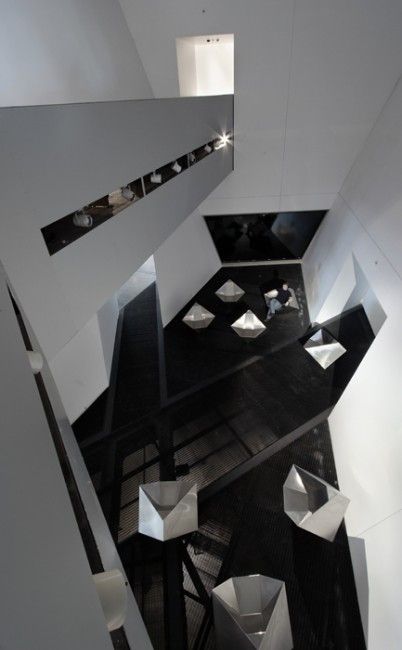
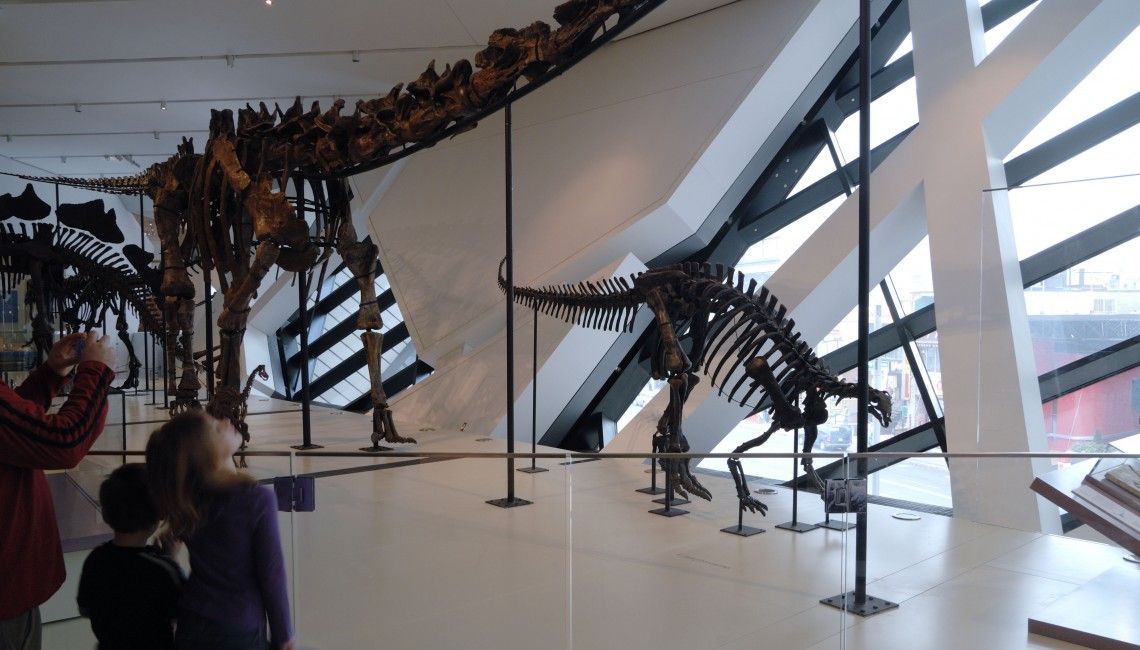
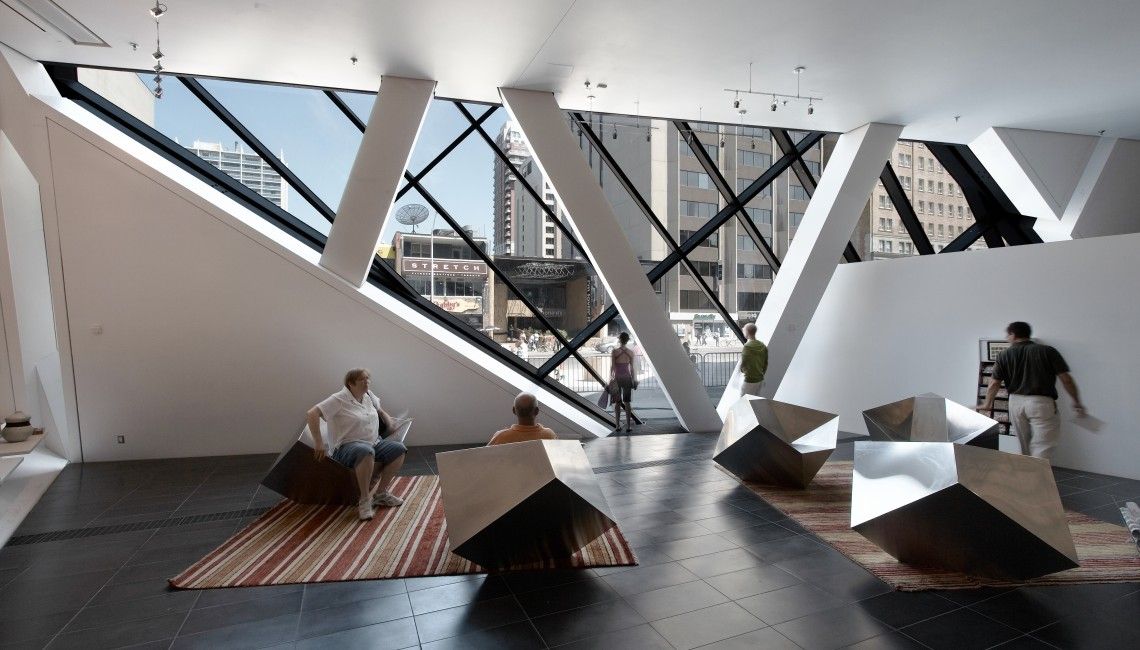
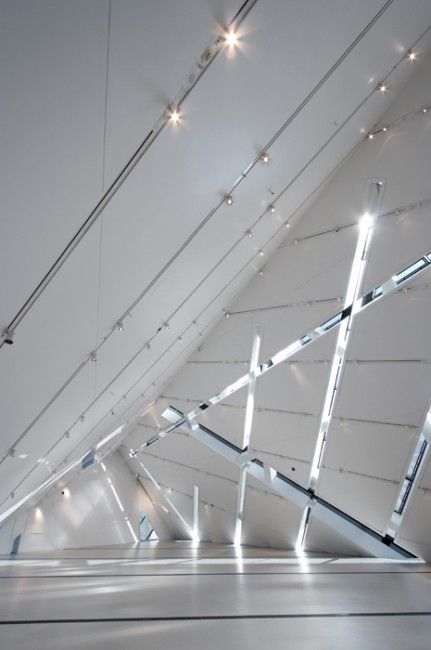
Royal Ontario Museum, History is a never ending cycle of events, and as we move forward creating more history and expanding our knowledge, we discover more artifacts and conditions that should be documented and showcased in galleries and exhibitions. Instead of constructing new museums in which to hold these conditions, the Royal Ontario Museum in Toronto, Canada decided to expand to better accommodate more history within its walls. Designed by Studio Daniel Libeskind, the extension is known as the Michael Lee-Chin Crystal and was officially opened in June of 2007. With this extension the museum gained 100,000 square feet of new exhibition space, a new entrance and lobby, a street level retail shop, and three new restaurants. Studio Daniel Libeskind also renovated ten galleries in the existing historical building as part of this project. The Michael Lee-Chin Crystal derives its name from the building’s five intersecting volumes, which are reminiscent of crystals. Two of these crystals dedicated for gallery space intersect to create the void known as the Spirit House. The Spirit House consists of a large atrium rising from below ground level to the fourth floor and is broken up by bridges crossing it at various levels. This space is mainly intended to be a space of reflections for the visitors and providing a break from the exhibitions.

photography by © Royal Ontario museum
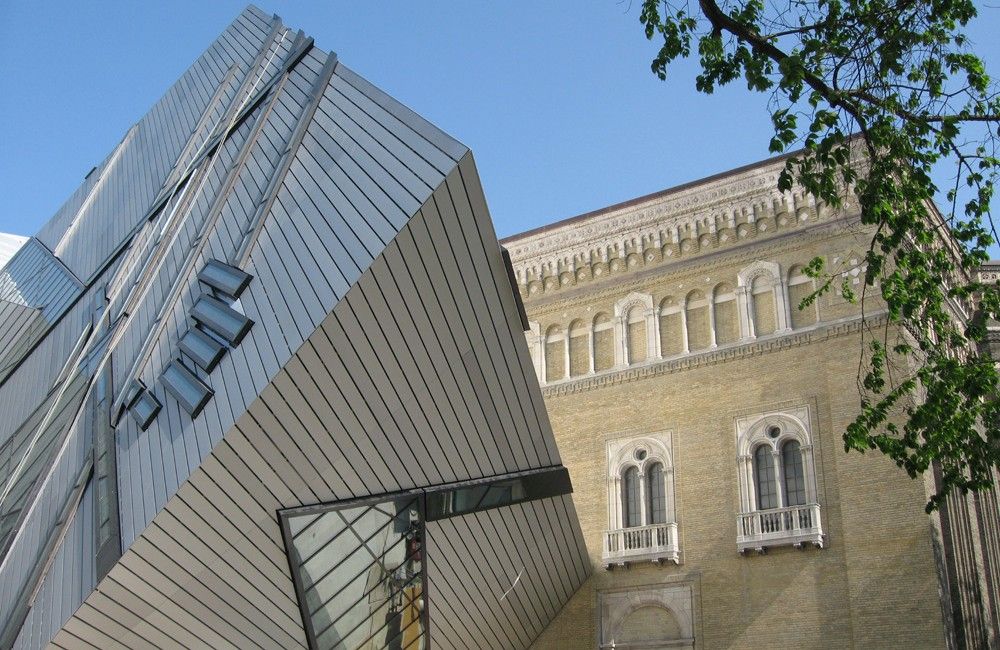
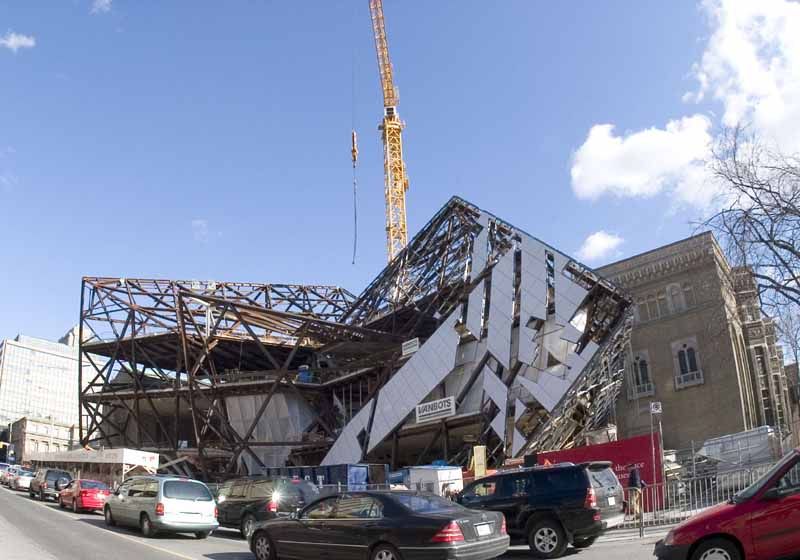
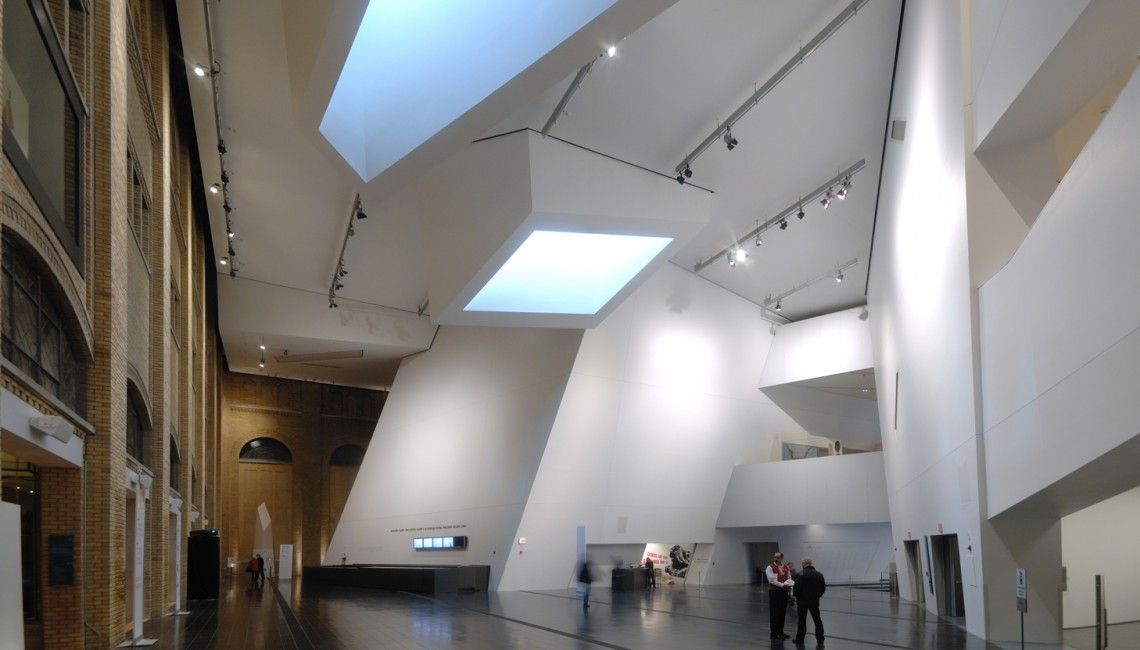
One of the crystals contains what is known as the Stair of Wonders which is dedicated to vertical circulation but also features exhibition vitrines at the landings, and the fifth crystal houses a restaurant. The building was made using a steel structure with aluminum cladding and glass windows. Although the exterior is chaotic, the intersection of spaces made by the crystal like form creates a variety of atriums at different levels of the museum offering a wide variety of unique views into galleries and to the progressing world outside. The new addition for the Royal Ontario Museum appears to dominate the historic existing building. Studio Daniel Libeskind obviously had no problem forcing their new modern architecture onto the traditional brick building of the original museum, doing nothing to create a more graceful transition from one form to another. Even though it appears as though not much attention and consideration was paid in regards to the existing structure, one large atrium, known as the Gloria Hyacinth Chen Court, which separates the new construction from the heritage building, provides a nearly complete view of the restored heritage façade.
photography by © Royal Ontario museum




Kristin Hoover is an editor at Arch2O and a proud graduate of Virginia Tech. Since joining in July 2014, she has authored over 200 insightful articles covering everything from adaptive reuse and cultural centers to eco-buildings and urban infrastructure . With a passion for architectural storytelling, Kristin skillfully curates and crafts compelling narratives that bring design innovation to life. Her editorial work reflects a broad yet finely honed interest in how architecture intersects with society, technology, and the environment—making her a key voice shaping Arch2O’s explorations of contemporary built form.