

Architects or not, everyone is prone to insomnia, and the causes are many. Insomnia could be initiated by psychological symptoms, like stress or depression. It could be triggered by certain foods or allergies, unhealthy lifestyle, or perhaps a flawed bedroom design. Yes, the design of your bedroom could affect the quality of your sleep. If you suffer from insomnia or would like to avoid it, then follow our tips here on how to design a bedroom that can help you sleep tight at night.
1. Use pastel colors for your bedroom walls instead of full hues. Their calm and soothing effect could help you sleep better.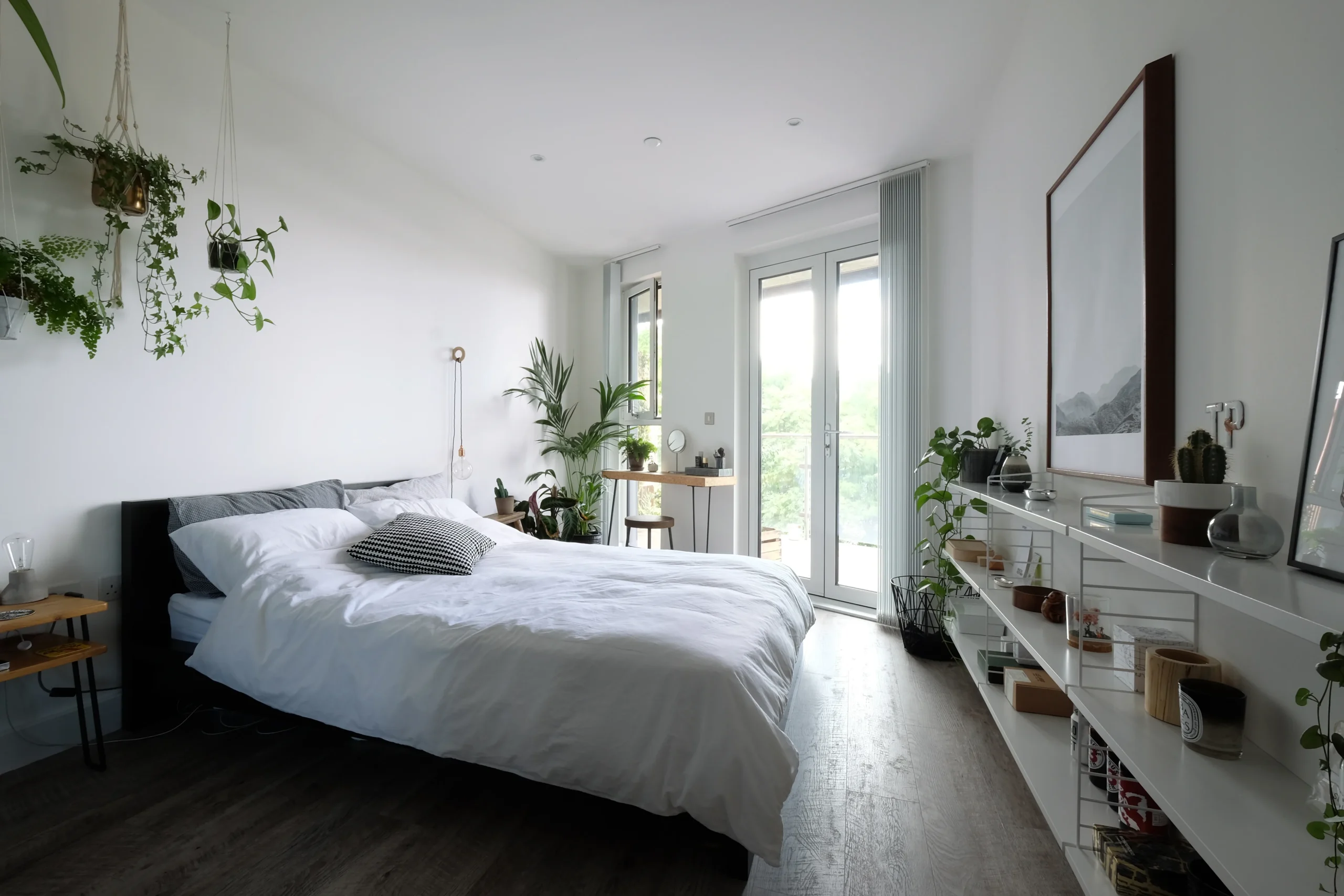
2. Opt for cool colors, like blue, green, and violet, rather than warm colors, like red, orange, and yellow, since they possibly decrease both heart rates and blood pressure, which could lead you to sleep.
3. Use fluffy fabric for carpets and furniture upholstery to muffle the noise while enjoying the soft texture and the fashionable look.
4. Integrate nature into your bedroom to benefit from its relaxing and purifying effect. You can do so by hanging painting of natural landscape or just use the real thing. Our article on indoor plants could help you with that. Be careful with plants’ “evening complex” though.
5. Use furniture crafted from natural materials, like wood, to attain a similarly freshening effect.
6. Plants with sleep-inducing aromas, like lavender, bergamot, or chamomile, would give you more than just a pleasant sight.
7. Cover your windows with blinds and dark fabric curtains to shut out the street light and noise.
8. Arrange the furniture in your bedroom so as to achieve symmetry. This arrangement could help you sleep better, experts claim.
9. A couple of little wooden cabinets, perhaps with drawers, would always look better than all the clutter that is, subconsciously, causing your depression.
10. Replace your compact bed with a larger one that would let you shift around more freely without hitting the side wall or worse, fall off the bed.
11. Choose the right height for your bed. When you sit on it, your feet should be flat on the floor, and your knees form a straight line with your hips.
12. Feng Shui experts recommend that the bed’s headboard should be thick and solid. It should not be against the same wall as the door, and it shouldn’t share a wall with the toilet or kitchen.
13. They also advise not to hang chandeliers or anything similar above the bed. Furthermore, do not place the bed under a beam or a sloped ceiling unless you would like to trigger claustrophobic symptoms.
14. Use low-wattage directional lighting with warm shades of yellow or orange instead of intensely blazing and blue spectrum light.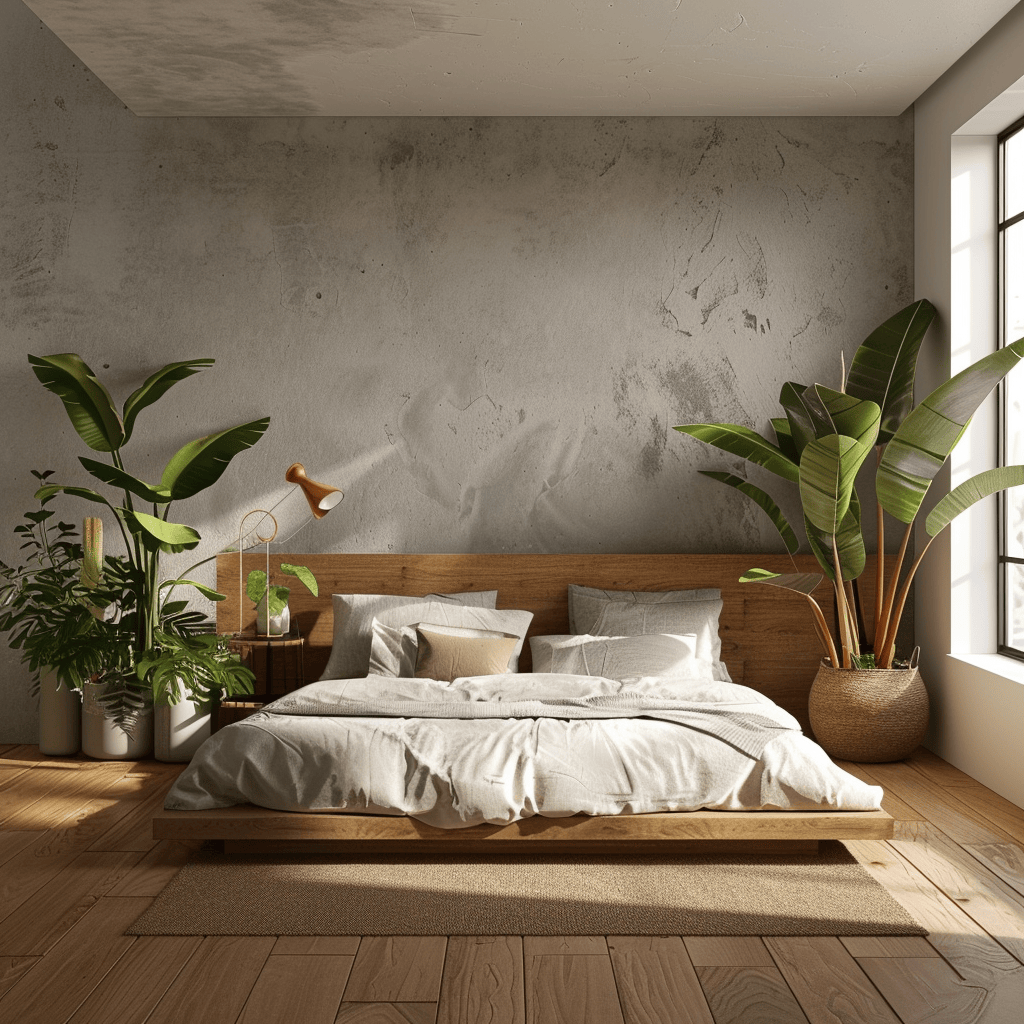
15. Keep digital gadgets out of your bedroom. Replace digital alarm with a traditional one, and replace the TV cabinet, perhaps, with a bookcase. The light from these appliances could keep you awake all night.

Yosra is an architect, writer, and teacher. She is always into learning something new. Her life motto is: "A jack of all trades is a master of none, but oftentimes better than a master of one.” One day she will travel the world and visit its architectural wonders. In the meanwhile, she contends herself with reading and writing about them.