

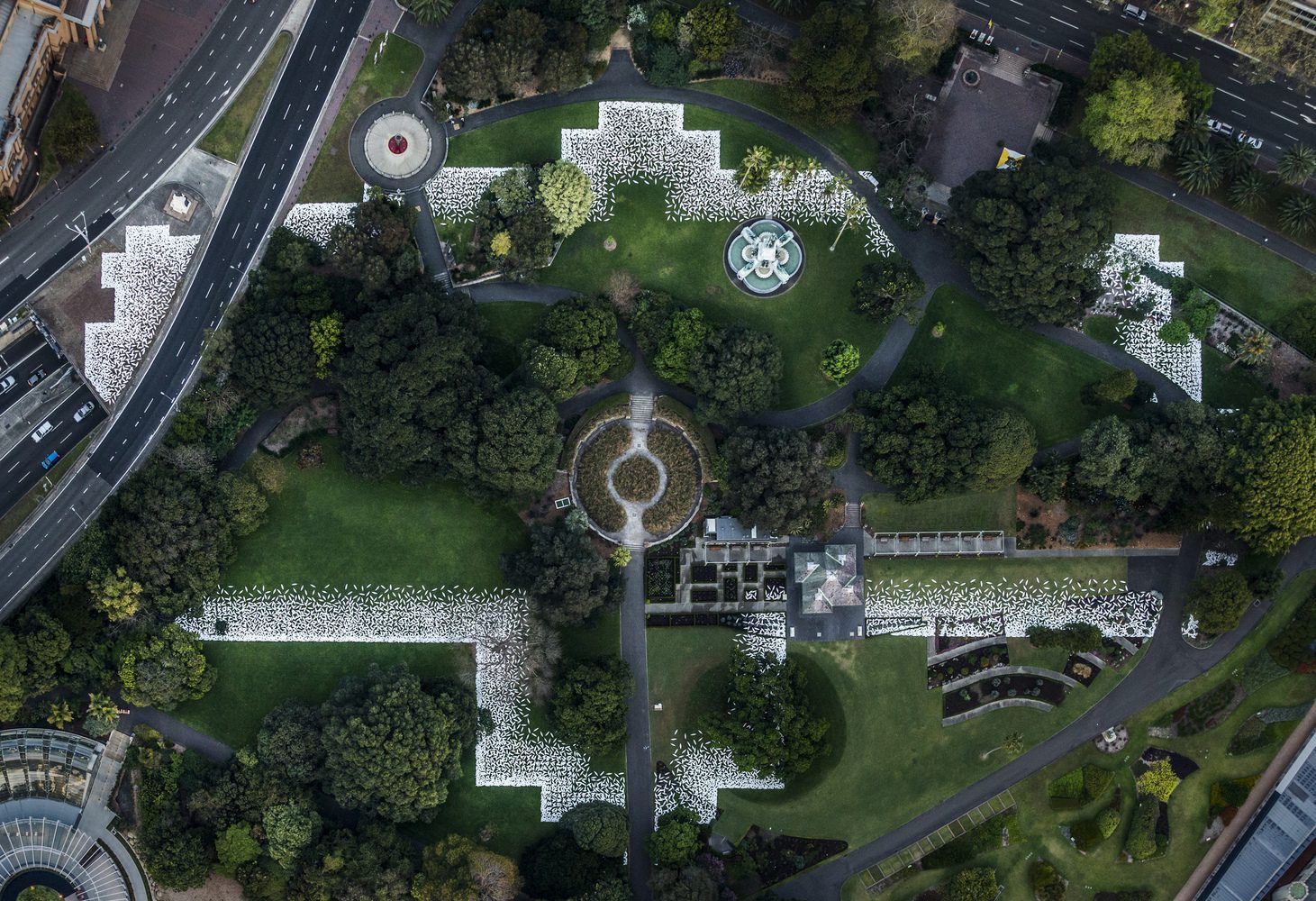
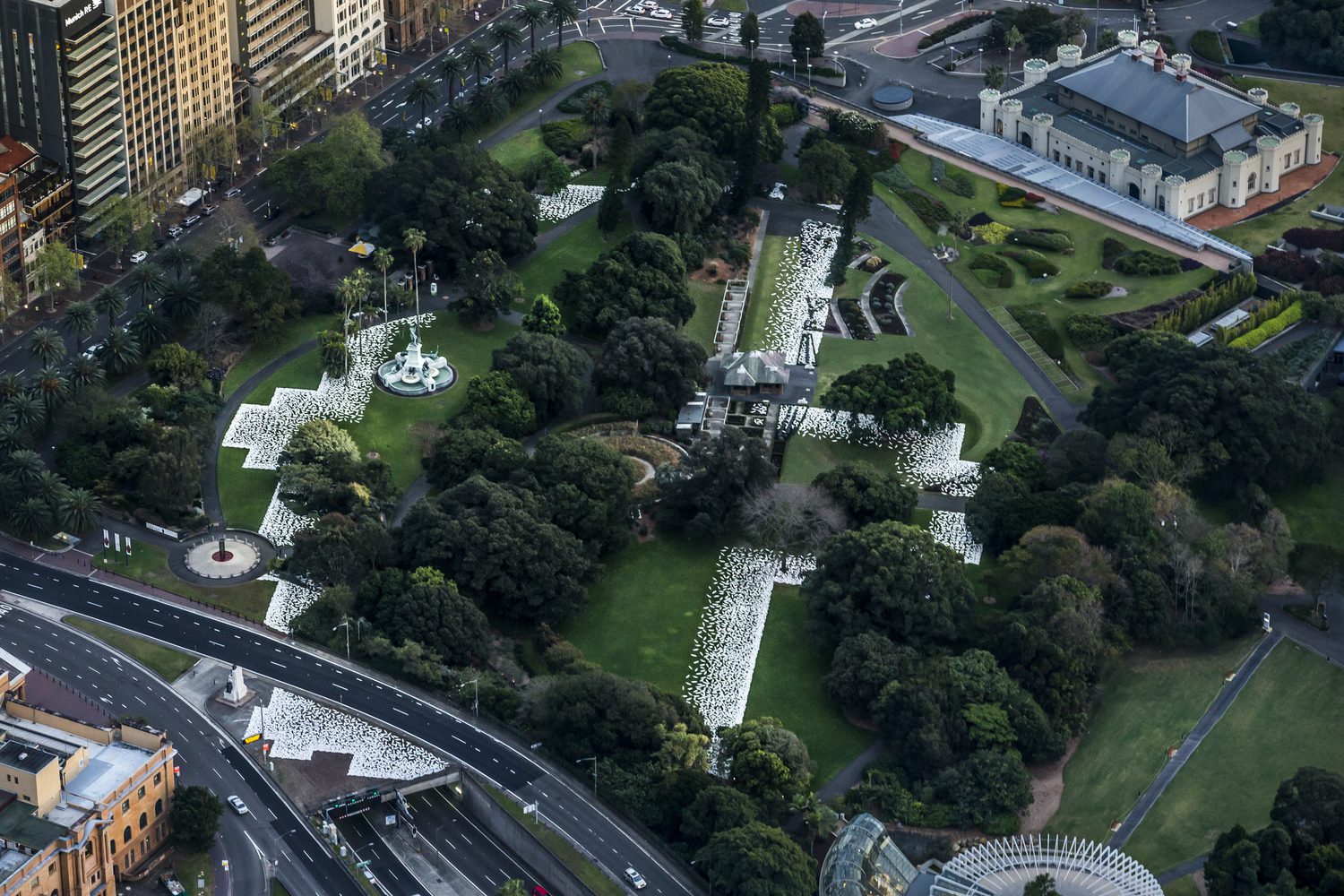
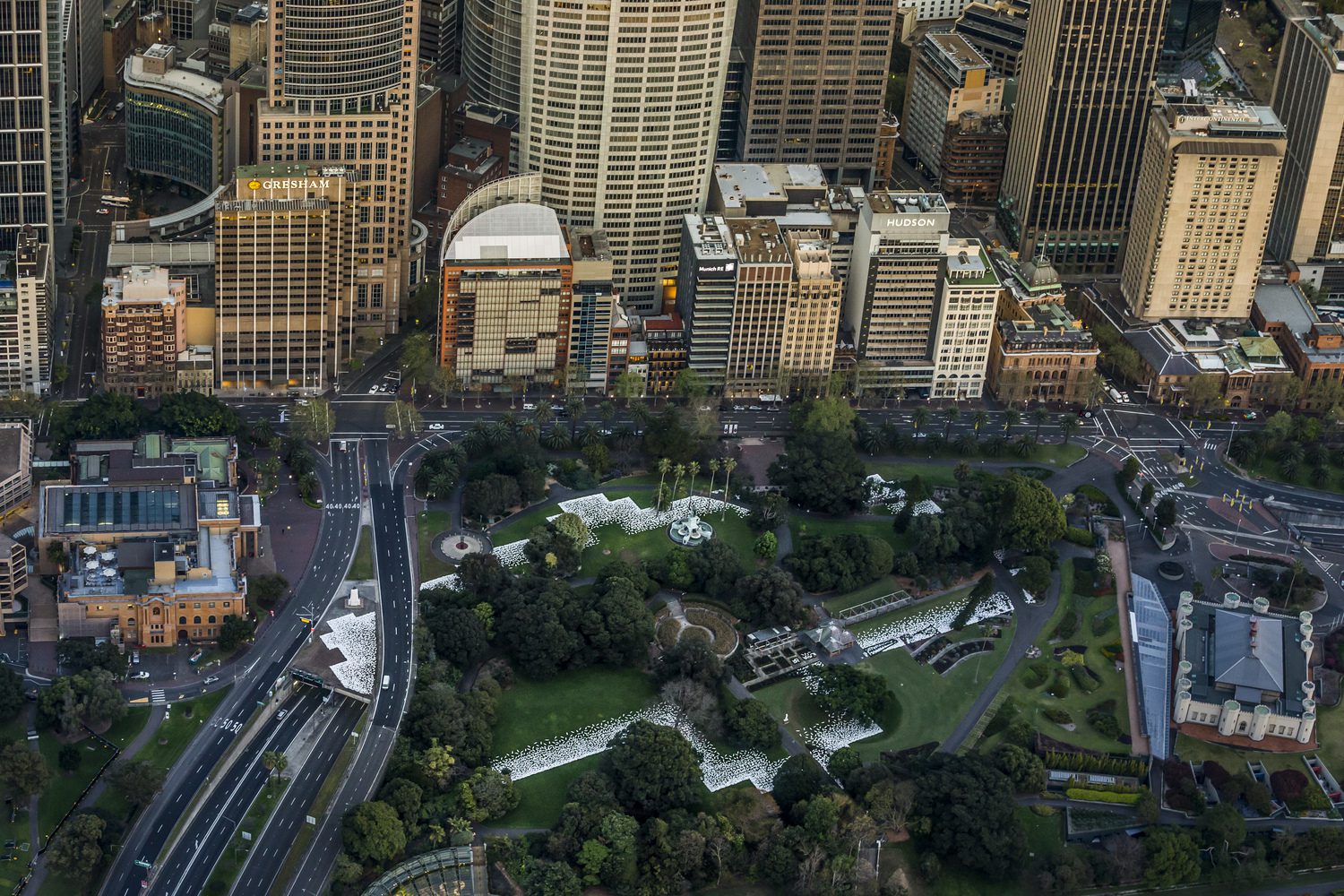
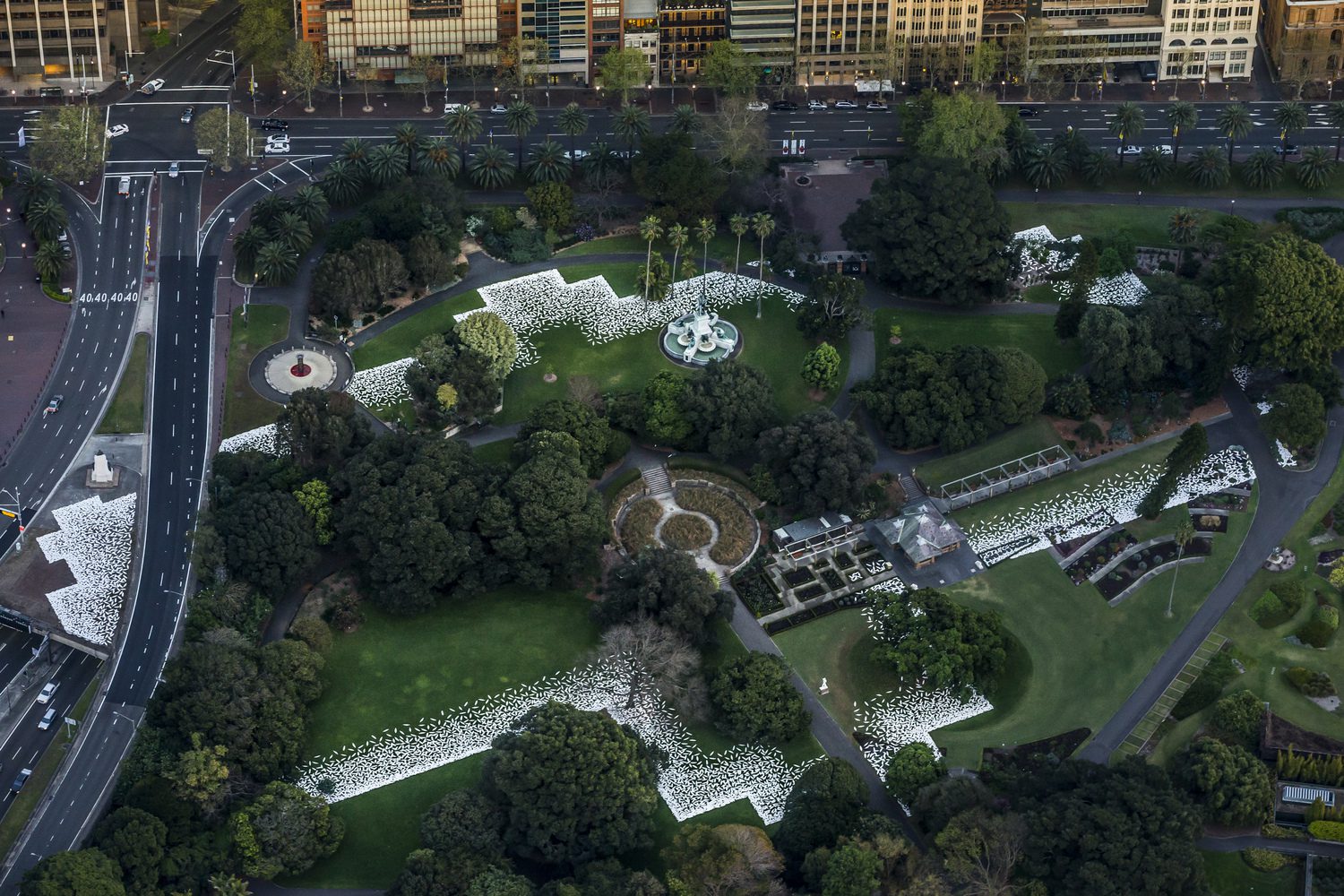
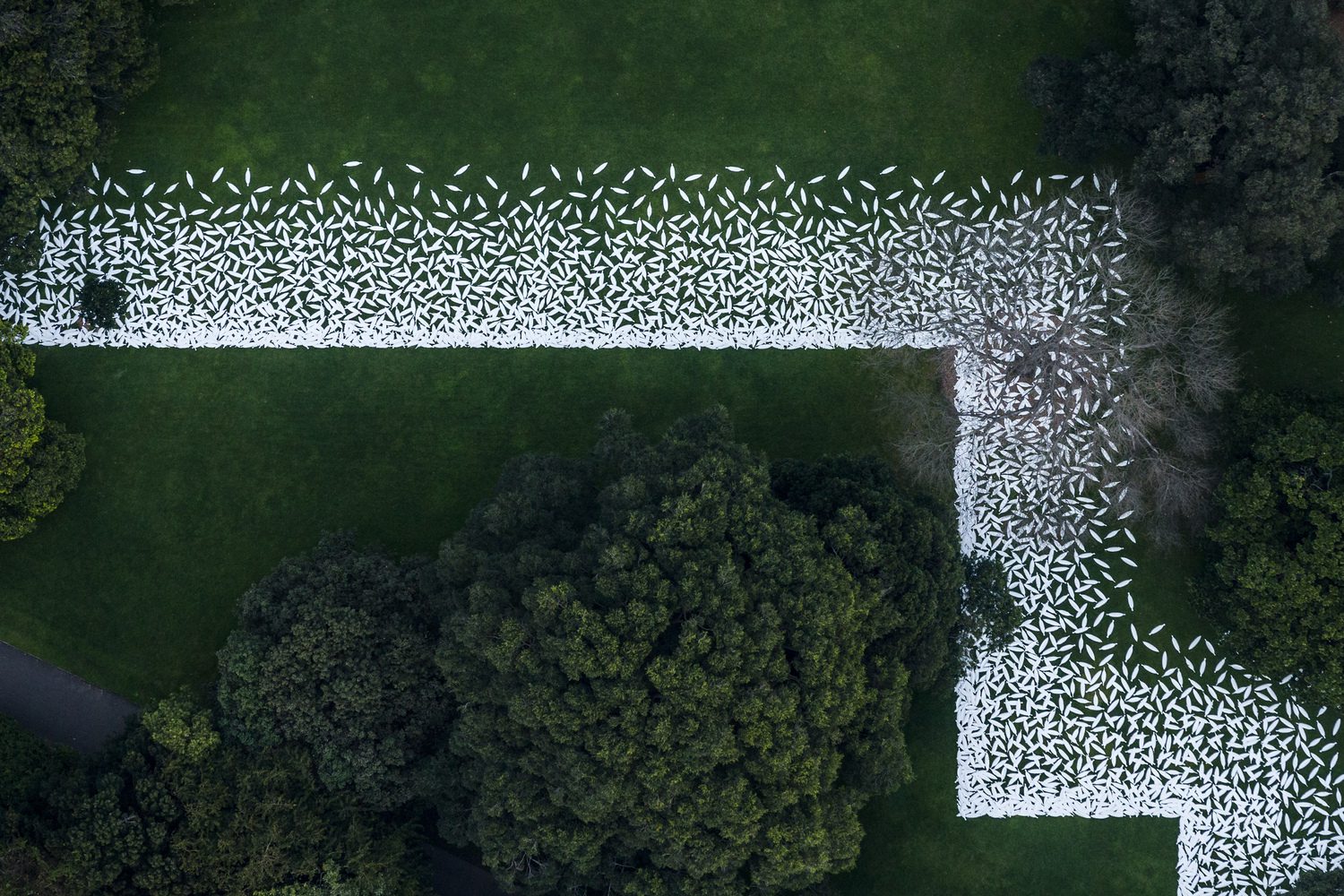
Kaldor Public Art Projects collaborates with the artist Jonathan Jones,and created barrangal dyara (skin and bones), in Sydney, Australia. Inspired by the history of the 19th century Garden Palace building, which originally stood in the Royal Botanic Garden from 1879 to 1882 before burning to the ground, the artwork marks the original footprint of Destroyed Palace with a sculptural installation of 15,000 white shields spanning 20,000 square meters.
Courtesy of Kaldor Public Art Projects
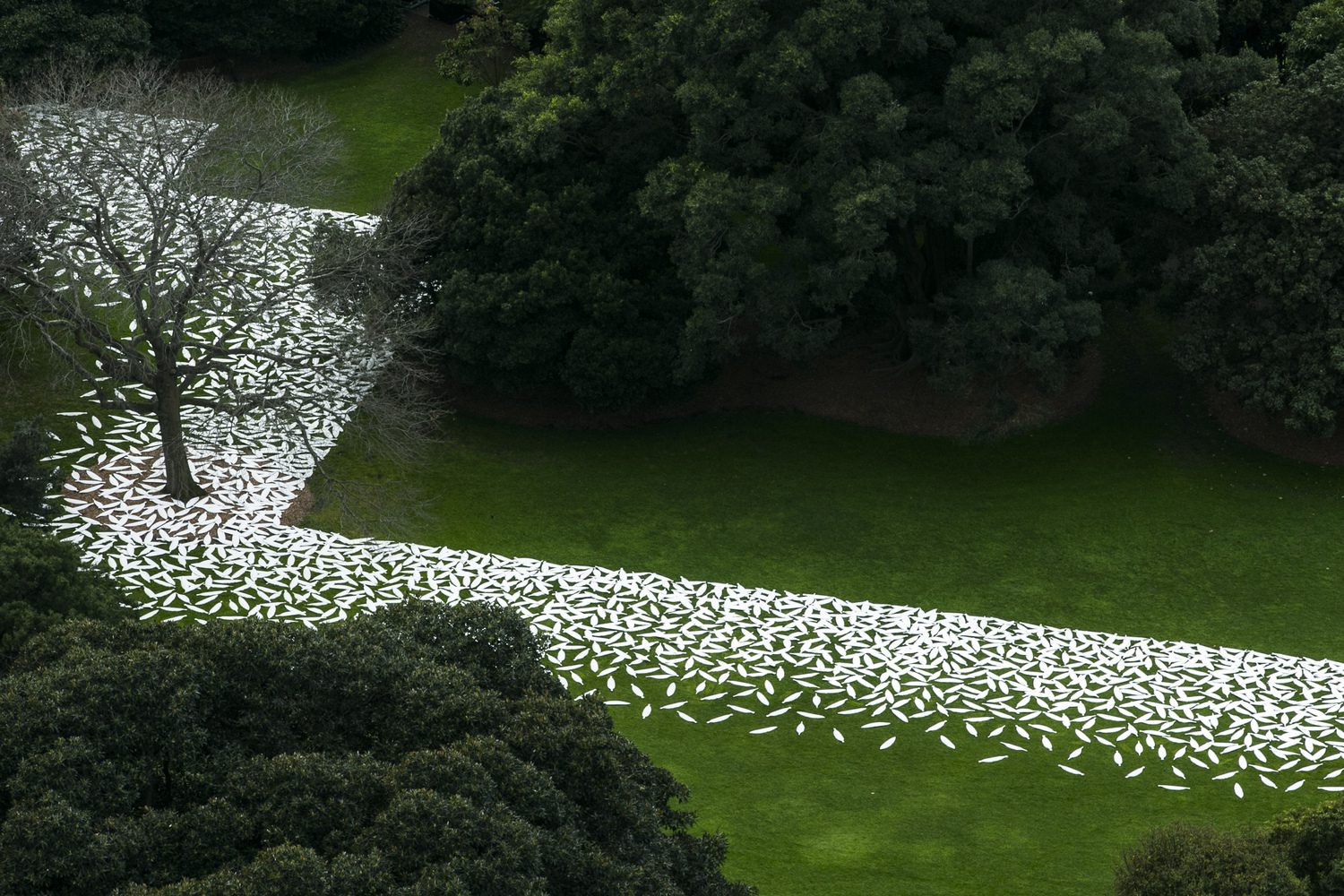
The thousands of shields laid across the Garden echo the masses of rubble left over after the fire, raising the bones of the Garden Palace for a contemporary audience. Each shield takes its shape from one of four typical shield designs from the south-east of Australia and speak to not only the significant number of cultural objects lost in the Garden Palace fire, but also the presence of objects on this site, used in ceremonies over countless generations.
Courtesy of Kaldor Public Art Projects
”barrangal dyara is a response to the immense loss felt throughout Australia due to the destruction of countless culturally significant Aboriginal objects when the Palace was razed by fire on 22 September 1882. It represents an effort to commence a healing process and a celebration of the survival of the world’s oldest living culture despite this traumatic event,” said artist Jonathan Jones.

Isabelle Laurent is a Built Projects Editor at Arch2O, recognized for her editorial insight and passion for contemporary architecture. She holds a Master’s in Architectural Theory from École Nationale Supérieure d’Architecture de Paris-Belleville. Before joining Arch2O in 2016, she worked in a Paris-based architectural office and taught as a faculty adjunct at the École Spéciale d’Architecture in Paris. Isabelle focuses on curating projects around sustainability, adaptive reuse, and urban resilience. With a background in design and communication, she brings clarity to complex ideas and plays a key role in shaping Arch2O’s editorial