

I Light Marina Bay 2016 – Lampshade
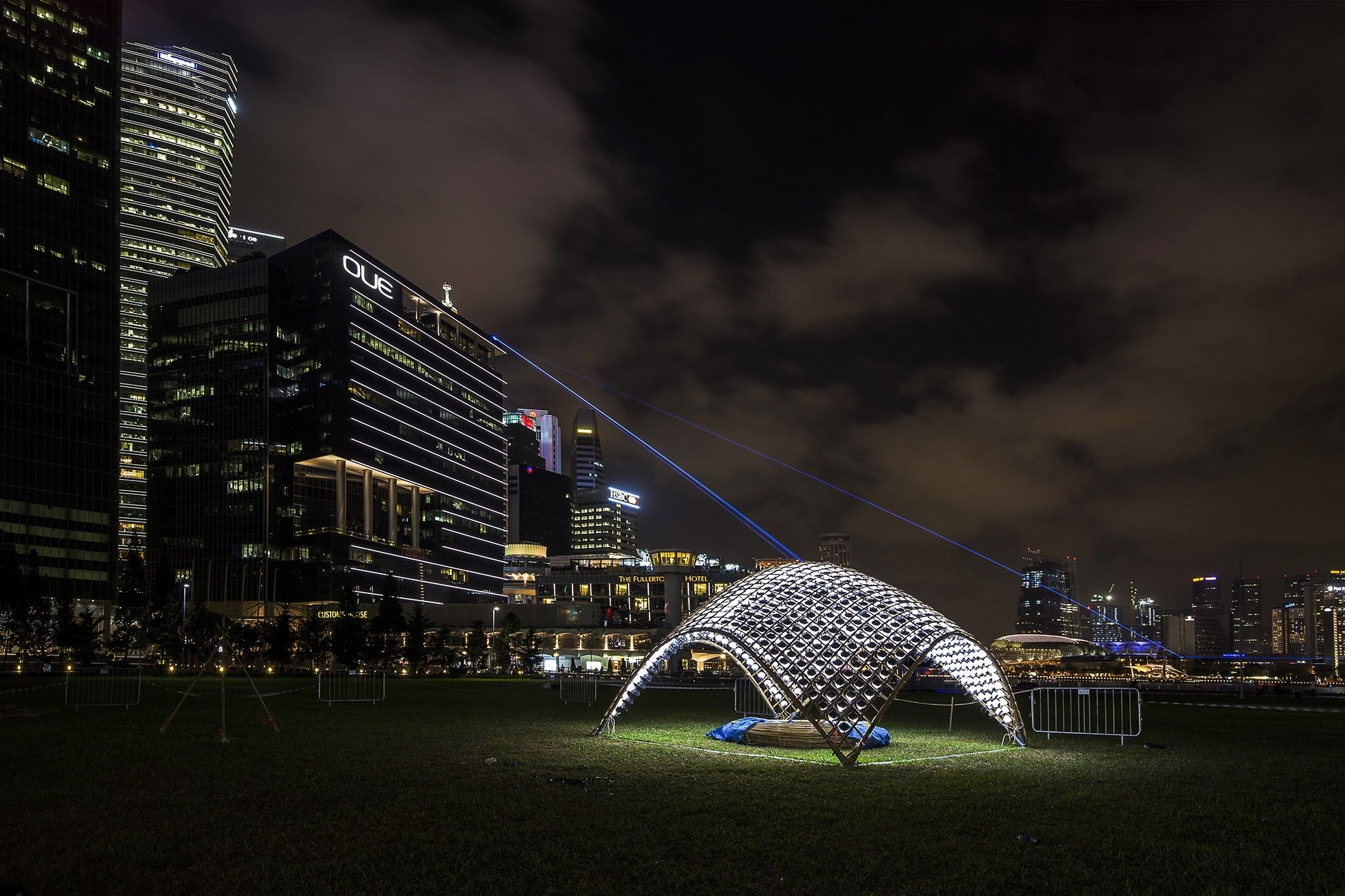
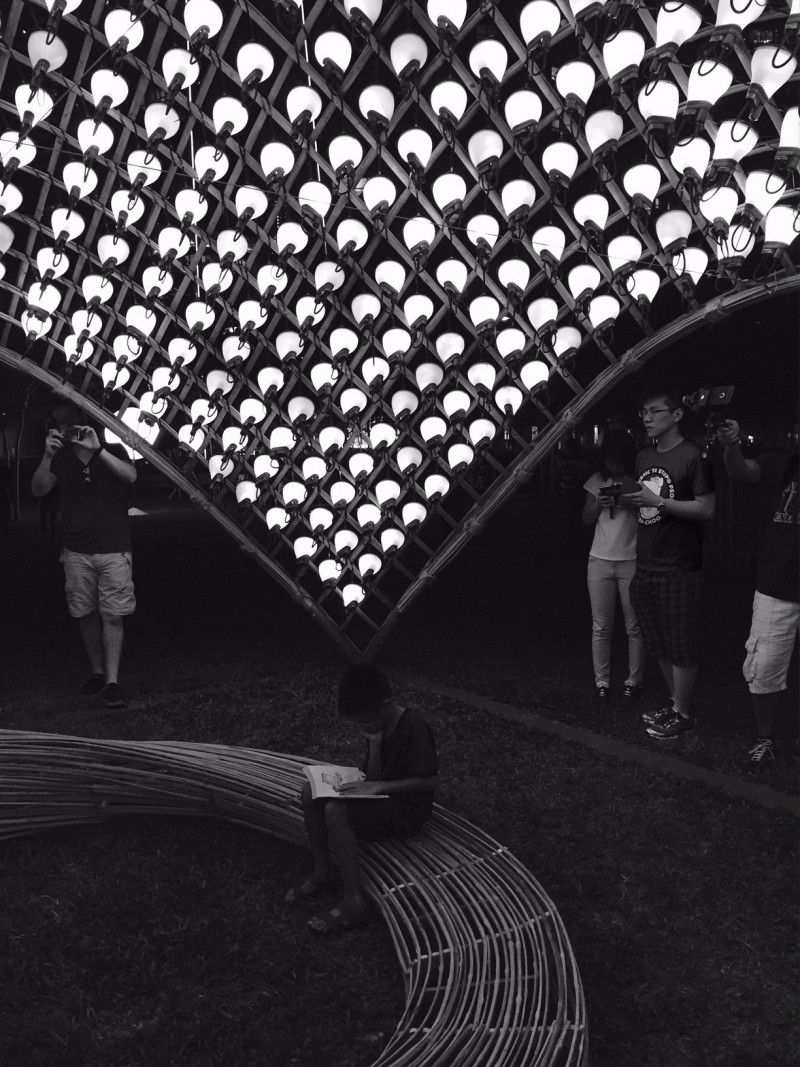
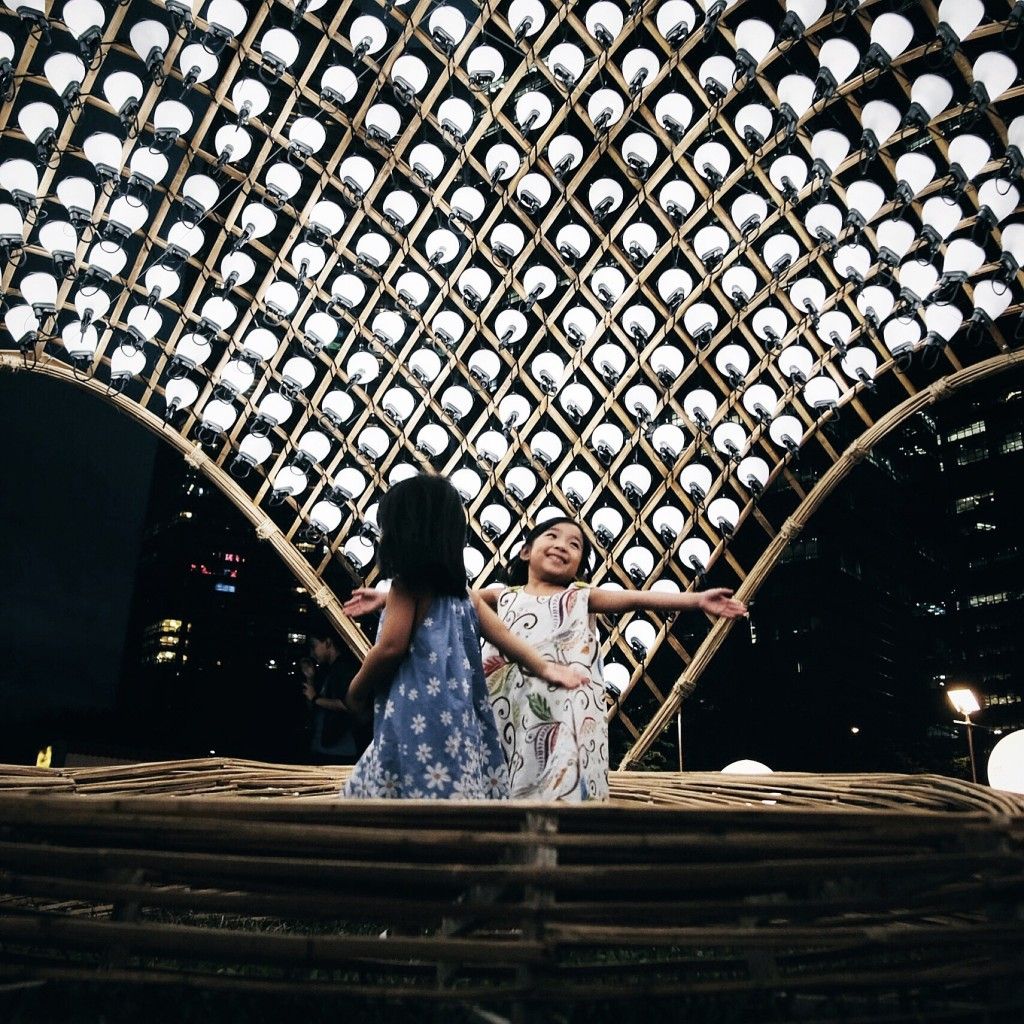
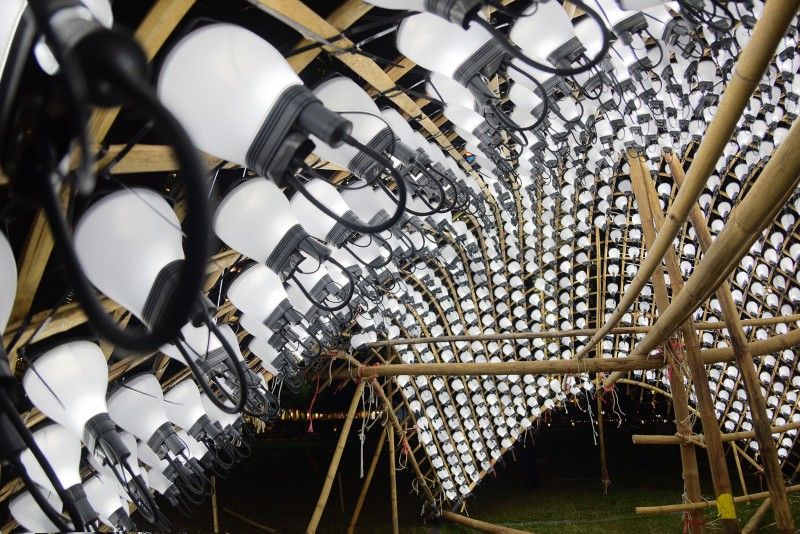
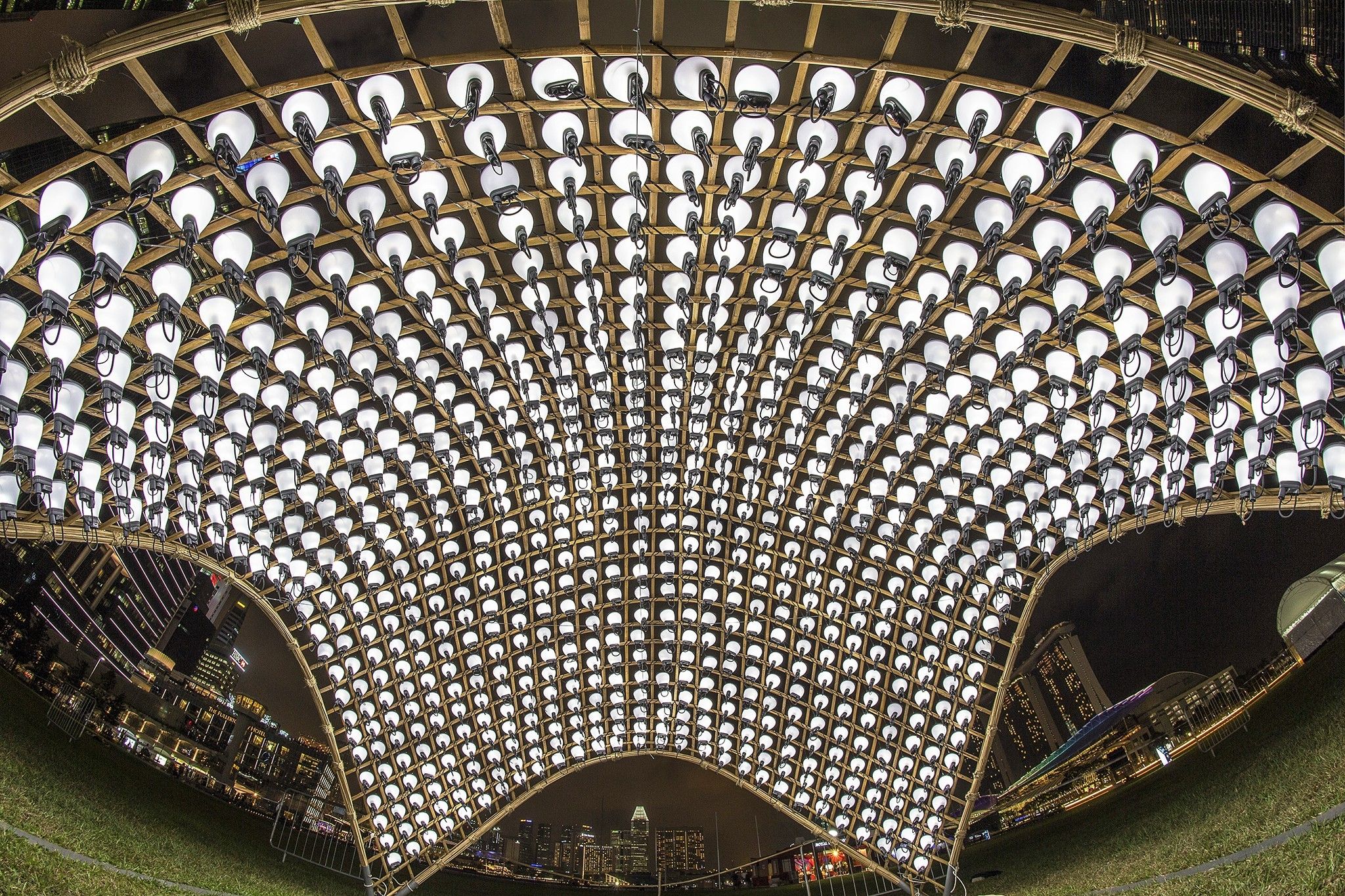
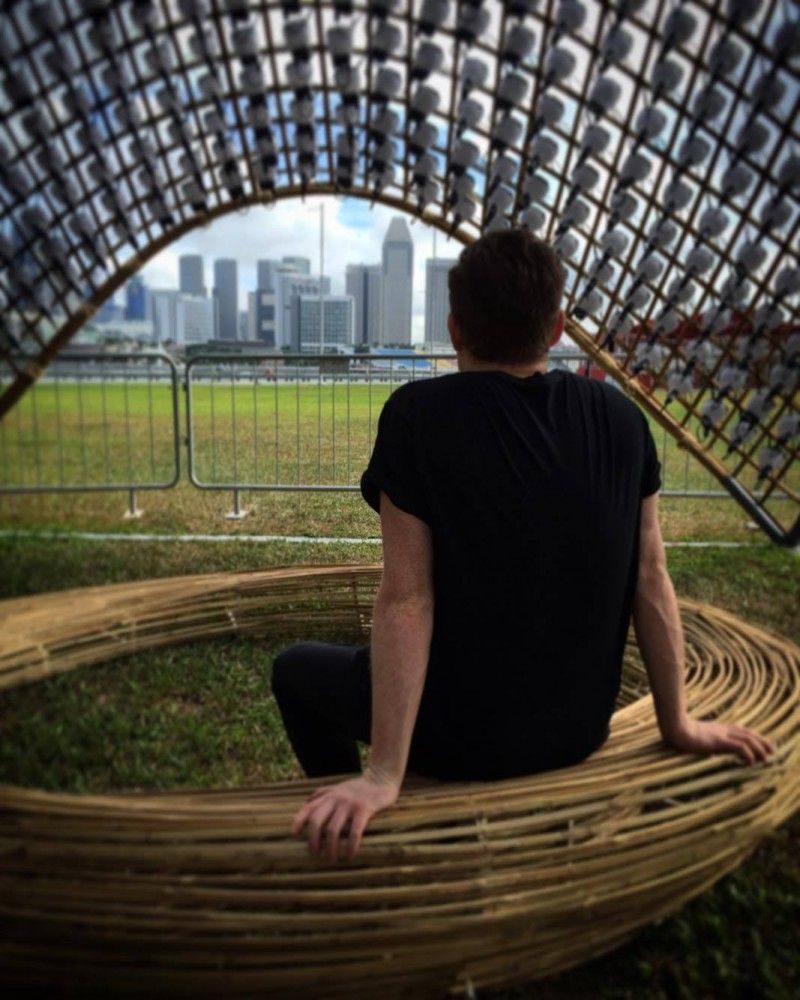
Project description from Snøhetta: For the I Light Marina Bay, Asia’s leading sustainable light art festival, Snøhetta has created Lampshade – an installation challenging the perception of light as a source independent from its energy source. The lampshade is an installation constructed by simple bamboo structures covered with photovoltaic cells. The structure creates shade and an escape from direct sunlight during the day and intensively lights up at night using solar energy collected during the day. The transformation and continuance of light happen within the same system, bringing the light from outside to inside. By intensifying the light experience in an interior dome space, the aim is to show visitors the direct link between capturing sunlight, the production of electricity, and the power of light. The juxtaposition of the hand-made bamboo structure and the ready-made lamps create tension between contextual and generic products, encouraging the discussion of controversial opinions relating to environmental approaches. Through the continuation of the project, the aspects of social and environmental sustainability are in focus. The lamps will after the festival be donated to communities where there is no grid or other electric energy sources. Furthermore, the bamboo will be donated to construction sites and will be reused as scaffolding. In this way, we aim to bring added value to communities and to secure the reuse of materials.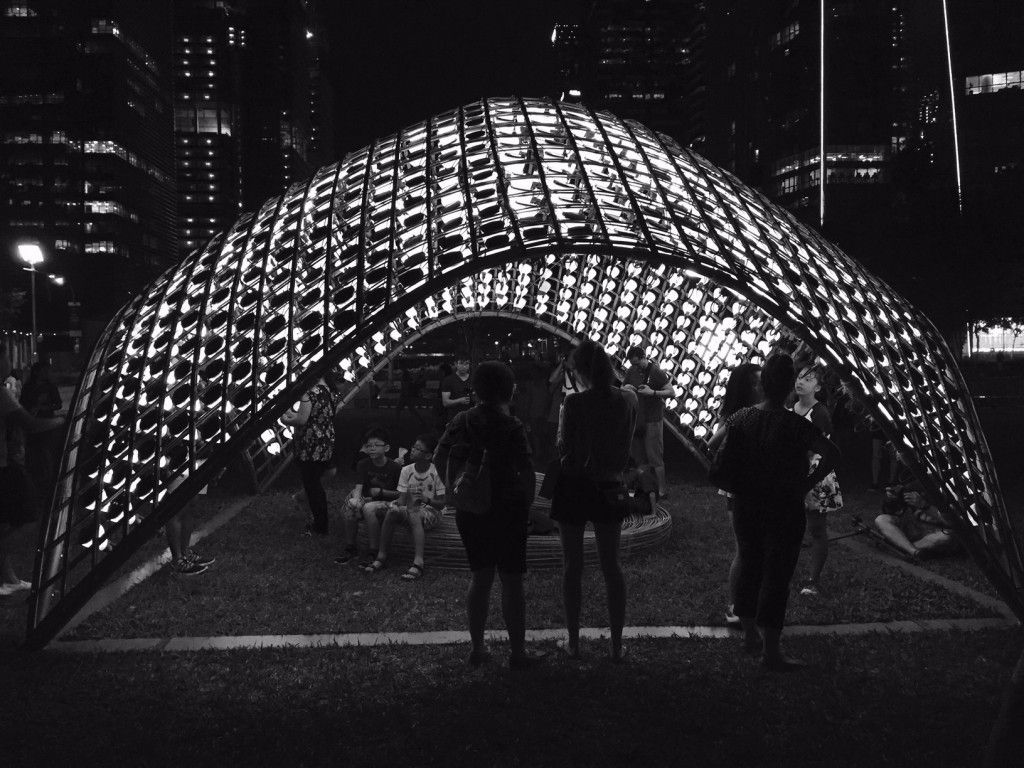

Ibrahim Abdelhady is an architect, academic, and media entrepreneur with over two decades of experience in architecture and digital publishing. He is the Founder and CEO of Arch2O.com, a leading platform in architectural media, renowned for showcasing innovative projects, student work, and critical discourse in design. Holding dual PhDs in Architecture, Dr. Abdelhady combines academic rigor with industry insight, shaping both future architects and architectural thought. He actively teaches, conducts research, and contributes to the global architecture community through his writing, lectures, and media ventures. His work bridges the gap between practice and academia, pushing the boundaries of how architecture is communicated in the digital age.