

The Loop Dubai is URB’s proposal for a 93-kilometre climate-controlled corridor for walking, running and cycling. It brings active travel, landscape and amenities into one continuous environment. The scheme’s published targets describe a design ambition; they should not be reported as achieved transport outcomes or as proof that the entire corridor has been built.
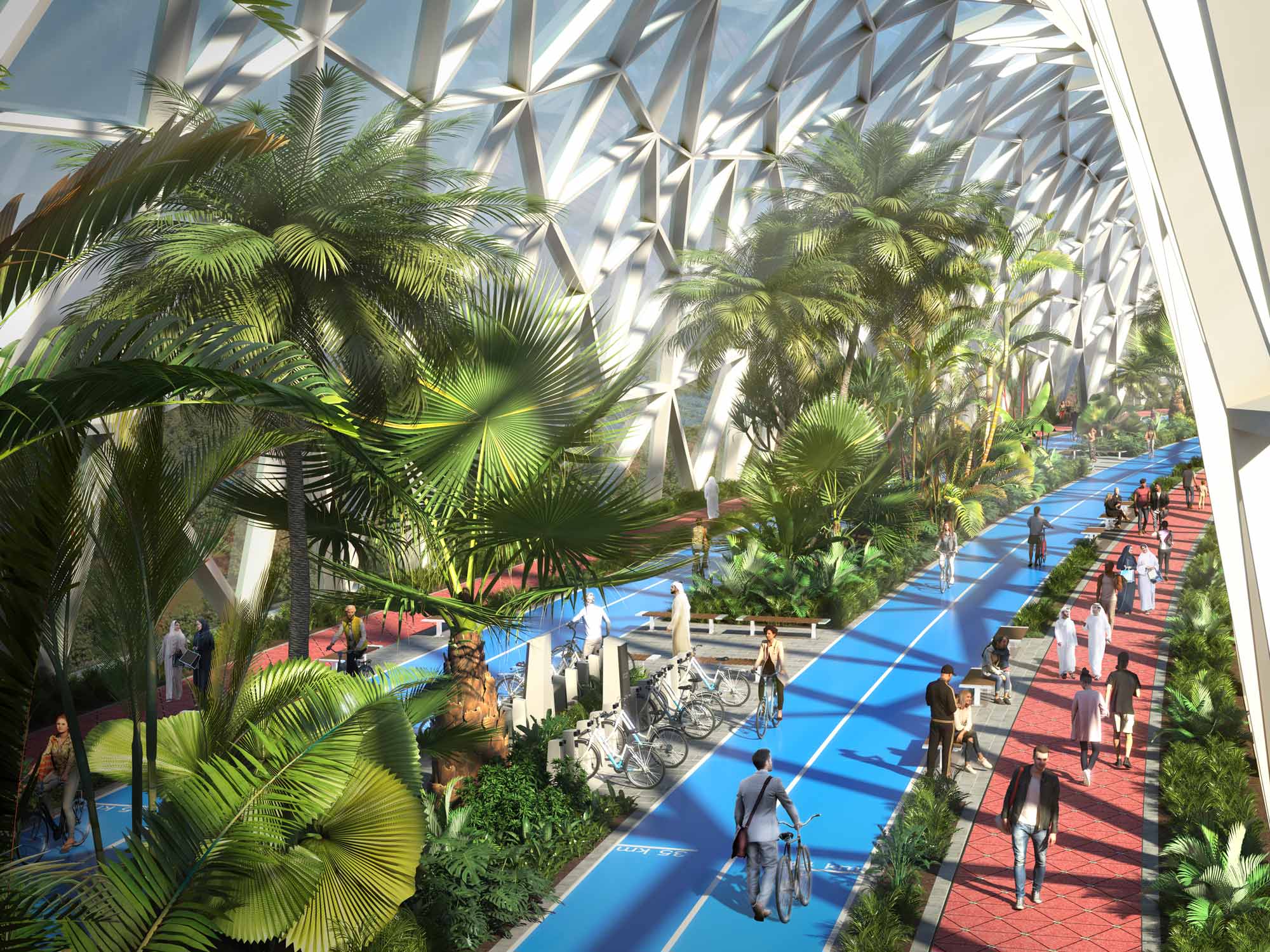
Dubai The Loop: a proposed network for walking and cycling
The proposal responds to a real design question: how can walking and cycling become useful everyday transport when heat and fragmented routes make them difficult? The connection to destinations matters as much as the corridor itself. A comfortable route is less useful if reaching its entrances requires crossing hostile roads or making a long detour.
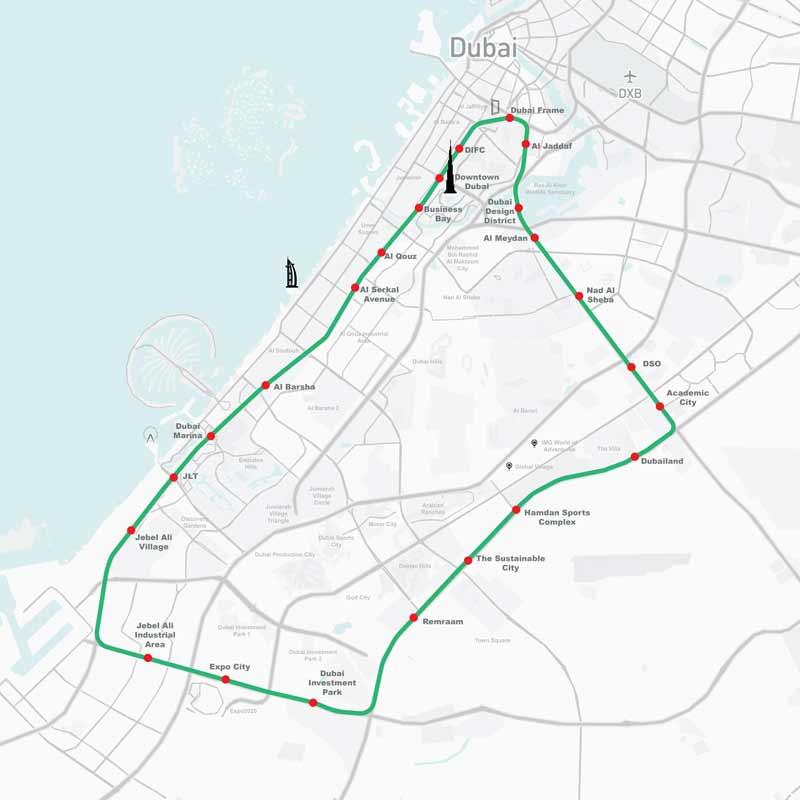
Comfort, connections and operating demand
Assess the scheme through complete trips. Locate homes, workplaces, transit stops and entrances, then include the outdoor distance at both ends. Consider how pedestrians, cyclists and people using mobility aids share the route. Junctions, speeds, rest points and access to services need attention alongside the large-scale visual concept.
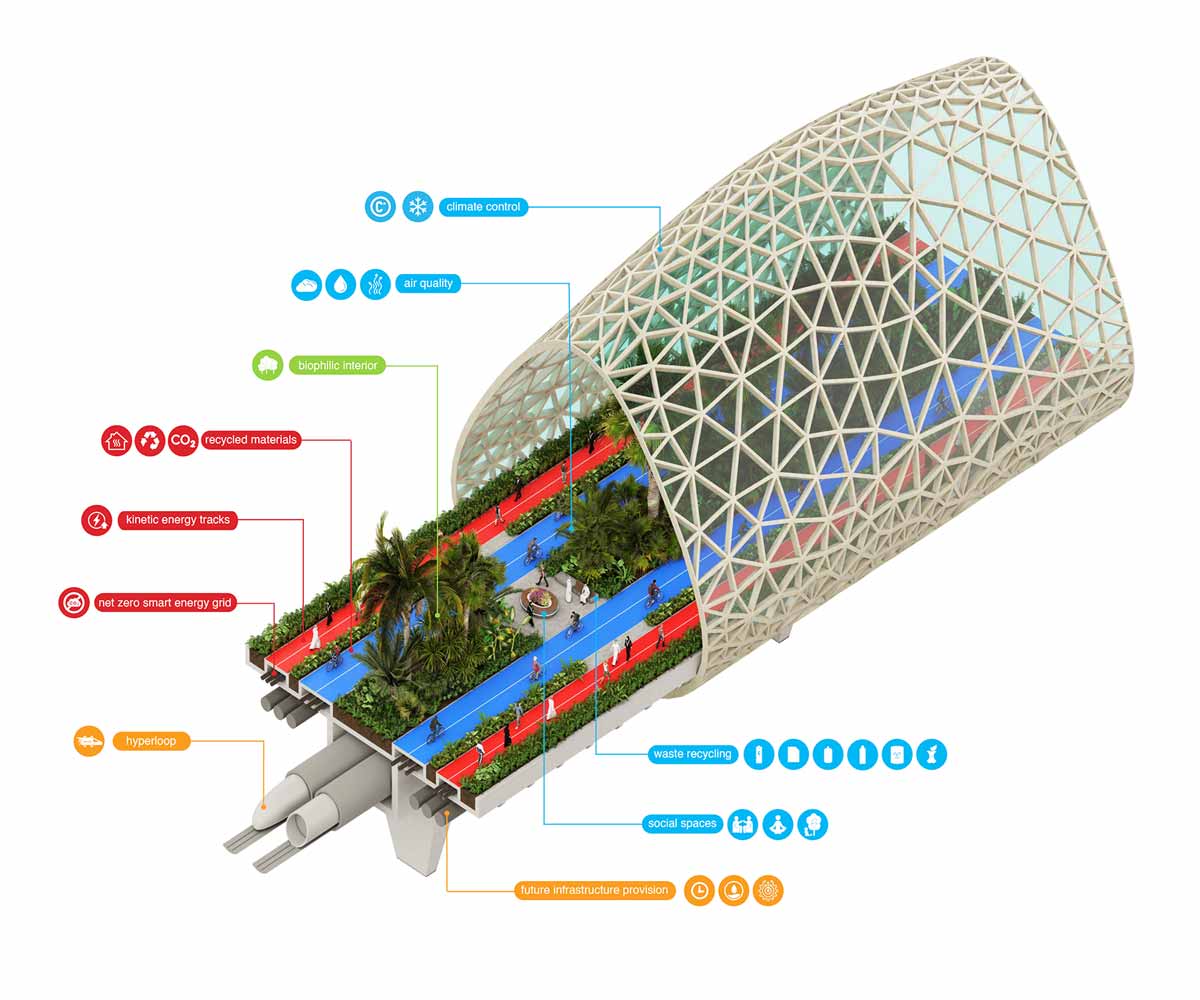
The environmental case should be evaluated using demand and operating evidence. Cooling a long enclosure, maintaining planting and supplying amenities all have resource implications. Renewable-energy and recycled-water claims should remain attributed project targets until independently demonstrated. The proposal is valuable as a prompt to design connected, comfortable mobility networks, while asking how the same objectives might be achieved through a range of urban interventions.
For the wider relationship between design decisions and environmental evidence, read our sustainable architecture guide: sustainable architecture.
Key takeaways
- Distinguish URB’s proposal from delivered public infrastructure.
- Measure complete journeys, including access to the corridor.
- Assess operating demand alongside environmental targets.
Related reading on Arch2O
Sources and further reading

Ruba Ahmed, a senior project editor at Arch2O and an Alexandria University graduate, has reviewed hundreds of architectural projects with precision and insight. Specializing in architecture and urban design, she excels in project curation, topic selection, and interdepartmental collaboration. Her dedication and expertise make her a pivotal asset to Arch2O.