

England’s Roads Will Soon Power Electric Cars
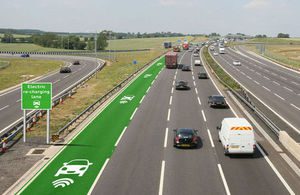
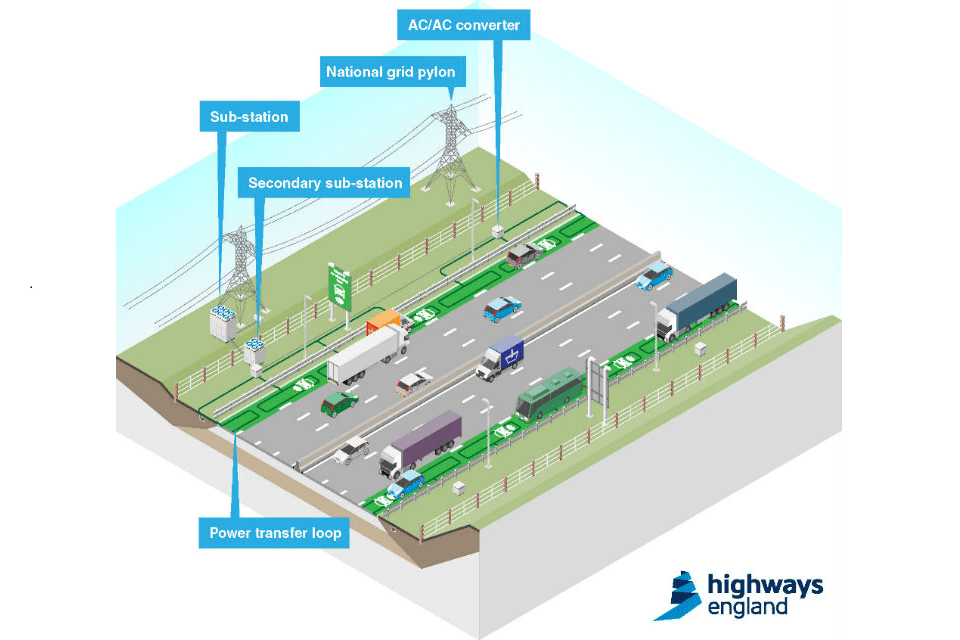
On August 11, the British Government announced a trial for an off road technology that will power ultra-low emission vehicles as they drive along them. Following a feasibility study commissioned by Highways England “into ‘dynamic wireless power transfer’ technologies”, the trial is set to launch later this year for a period of 18 months. During this time, it “will test how the technology would work safely and effectively on the country’s motorways and major A roads”.
Courtesy of Highways England
“The trials will involve fitting vehicles with wireless technology and testing the equipment, installed underneath the road, to replicate motorway conditions. Full details of the trials will be publicised when a successful contractor has been appointed.” – Highway England and Transport Minister Andrew Jones explain.
While a fuel tank can cover roughly 300 miles, the average electric car battery has an autonomy of only 260 miles. Considering this and the fact that there are less electric car chargers than gas stations – although Highways England is planning on changing that by “installing plug-in charging points every 20 miles on the motorway network as part of the government’s Road Investment Strategy” – not many people opt for hybrid or electric cars.
With this project, the British government wishes to increase the effectiveness of such vehicles and hopes they gain more ground. “The potential to recharge low emission vehicles on the move offers exciting possibilities. The government is already committing £500 million over the next five years to keep Britain at the forefront of this technology, which will help boost jobs and growth in the sector. As this study shows, we continue to explore options on how to improve journeys and make low-emission vehicles accessible to families and businesses” – Transport Minister Andrew Jones states.
Courtesy of Highways England
This might be one of the biggest trials of this kind, but it is not a first. A previous one has been conducted in Milton Keynes, England, where buses were charged wirelessly through plates on the road – though not while driving. Similarly, a South Korean trial used a process called Shaped Magnetic Field in Resonance (SMFIR) on a 7.5 mile stretch of road to charge electric buses. However, the ‘electric highway‘ project is at a much larger scale and cost – and it has its share of skeptics. For instance, Dr Paul Nieuwenhuis, director of Cardiff Business School’s Electric Vehicle Centre of Excellence, questions the need for this technology on such roads, considering ongoing improvements in battery technology.

Ana Cosma is an editor at Arch2O with a deep-rooted passion for architecture and urban design. Drawing on nearly a decade of architectural experience across prominent firms in Stuttgart, Germany—including Exyte, BWK.Architekten, and SCD Architekten—Ana brings a practiced eye and international perspective to her editorial work. Her academic foundation in Architecture and Urbanism from Politehnica University of Timișoara, complemented by a study period at Sapienza Università di Roma, informs her nuanced approach to exploring contemporary urban challenges and design innovations. At Arch2O, Ana curates and contributes insightful articles that bridge professional practice with emerging trends in urbanism and architectural theory.