

What is perhaps most striking about 2040: Lunar Outpost [A] designed by [n]igma, is the manor in which it is conceived to be constructed. Everything we make is an assemblage of parts which have been derived in some way from the earth and then processed and then stored and then transported and finally fitted together in a way that is very man-made. This proposal, which was the 2010 TSA Best Thesis Selection and winner of Honourable Mention in the 2011 eVolo Skyscraper competition, seeks to offer not only an alternative to building, but to building on earth.
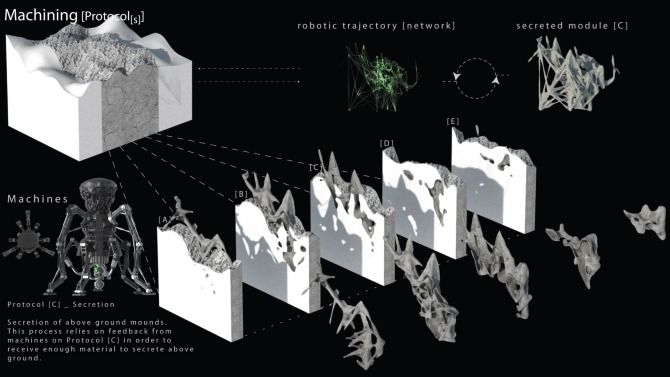
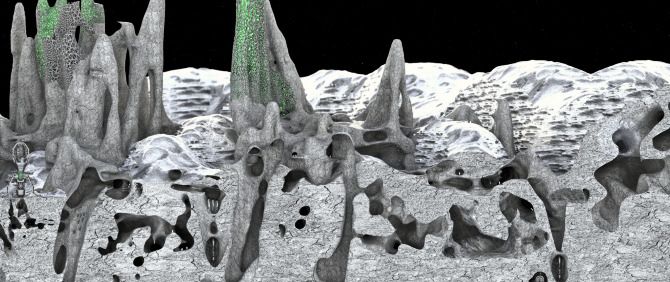
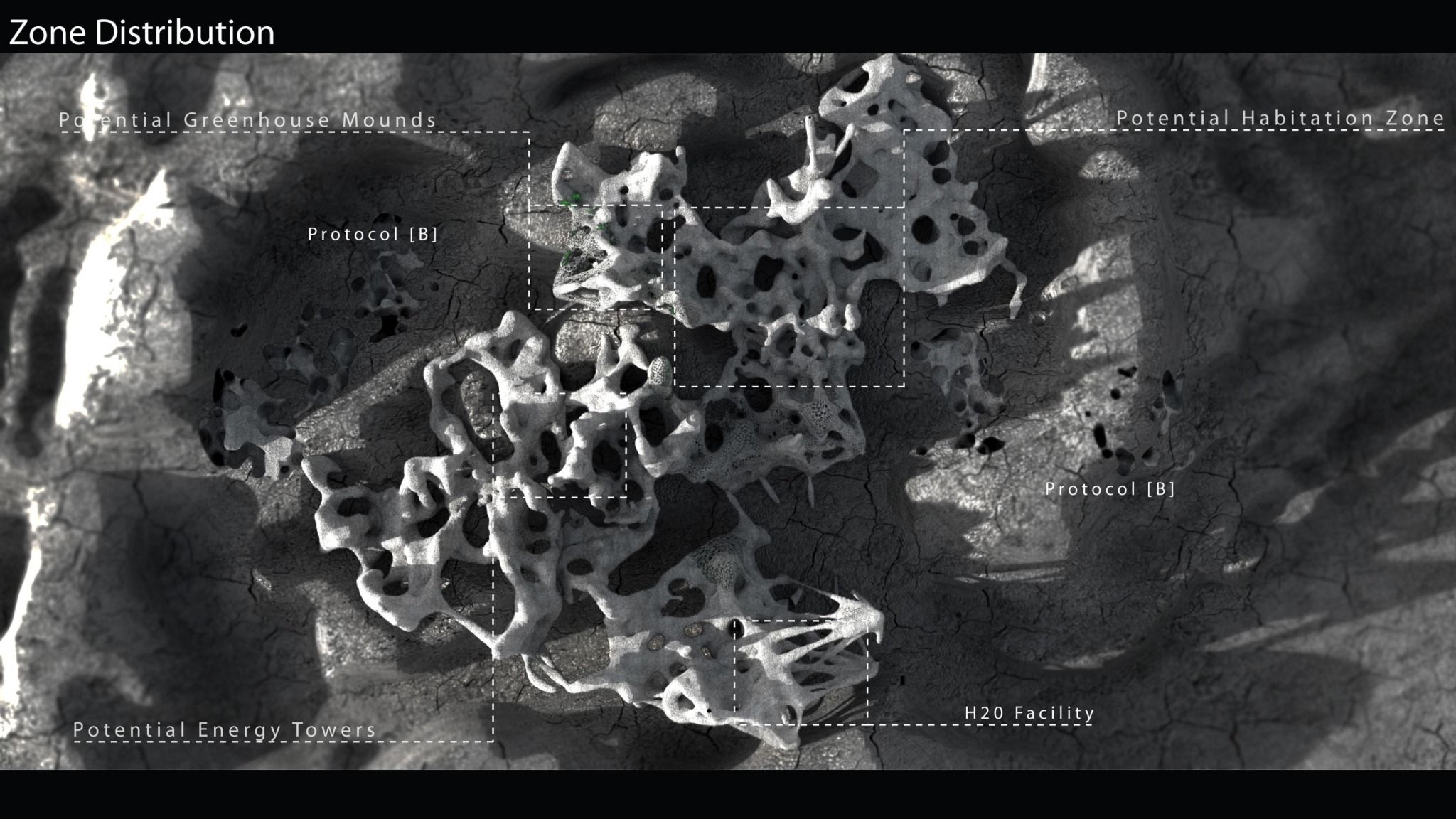
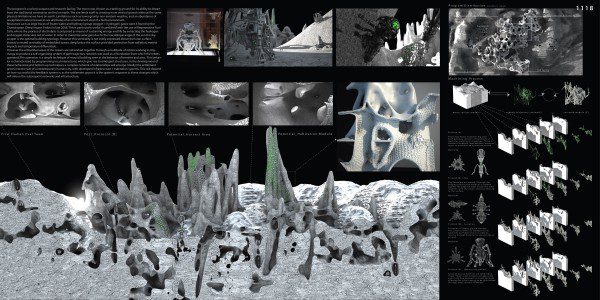
Teams of robots would be the first to arrive on the site: our moon’s Shackleton Crater. Here they begin burrowing and mound building. The process would be one very similar to that which ants and termites undergo in the formation of their nests. Material is removed, creating a network of underground ‘towers’ which would act as shelters from radiation, impacts and temperature swings. The removed material is then taken by another type of robot and excreted to form mounds which grow vertically as new ground as well as habitable space.
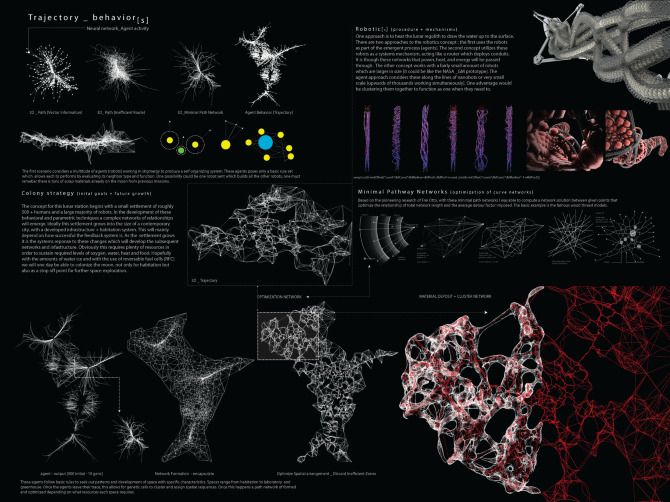
The project has a time span of 0-60 years, the first 20 of which will be pre-human. During this time the above mentioned robots will take the place of typical construction workers who would be exceedingly clumsy trying to work conventionally in spacesuits.
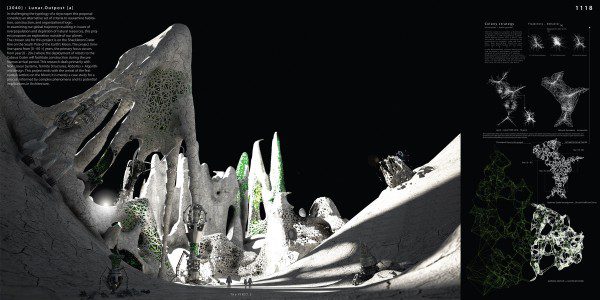
One last thing. In today’s world the 3D printer is becoming ever more present. This lunar outpost seems to me a fascinating glimpse into what the future might hold for building. A future where there are those buildings which are constructed in the conventional fashion as well those which are formed.

Matt Davis is a Virginia Tech graduate and one of the founding editors behind Arch2O. Launching the platform in mid‑2012 alongside fellow Hokies, he helped shape its identity as an international hub for design innovation and critical dialogue . With a foundation in architectural education and a passion for uncovering unconventional design approaches, Matt has contributed significantly—both editorially and strategically—to Arch2O’s growth, ensuring that emerging architects, academics, and creatives have a space to question, explore, and elevate the built environment.