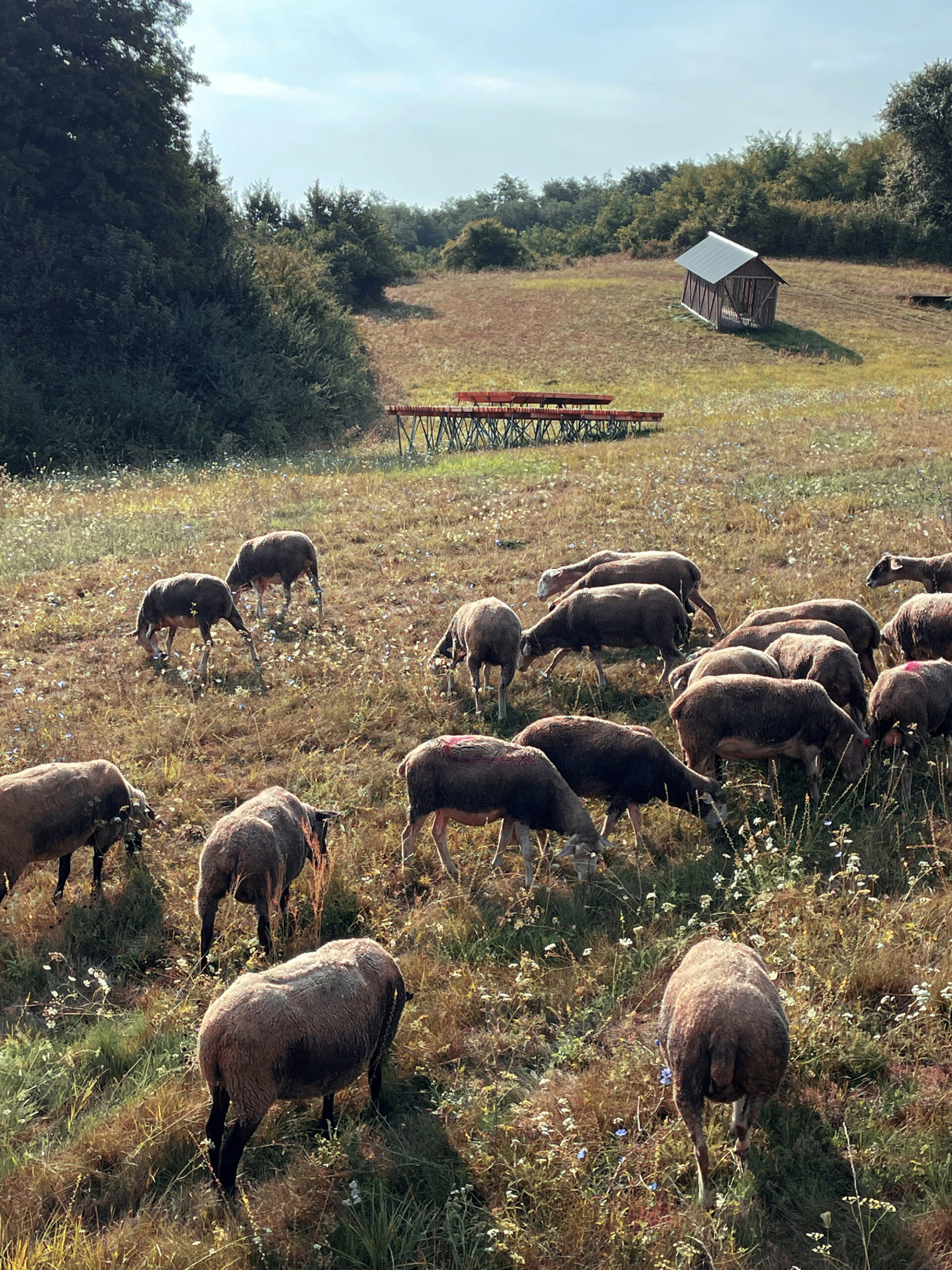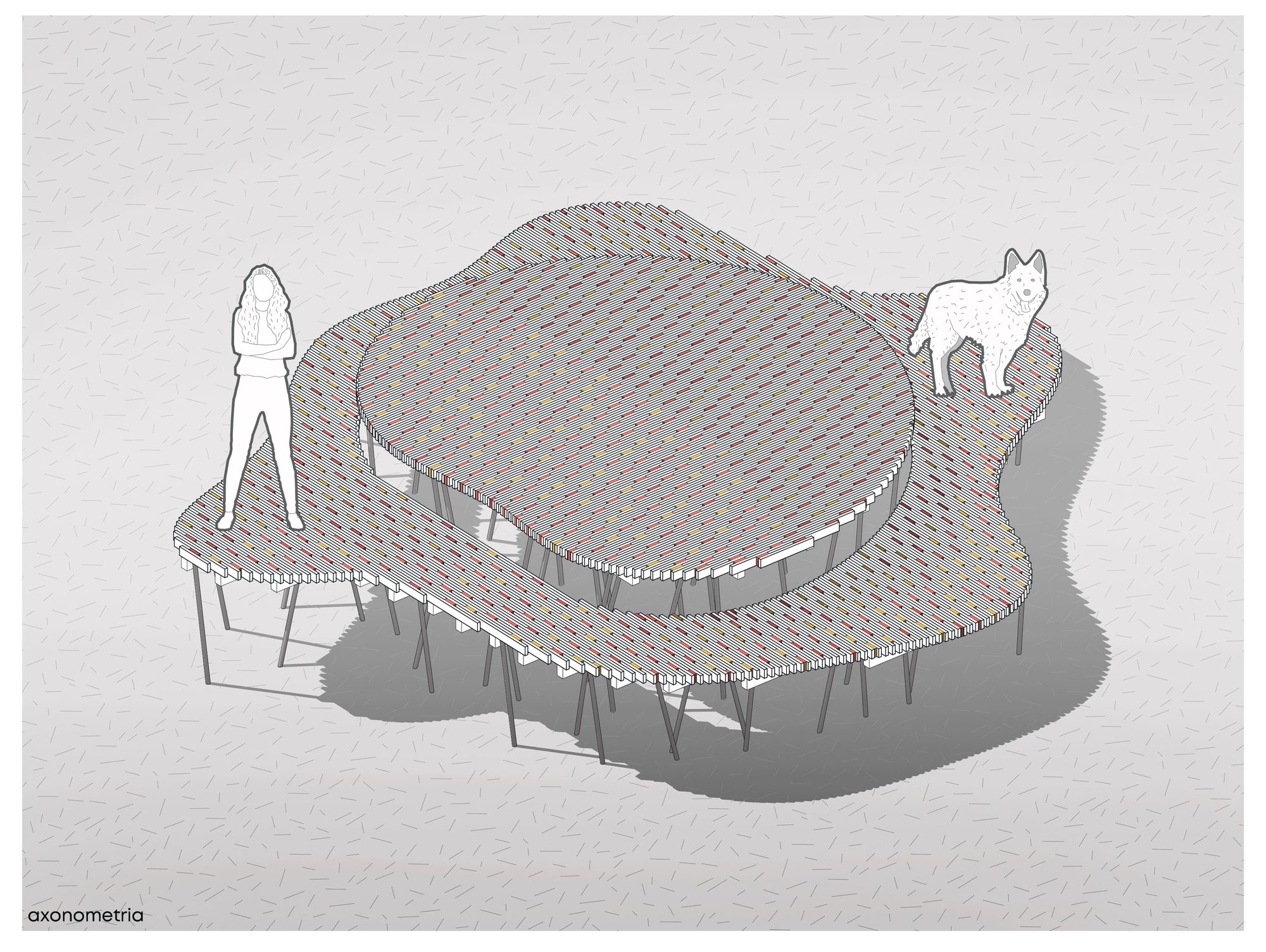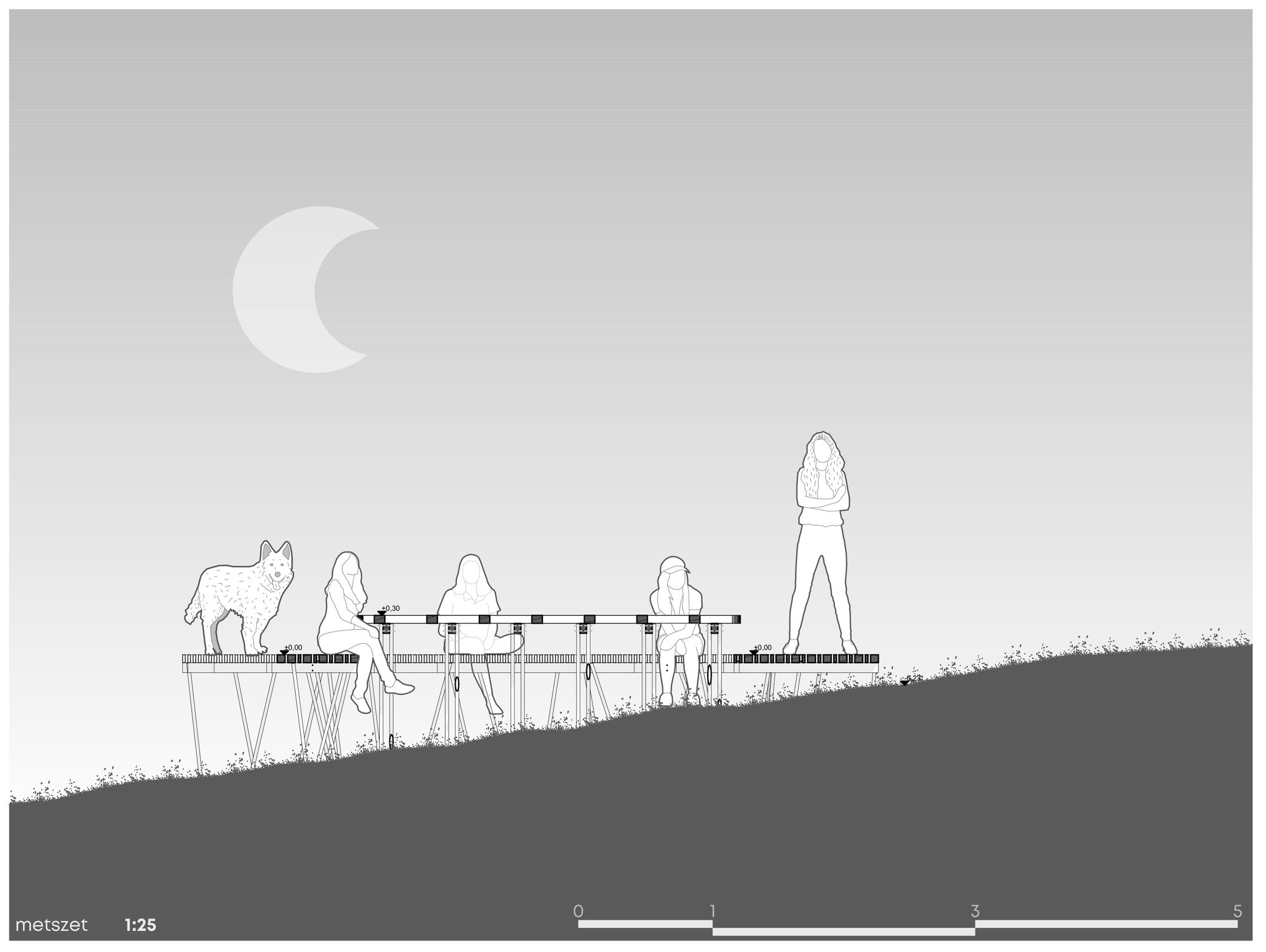


100x Round Table, LOCATION: Village–House–Field – Ipolytarnóc, a small village near the Slovak-Hungarian border, is set within the rolling hills of the Northern Hungarian Highlands. West of it, in Győr, the Architects’ Atelier serves as a creative hub for architecture students. These two seemingly distinct places connect at the edge of Ipolytarnóc, in an open field known as the Field of Sparks—a site where architecture and artistic experimentation take shape.
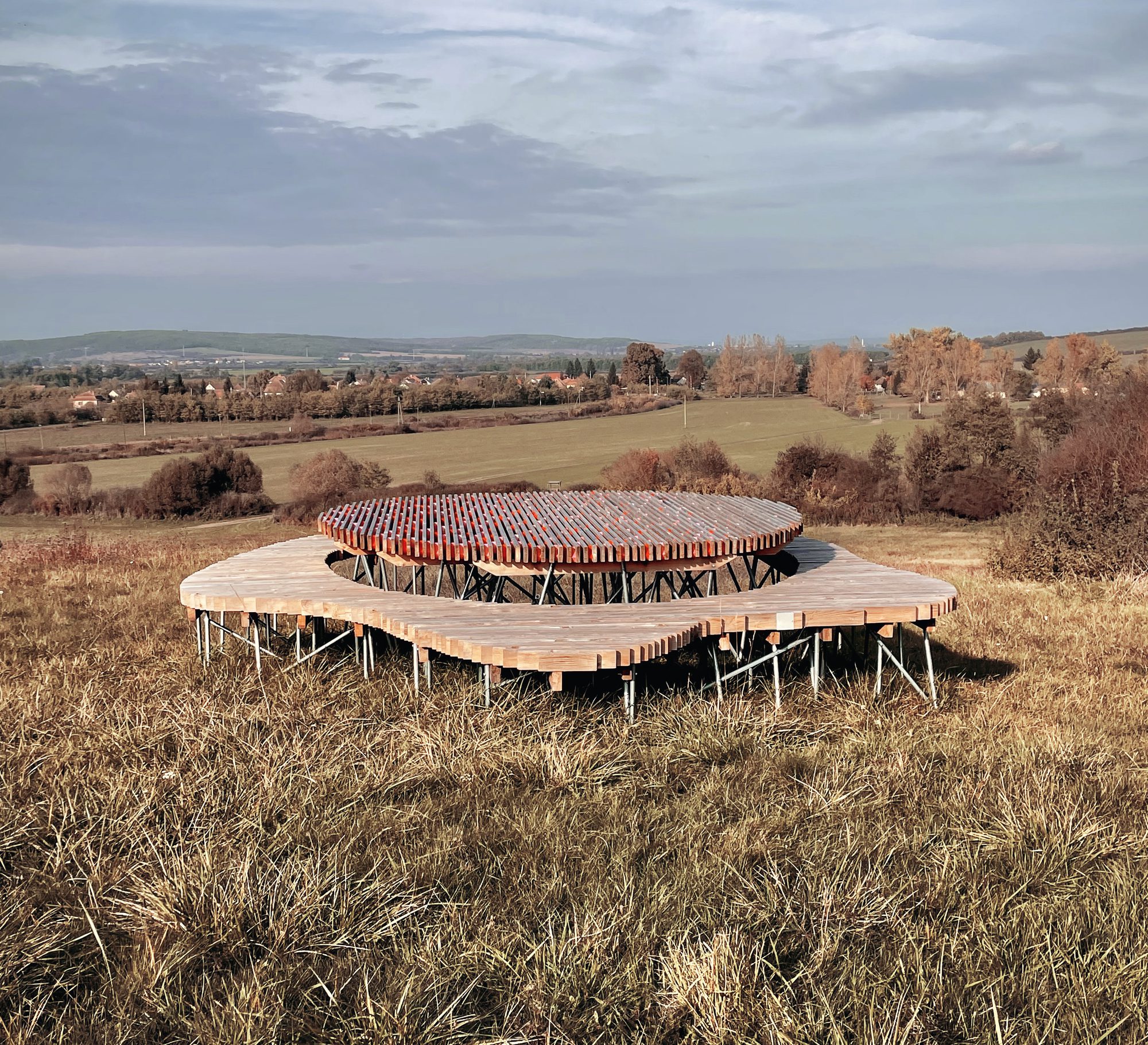
© Ungerhofer Dániel, Fátrai Júlia, Reizinger Ákos, Laczkó Péter
COMMUNITY: Inspiration–Architecture–Art – Field of Sparks is an ongoing artistic and architectural initiative that has hosted an annual Artweek since 2019. Each year, invited architects contribute new experimental architecture installations to the evolving landscape. The project is driven by a commitment to Ipolytarnóc, aiming to highlight its cultural and spatial qualities. The organising crew of Field of Sparks, with the art direction of Zsófi Fenyvesi works relentlessly to sensitize every participant to social imbalances, and ethnic differences to encourage a more profound understanding of each other, to create a new kind of reality for the local community, and to aspire to a more tolerant and broad-minded future. The 2024 workshop, titled: Cabinet of Curiosities, supported by the International Visegrád Fund, continues this mission, with students from Széchenyi István University in Győr joining the process.
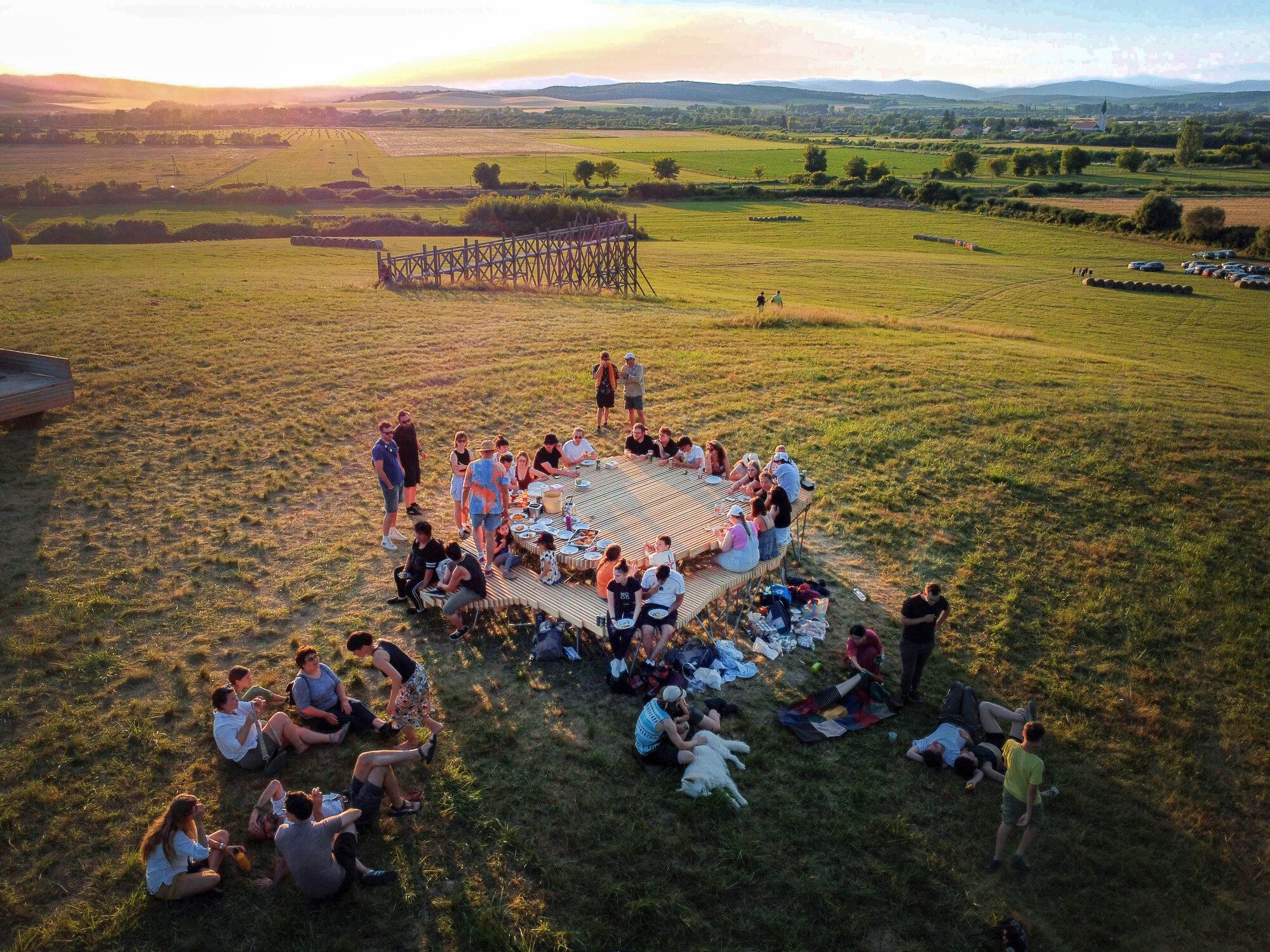
© Ungerhofer Dániel, Fátrai Júlia, Reizinger Ákos, Laczkó Péter
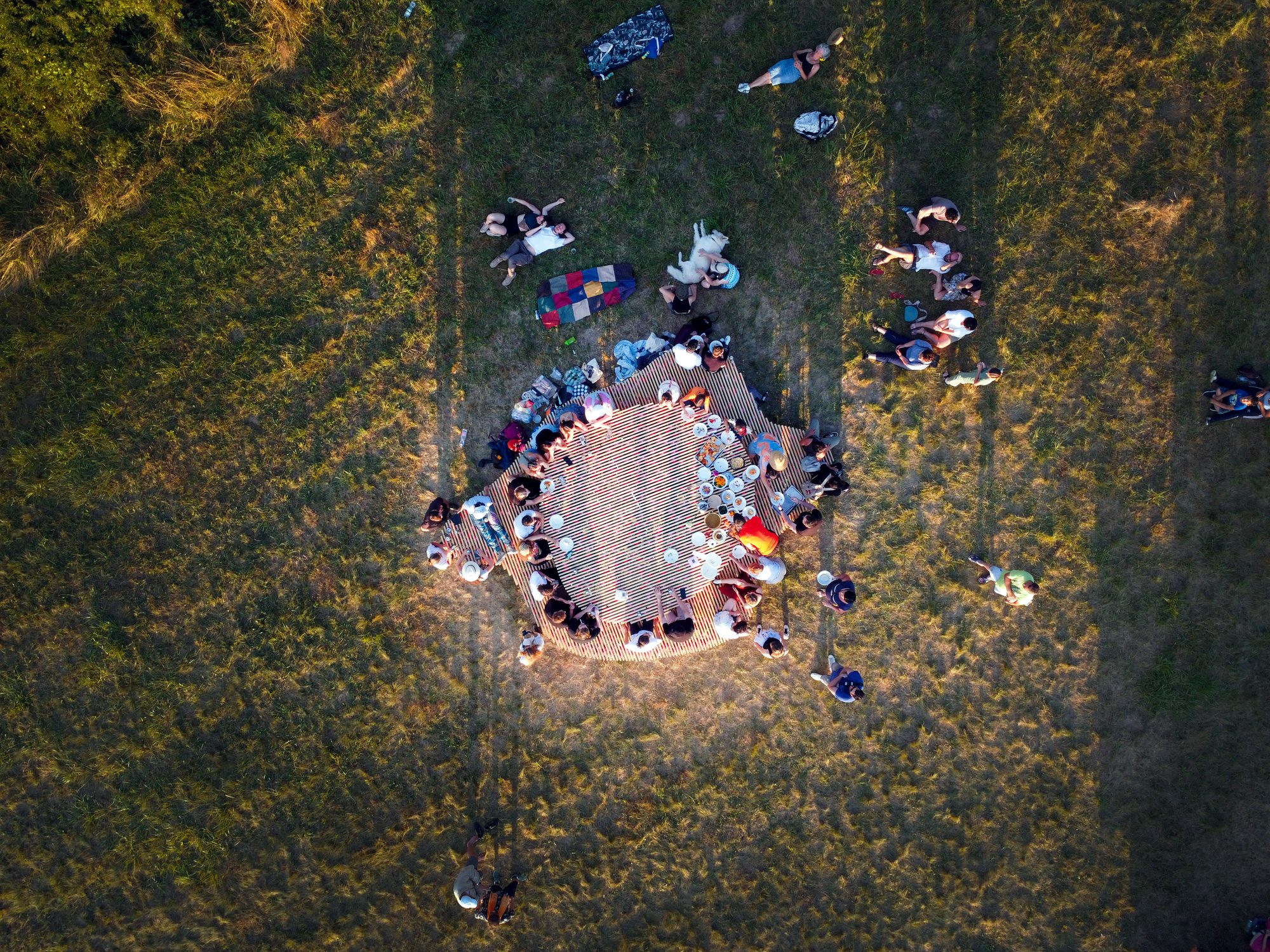
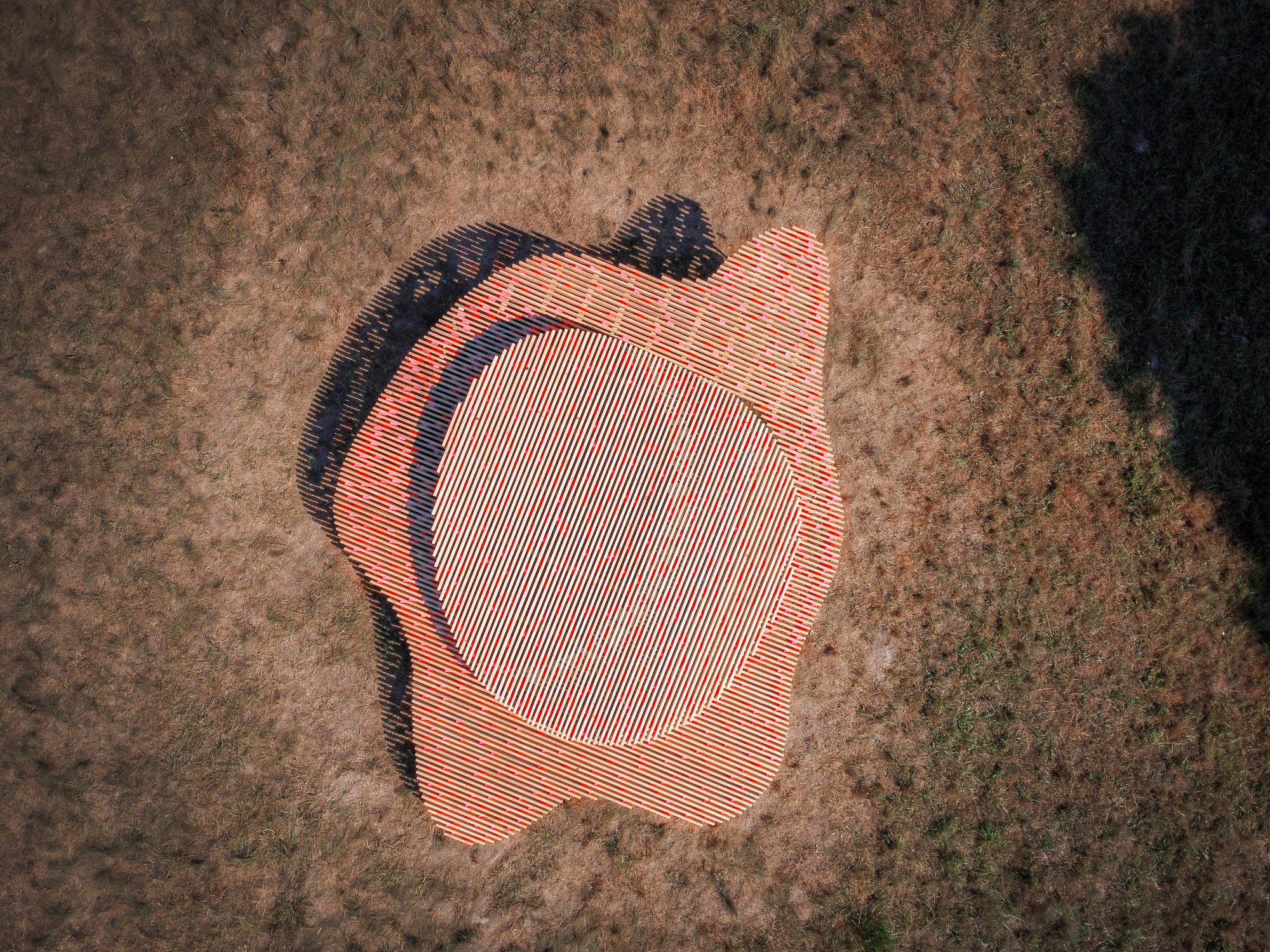
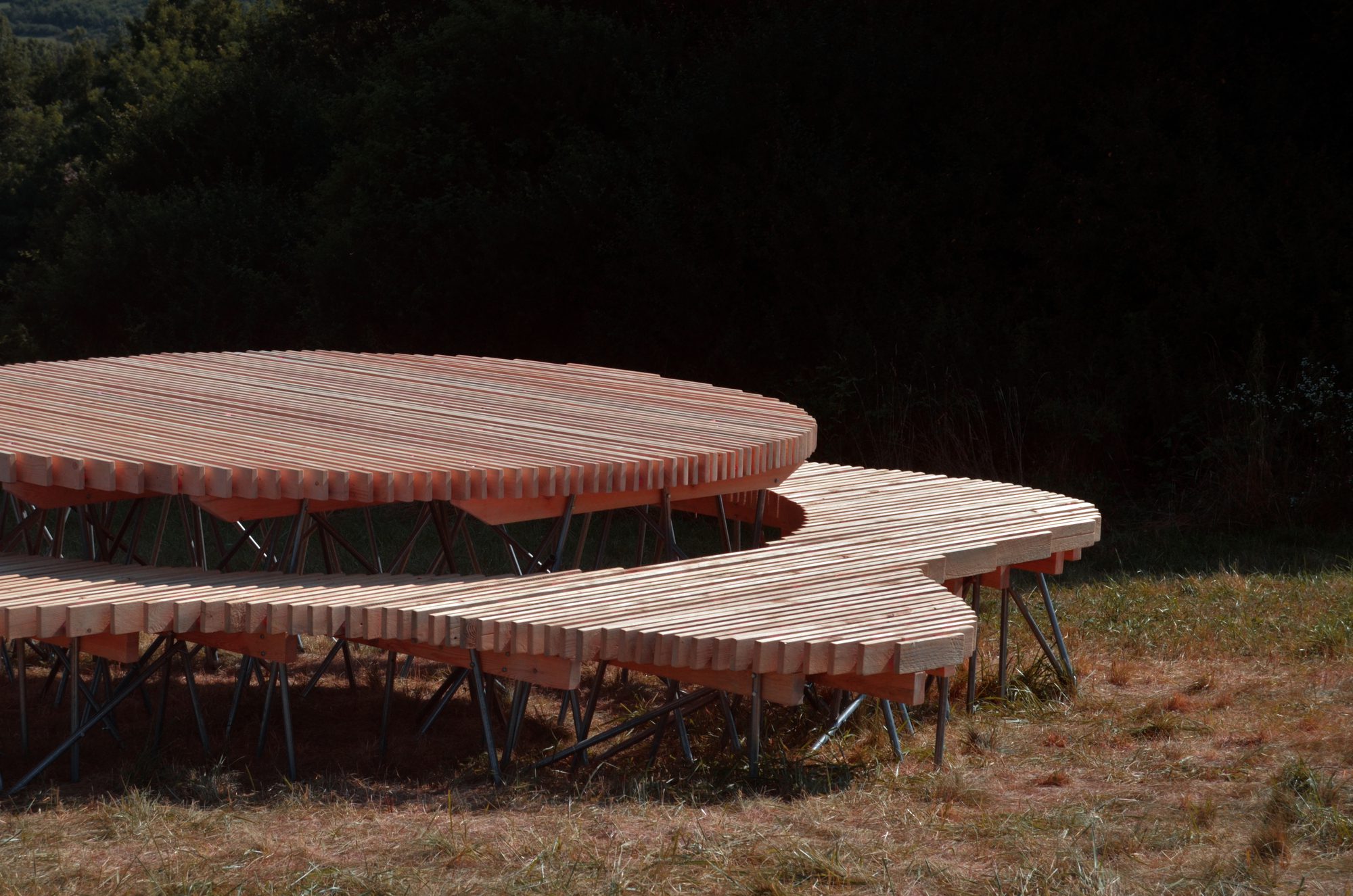
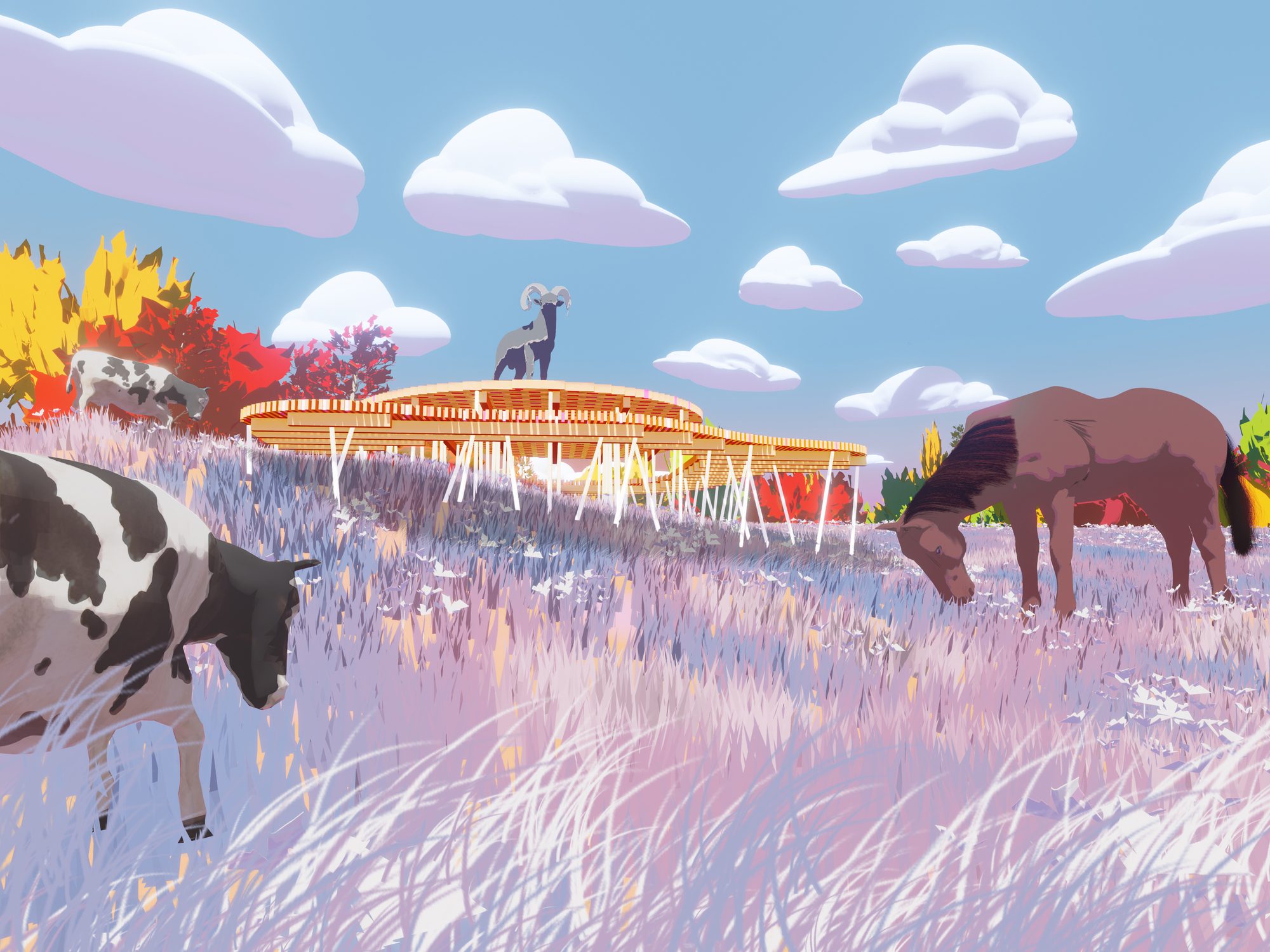
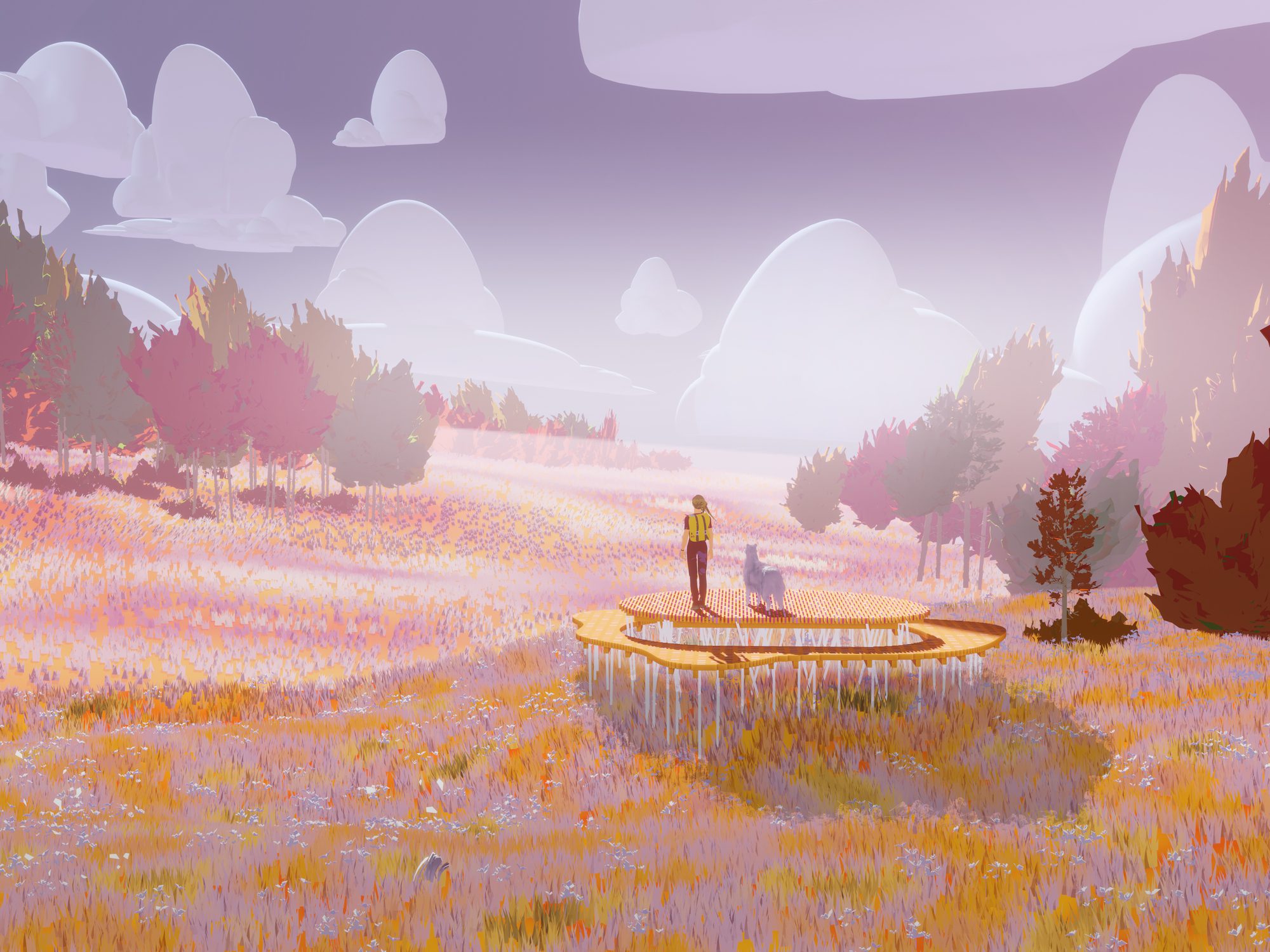
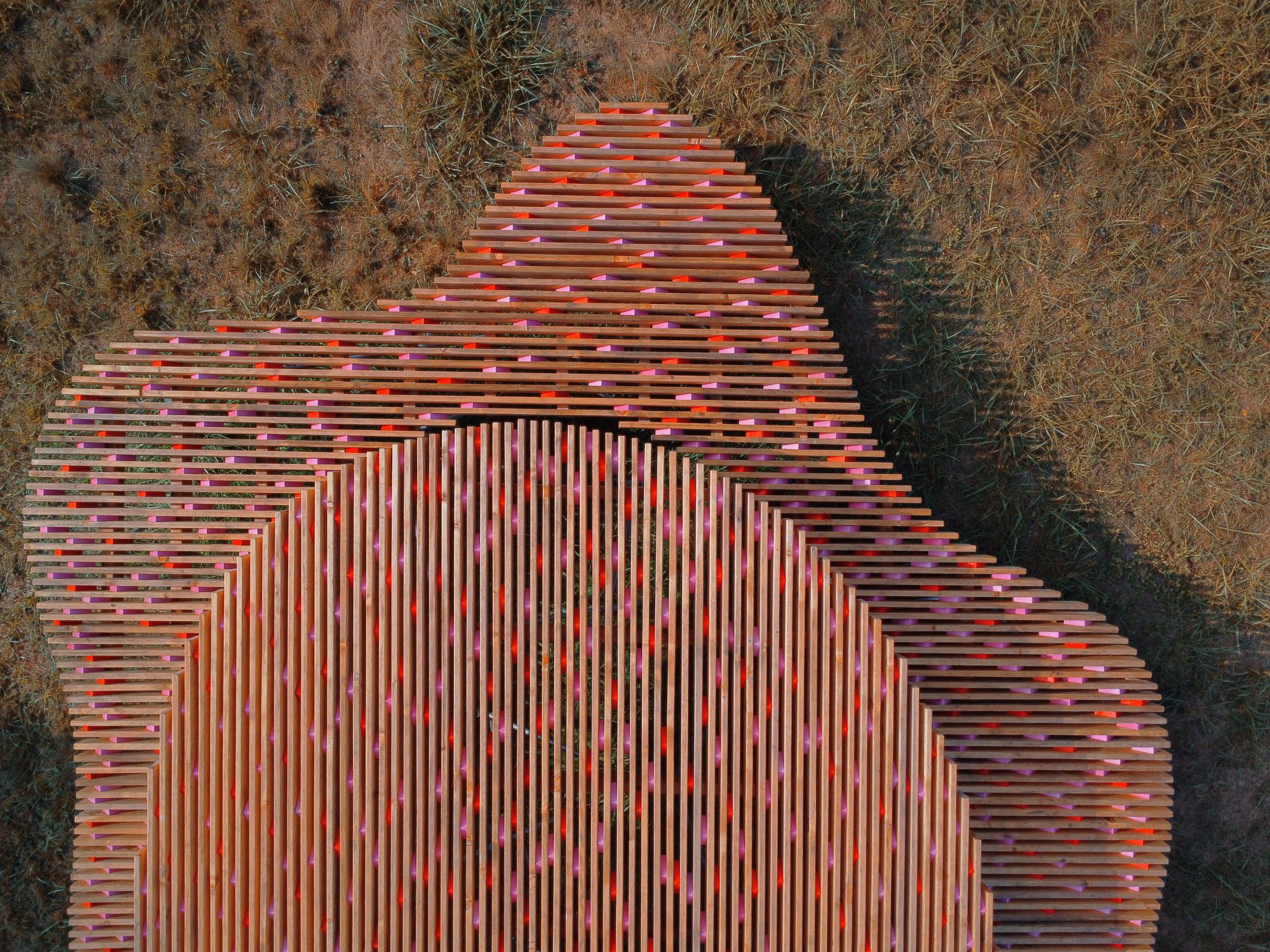
CREATION: Time-Space-Function – The site, located on a gently sloping terrain, presents a collection of built interventions, each responding to the openness of the landscape. Adding a new structure required careful consideration of the existing spatial conditions. The design process, spanning six months, focused on creating a functional, communal element, resulting in a large, multi-purpose, playful table that serves as a gathering point for the community.
© Ungerhofer Dániel, Fátrai Júlia, Reizinger Ákos, Laczkó Péter
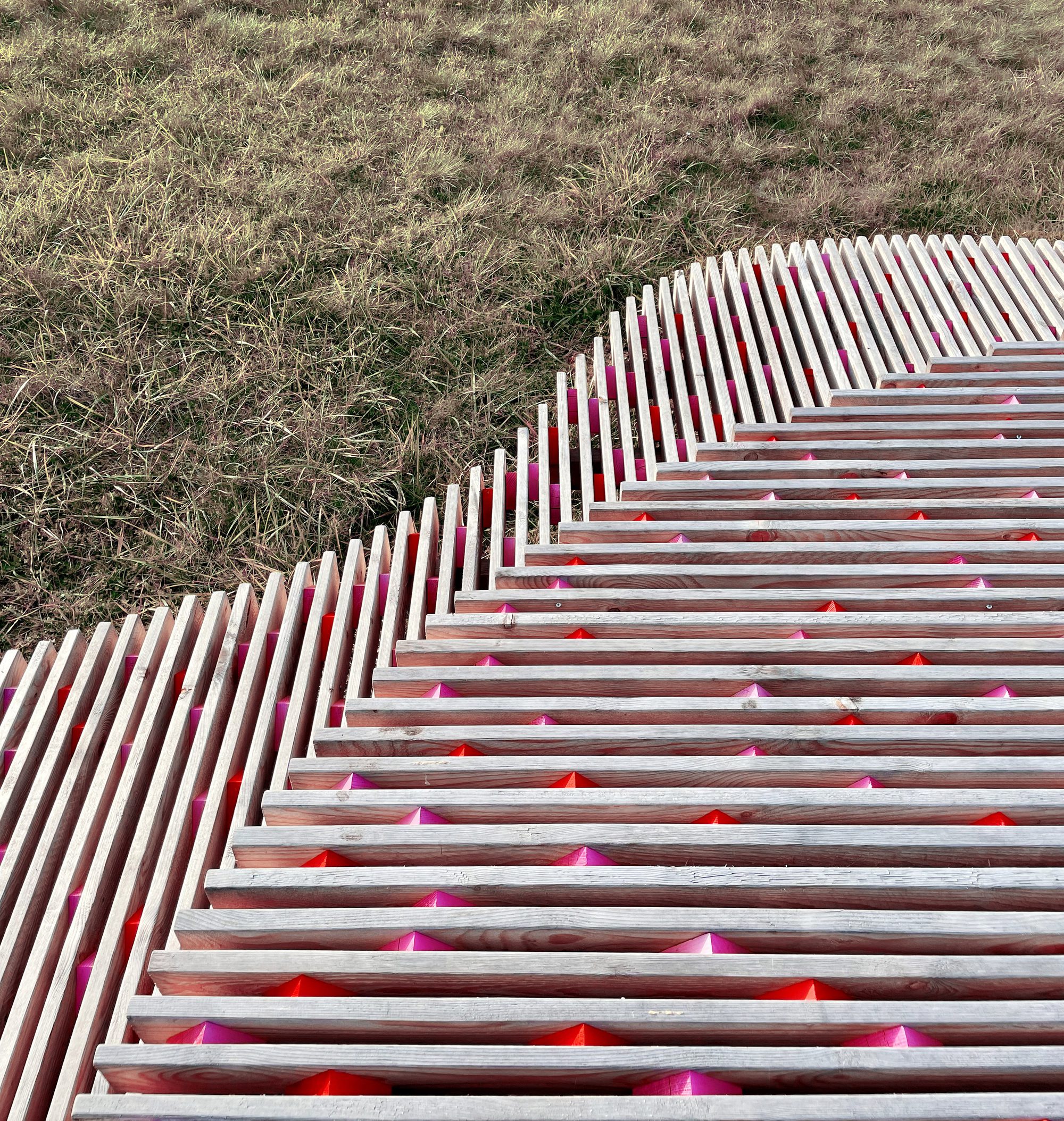
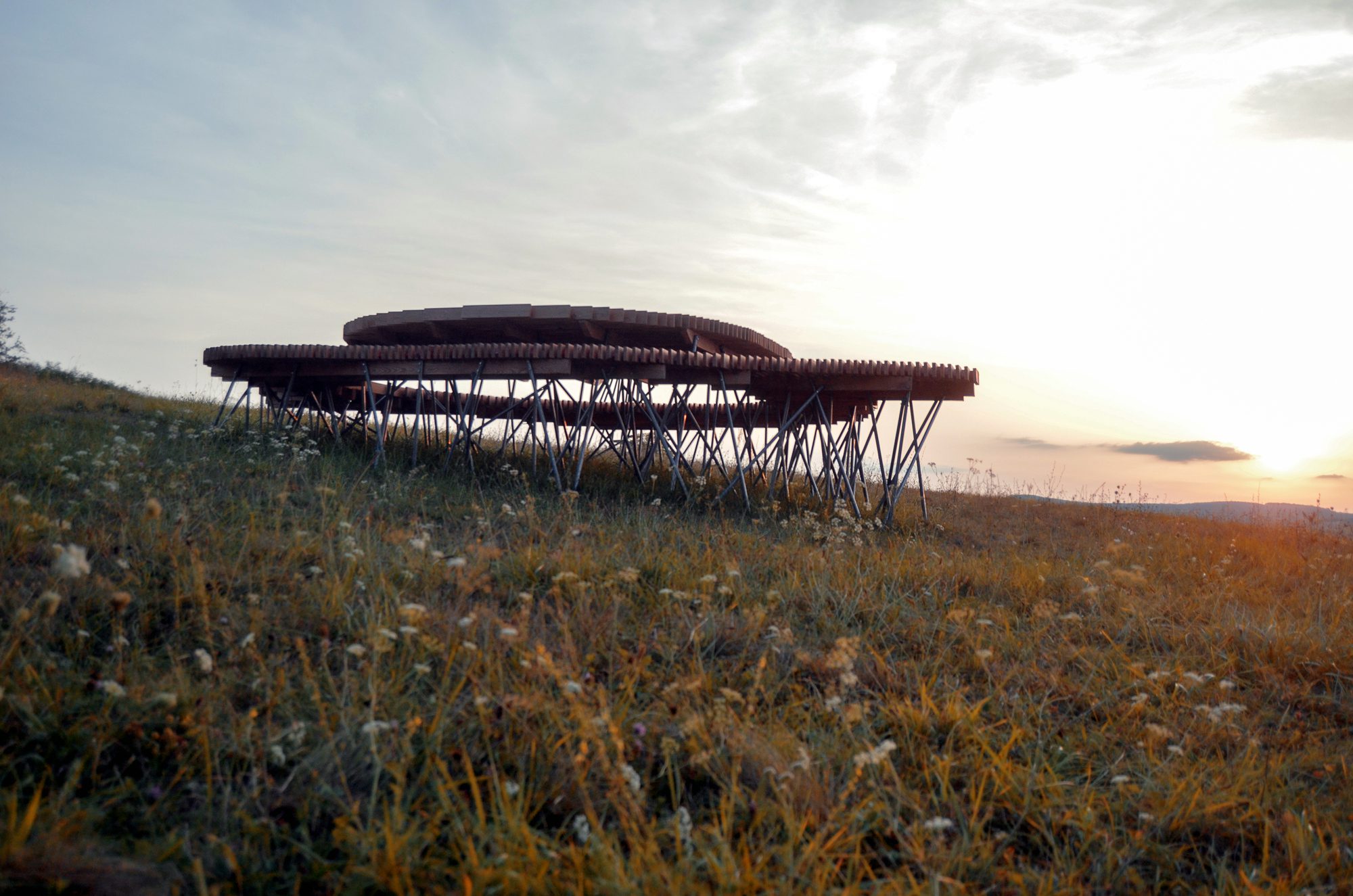
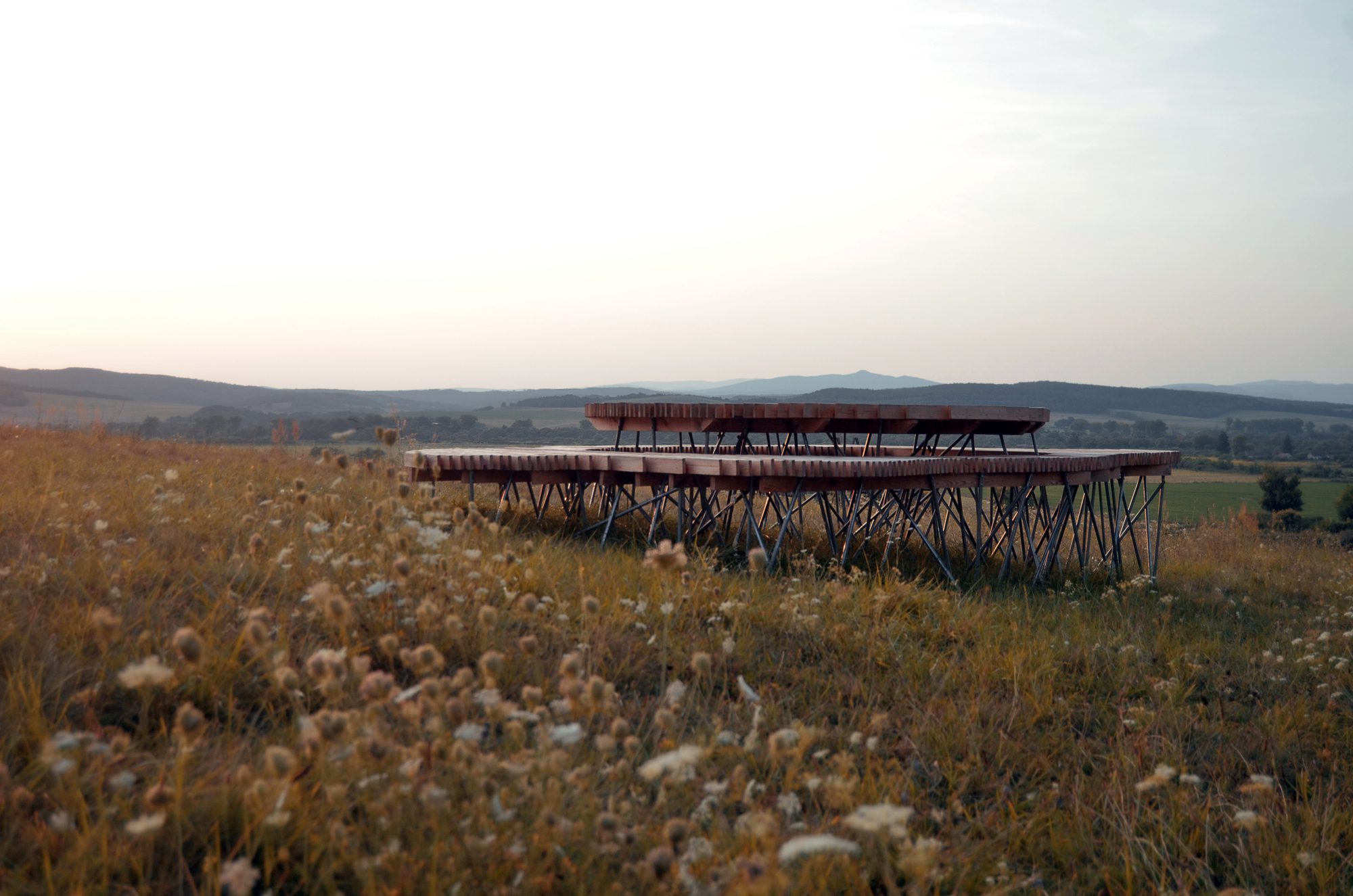
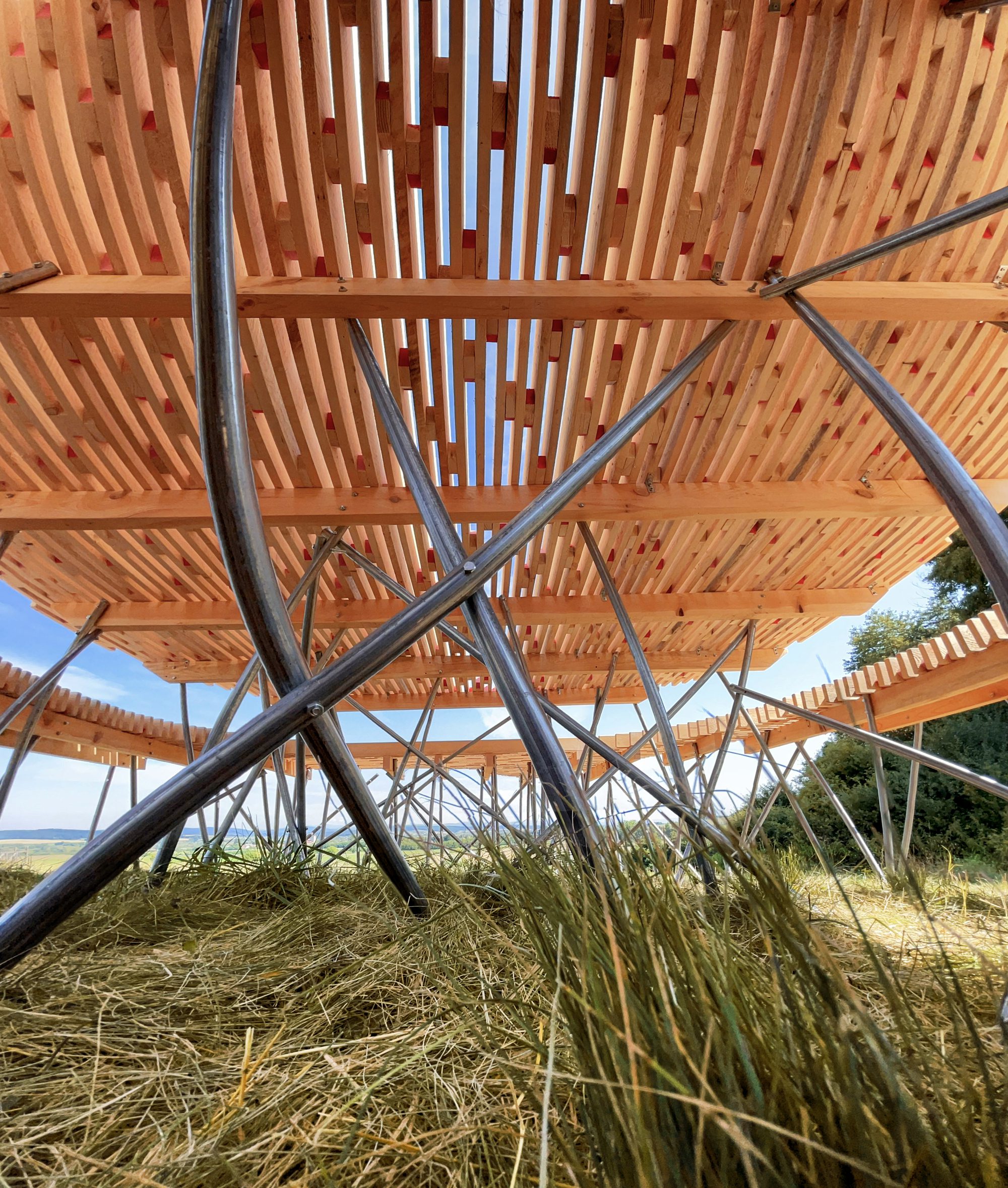
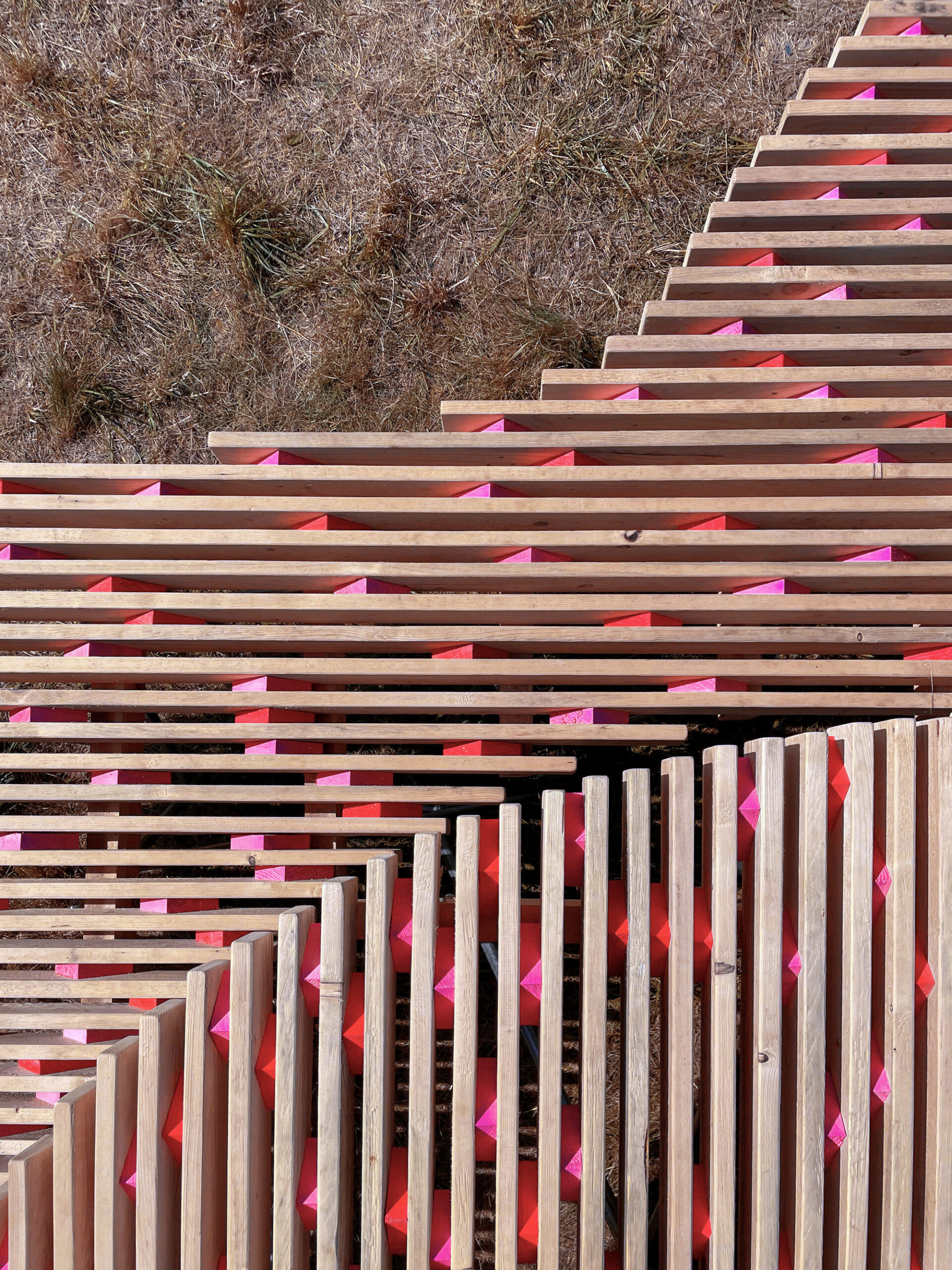
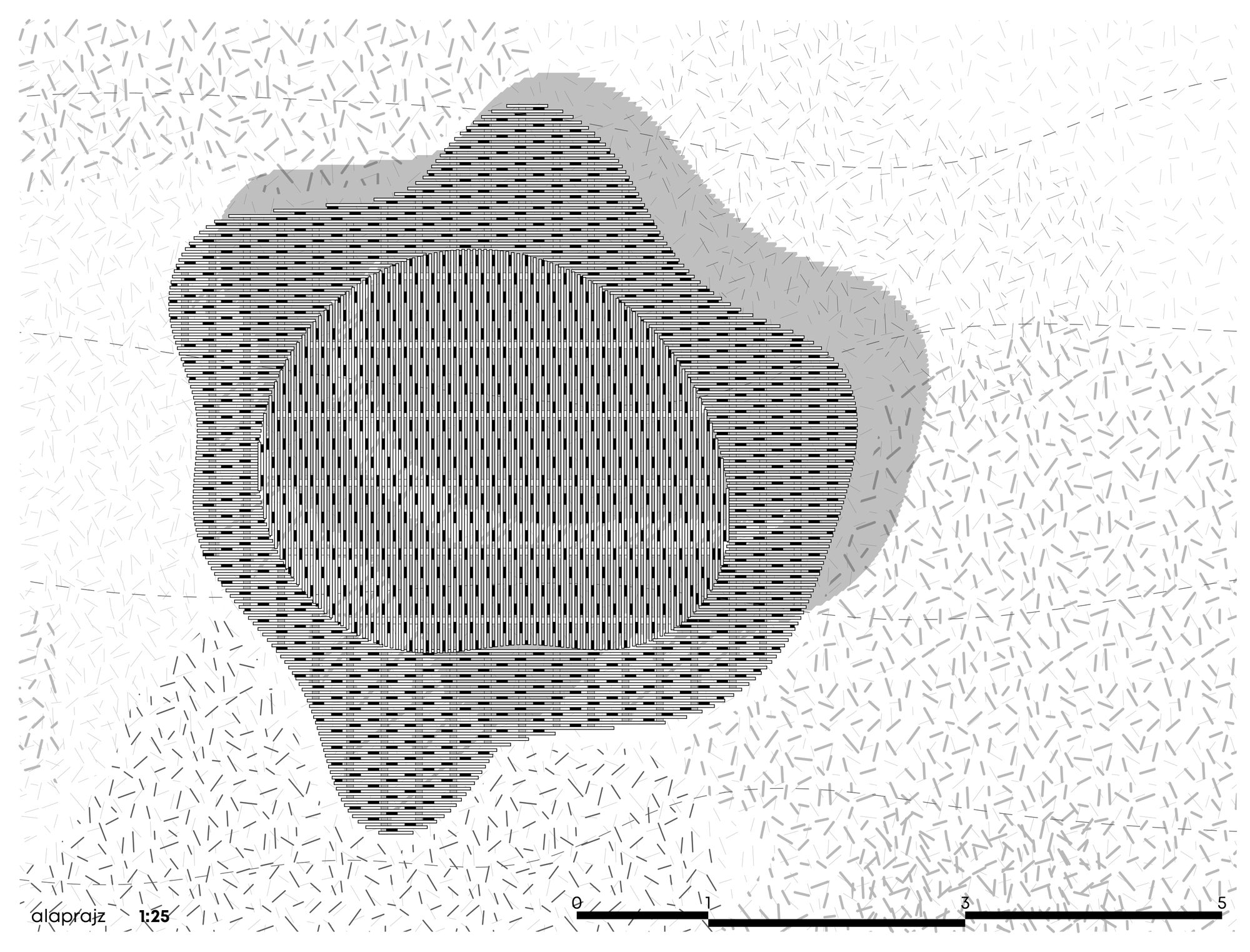
TABLE: Location-Community-Creation – Designed to accommodate large groups, the table adapts to the natural topography, generating an undulating form that responds to the terrain’s elevation changes. Stability is ensured by a network of steel pipes anchored into the ground, giving structural integrity while minimizing site disturbance. The seating and tabletop feature offset wooden slats, introducing variation in texture and color. The result is a structure that is both functional and adaptable, serving as a focal point for social interaction while integrating seamlessly into its surroundings.
Project Info
Architects: Atelier Széchenyi István University, Field of Sparks
Country: Hungary, Ipolytarnóc
Area: 30 m²
Year: 2024
Photographs: Ungerhofer Dániel+Fátrai Júlia+Reizinger Ákos+Laczkó Péter
Clients: Field of Sparks
Creators: Apatini Tamás, Bach Péter, Bartha László, Birkás Lili, Farkas Viola, Fátrai Júlia, Horváth Dávid, Horváth Kalliszta, Horváth Lilla, Kelemen Roland, Koncz Tamara, Lendvai Dorina, Lukács Anna, Nagy András, Reizinger Ákos, Szemes Viktória, Ungerhofer Dániel