


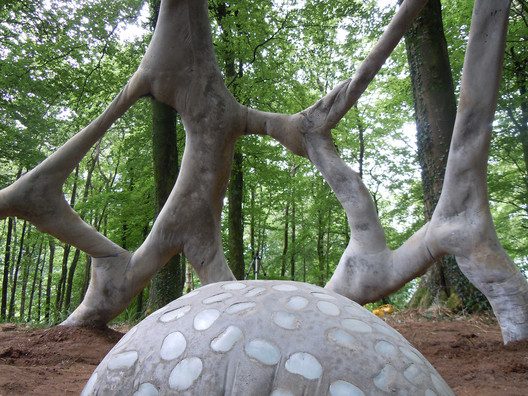
AA Summer DLAB 2014 : CALLIPOD is the final working prototype of the AA Summer DLAB, which occurred between the AA’s campuses in London and Hooke Park over a period from 21 July – 08 August 2014. As the outcome of an investigation which has explored earth scaffolding, fabric formwork, and concrete materiality, CALLIPOD is a 2.1 meters tall and 4.4 meters wide pavilion, realised over a period of one week The means of exposing the structural behaviour of concrete across its fluid nature were the starting point of the research agenda. Throughout the design explorations, the integration of structural and material properties of concrete with various architectural parameters which are essential in generating diverse spatial qualities have remained a major focus.
© Elif Erdine
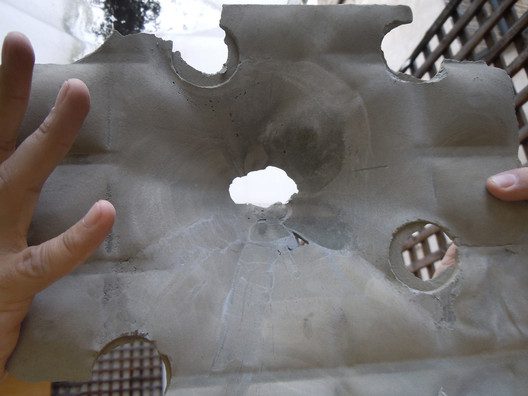
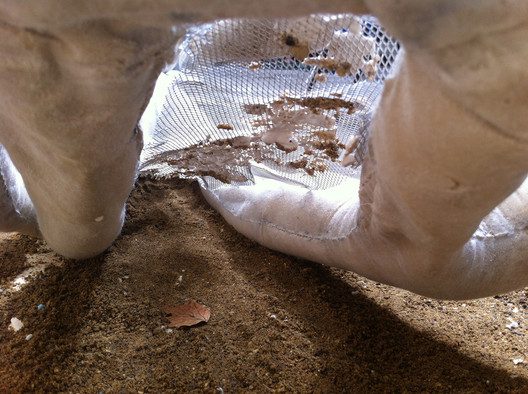
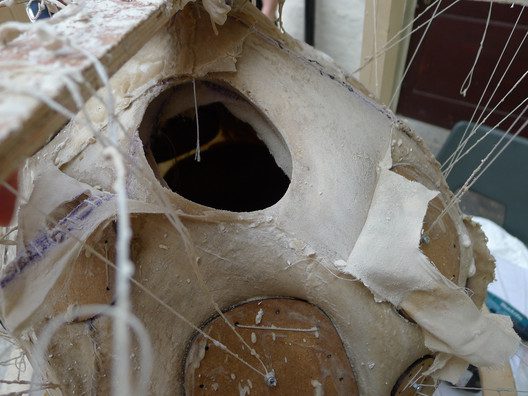
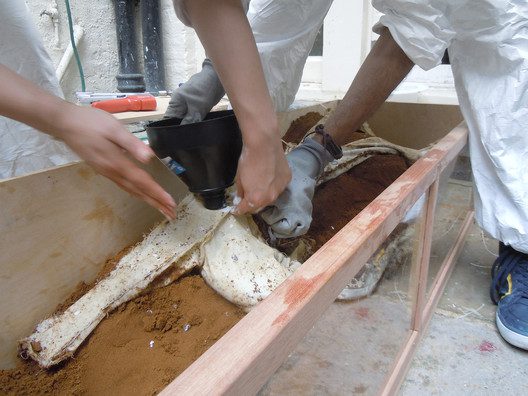
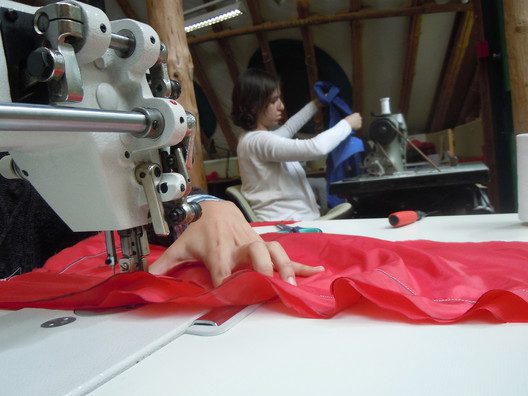
The algorithmic setup for design explorations reflects the characteristics of self-organisation which are observed across a range of scales in biological systems. Initially, real-time generative form-finding methods based on branching and bundling systems in nature have been developed and simulated in the open-source programming environment Processing. A key influence in working with branching systems has been the motivation to contextualise the design outcome in the natural environment of Hooke Park. The digital simulations present a progression from the analog-optimised path experiments of Frei Otto, due to additional design constraints relating to gravity, UV mapping, and the ability to follow free form three-dimensional shapes. The outcomes at this stage have then been evaluated via FEA analysis, in Scan&Solve for Rhino and Karamba for Grasshopper respectively. Various iterations in order to meet optimum structural results have been generated before finalising the overall design. The final geometry has been marked on fabric via CNC router and then stitched together, thereby creating the fabric formwork for concrete casting. The scaffolding for the pavilion was assembled from earth, which forms a second point of integration with the environment of Hooke Park. After the process of concrete casting within the fabric formwork, the earth scaffolding has been removed and reunited with the surroundings.
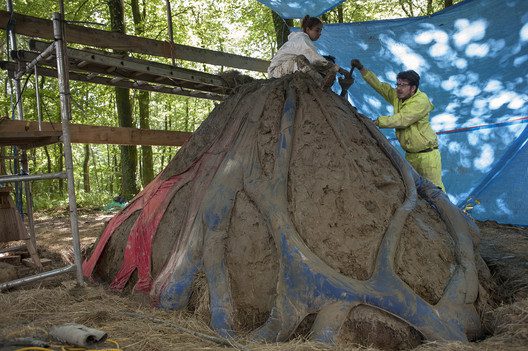
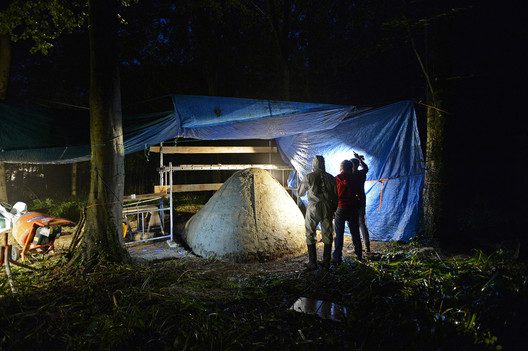
Large scale prototype casting process. Image © Valerie Bennett
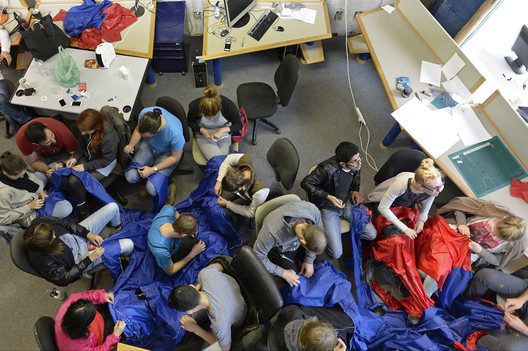
One of the main objectives of Summer DLAB 2014 is teaching the progressive inter-relationship of different computational software that can enhance the quality and performance of architectural design. The workflow among various computational platforms allows for the testing of numerous geometrical assemblies followed by their construction via digital fabricating machines. In 2014, this was achieved through experimentation with various proposals during the first phase of the programme. Each design proposal included an algorithmic process showing a systematic design approach as well as the process of fabricating each concept at a certain scale. These initial experiments, which were conceived based on the theoretical framework of emergence, differentiation, and complexity, contributed greatly to the realisation of CALLIPOD’s fabrication process and structure during the second phase.
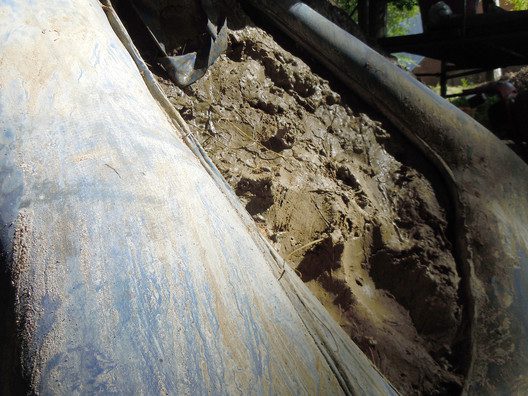
Large scale prototype fabrication process. Image © Elif Erdine
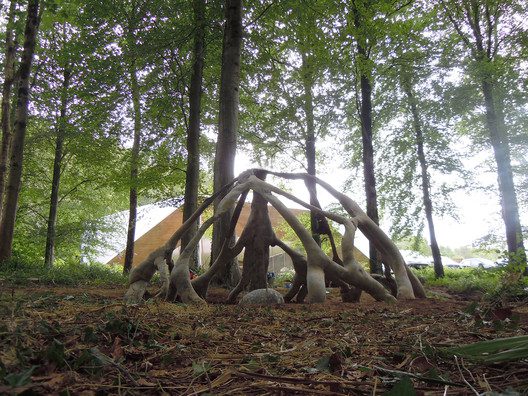
Conceived as a landmark piece in Hooke Park’s forest, the CALLIPOD pavilion is the centrepiece of the Summer DLAB 2014 programme and displays the architectural possibilities of using concrete in a non-conventional way, directly connecting the process of fabrication with the digital design methodologies. The architectural aim has been to combine a structurally efficient, natural form with elements of traditional materiality and to create a structure that is sustainable, welcoming and contextually linked to its environment.
© Elif Erdine
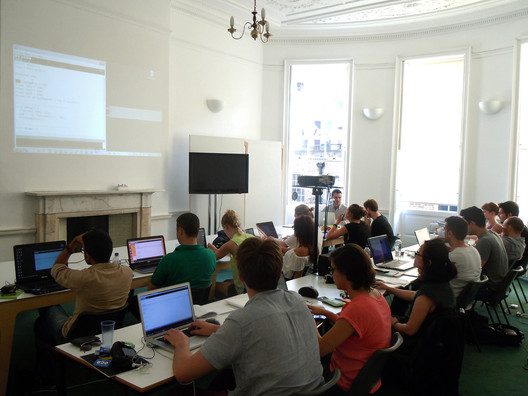
The structure is made of a special concrete mix that enabled it to be cast, dried and held firmly in place, over a period of several hours without being limited by the constraints of applying conventional reinforcing systems such as rebar. For the realisation of the pavilion, the entire team of participants and tutors was divided into sub-teams and given a certain task. Each sub-team had their responsibilities and the site was converted into a construction site, following health and safety regulations. From a pedagogical point of view, this part has always been an essential component of Summer DLAB as it allows for a hands-on understanding of the demands involved in the construction of a 1-to-1 scale model.
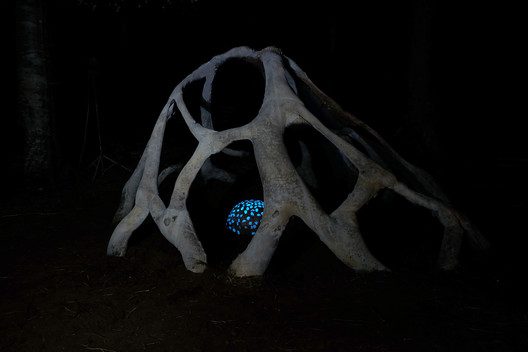
© Max Winter
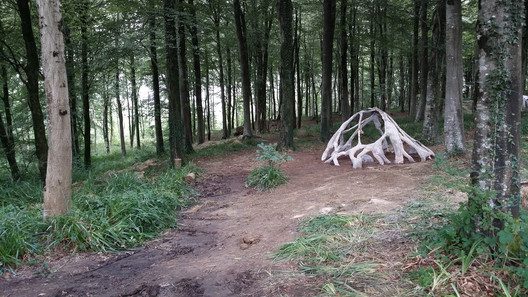
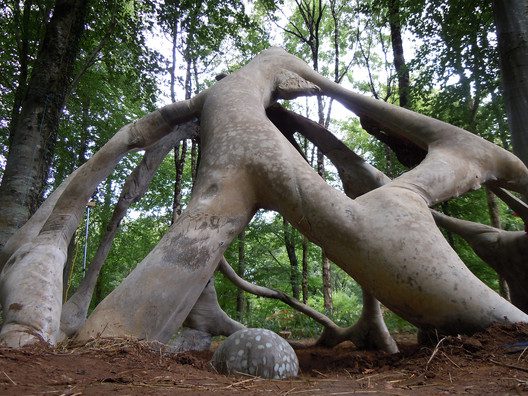
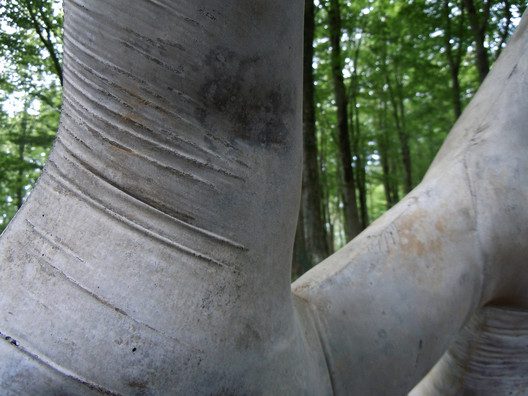
Balancing the intricate concrete branches that are visible from a distance with a more monolithic interior piece, the pavilion is characterised by two different experiential states. The concrete branches which emerge from the earth create a dome-like structure that houses a plinth-like seat. During the day time, the pavilion merges with its surroundings due to its form as well as its surface patterns that resemble a tree. One can then enter CALLIPOD and take a seat to enjoy the view from within the dome. The harmonised blending of CALLIPOD in nature changes during the night, when the central concrete plinth is illuminated. The special pebbles that are part of the seat begin to glow in the dark. Each day they get charged by the sun-light and then release that energy in the form of cyan light that distinguishes the structure from the rest of the forest by night.
Throughout the duration of the programme, there have been numerous architectural discoveries that enabled us to move beyond the conventional methods of design and fabrication. Among its various achievements, Summer DLAB continues to inspire the avant-garde of young architects and architectural students.
Programme Director: Alexandros Kallegias
Tutors: Alexandros Kallegias, Elif Erdine, Daghan Cam, Angel Fernando, Lara Moreira, Suzan Ucmaklioglu
Students: Adam Turczyn, Isabella Souza, Baraa Yakzan, Juan-Pablo Chinchilla, Elien Termote, Daria Kleymenicheva, Aiman Tabony, Mohanned Iskanderani, Weronika Krol, Xiaohong Ling, Sabine Hansmann, Fabian Scholz, Max Winter, Ignacio Carbo del Moral, Kevin Mazanek, Zelal Cinar

Ibrahim Abdelhady is an architect, academic, and media entrepreneur with over two decades of experience in architecture and digital publishing. He is the Founder and CEO of Arch2O.com, a leading platform in architectural media, renowned for showcasing innovative projects, student work, and critical discourse in design. Holding dual PhDs in Architecture, Dr. Abdelhady combines academic rigor with industry insight, shaping both future architects and architectural thought. He actively teaches, conducts research, and contributes to the global architecture community through his writing, lectures, and media ventures. His work bridges the gap between practice and academia, pushing the boundaries of how architecture is communicated in the digital age.